Editorial: Boost to India-US nuclear deal
The recent decision of the US to lift curbs on three Indian nuclear entities is a significant step forward in enhancing energy cooperation and reinforcing the strategic framework between the two countries
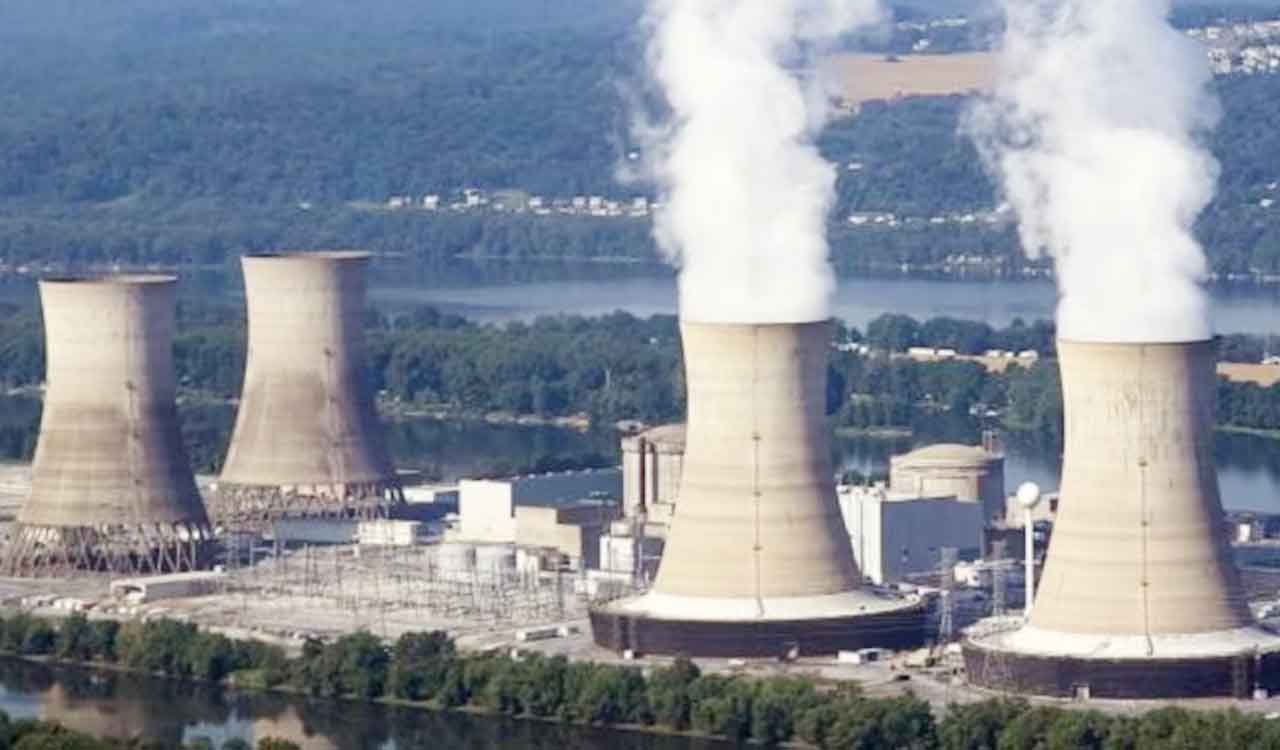


Though India and the United States had signed a historic civil nuclear deal nearly 16 years ago, after overcoming political hurdles on both sides, the full potential of the agreement could not be realised all these years. This was because of America’s continued reliance on restrictive practices. However, the recent decision of the US Department of Commerce’s Bureau of Industry and Security (BIS) to lift curbs on three Indian nuclear entities is a significant step forward in enhancing energy cooperation and reinforcing the strategic framework between the two countries. Bhabha Atomic Research Centre (BARC), Indira Gandhi Atomic Research Centre (IGCAR) and the Indian Rare Earths (IRE) are the three entities that have been freed from restrictions. This will enable closer bilateral cooperation to secure more resilient critical minerals and clean energy supply chains. The easing of regulations will mark a new phase in Washington’s slow pivot from stymying the development of India’s nuclear programme. It had imposed restrictions on over 200 entities after India’s nuclear tests in 1998. The so-called ‘Entity List’ has long been a tool used by the United States to regulate trade with organisations considered potential risks to national security. For years, the inclusion of these Indian entities on the list posed obstacles to scientific exchanges and delayed collaborative projects. Their removal not only reflects a growing trust between the two nations but also highlights shared priorities in critical sectors such as rare earth minerals, advanced nuclear energy and clean energy technologies.
The decision paves the way for seamless cooperation in advanced energy initiatives, enabling India to access cutting-edge US research and development. The signing of the civil nuclear deal with America in 2008 provided an ultimate testimony to India’s reputation as a responsible nuclear-weapon state. This was followed by a waiver from the NSG (Nuclear Suppliers Group) in exchange for allowing the International Atomic Energy Agency (IAEA) to inspect India’s civilian reactors. Though it had removed restrictions on many Indian entities, the restrictions on those under the Department of Atomic Energy remained. Though the present move will encourage more research and development and science and technology cooperation, there remain concerns over India’s nuclear liability framework. The Civil Liability for Nuclear Damage Act (CLNDA) places no-fault liability on nuclear plant operators while allowing them to seek legal recourse against suppliers for defective products or technology. In 2015, Prime Minister Narendra Modi and US President Barack Obama agreed to a deal that limits the liability of US suppliers in the case of a nuclear power plant accident with India agreeing to set up an insurance pool. The lifting of restrictions could boost India’s ambition of joining the NSG, a multilateral nuclear export control arrangement, as well as expansion of its nuclear power capacity. India aims to triple its nuclear power generation capacity by 2030 from the present 7.5 GW.

Related News