Congress govt to present Rs 3.2 lakh crore budget with big promises, bigger borrowings
Telangana’s 2026-27 Budget is expected to rely heavily on borrowings amid rising debt and limited revenues, as the government balances welfare commitments and infrastructure projects while facing pressure over partial implementation of its Six Guarantees.
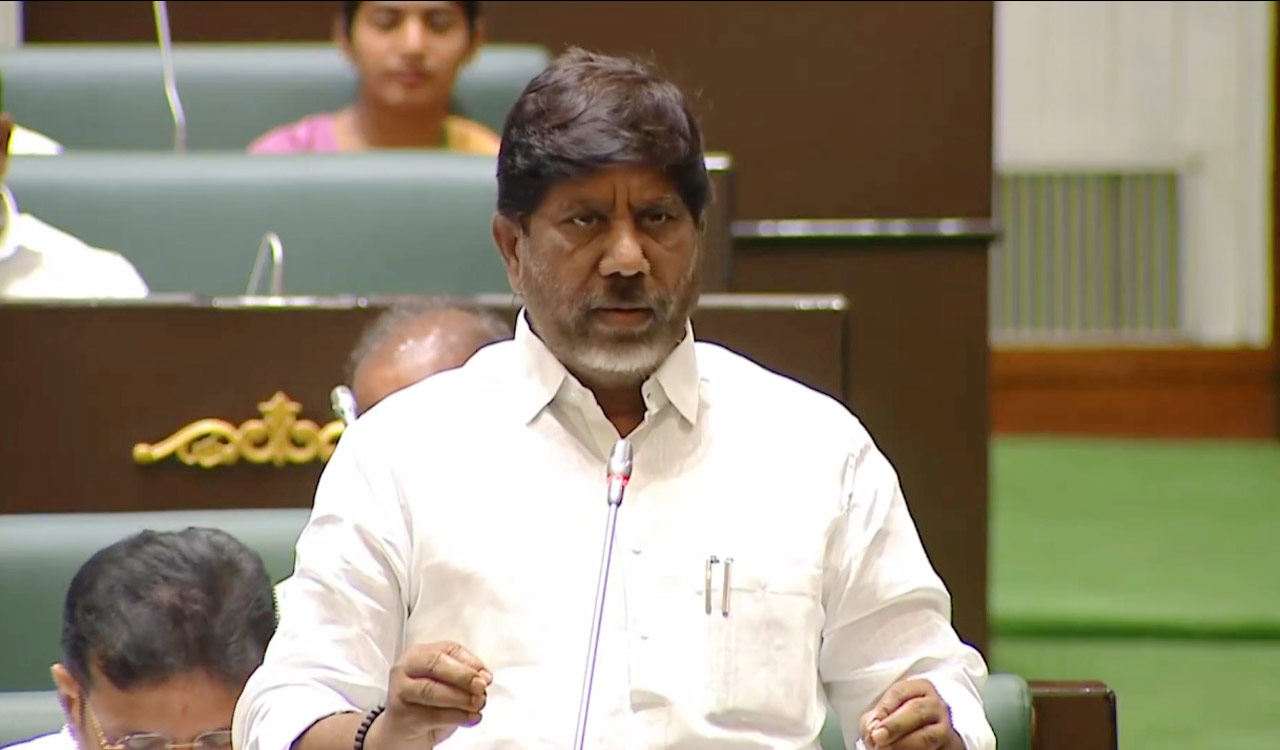


Hyderabad: The Congress government in Telangana is set to unveil a fiscally stretched budget for 2026-27 in the State Assembly on Friday. Deputy Chief Minister and Finance Minister Mallu Bhatti Vikramarka is preparing to present an outlay expected to cross Rs 3.2 lakh crore, which signals ambition on paper and anxiety in the treasury.
Legislative Affairs Minister D Sridhar Babu will introduce the budget in the Legislative Council. This will be the third budget of the Revanth Reddy government, and it comes at a time when the administration is under pressure to explain why its much-advertised Six Guarantees remain only partially delivered. With finances tight and revenues underwhelming, the government appears ready to change the narrative by rolling out new schemes and expanding announcements. To keep the narrative afloat, the government will lean heavily on borrowings and Central funds.
Six Guarantees falter, new schemes take centre stage
Officials admitted privately that full implementation of the Six Guarantees was still out of reach. Instead, the budget was likely to spread allocations across phases, while unveiling fresh schemes to maintain political momentum. Among the proposals being readied are Young India Kits for students, electric scooters for women students, subsidised livestock for dairy farmers, Young India Integrated Residential Schools, skilling programmes and employment-linked initiatives. The emphasis on education, health and welfare infrastructure is being projected as proof of commitment, even as funding clarity remains thin.
Welfare and Mega projects anticipated
If the pre-budget consultations are any indication, the government is trying to walk two opposite paths at once. Alongside welfare promises, the budget is expected to carry massive allocations for irrigation, transport and urban infrastructure. Projects such as Palamuru-Rangareddy, Sitarama, Thummadihetti, SLBC and the Kodangal lift scheme are likely to get funds, with nearly Rs.5,000 crore estimated for land acquisition alone. However, sources said allocations for irrigation projects are likely to be low compared to last financial year.
More than Rs.1 lakh crore could be proposed for infrastructure development, including the Regional Ring Road, Hyderabad-Vijayawada corridor, Future City links, Musi riverfront, Metro Phase-II and airport expansion. While these projects demand funds that the State does not currently have, the government is planning to rely heavily on borrowings, which have ballooned and the Central funds that remained a mirage.
Borrow now, worry later
With revenue growth modest and Central grants uncertain, Telangana is heading into a borrowing-led budget. Officials are exploring heavier market loans, off-budget financing through State entities, asset monetisation and even tax revisions to plug the widening gap. Chief Minister A Revanth Reddy himself announced in the Assembly on Wednesday night that his government was persuading the Centre for restructuring loans amounting to a whopping Rs.2 lakh crore. While around Rs.27,000 crore loans have already been restructured this fiscal, the State borrowings shot up from projected Rs.54,009 crore to nearly Rs.84,000 crore.
The State’s debt is already nearing Rs.3 lakh crore, and servicing costs are rising fast enough to threaten future welfare spending. Yet the government is banking on Central schemes, interest-free infrastructure loans and matching-grant programmes to keep its plans alive. The catch: every rupee from Delhi comes with conditions, forcing the State to commit its own funds first, often through more borrowing.
The 2026-27 Budget, to be cleared by the Cabinet before being presented in the Assembly on Friday, is therefore less about what the government wants to spend and more about how long it can afford to keep spending this way.

Related News