Drinking water crisis looms over Telangana as reservoirs shrink, groundwater declines
Telangana faces a looming drinking water crisis as deficient monsoon rains and El Niño have depleted reservoir storage and groundwater levels. Authorities are implementing contingency measures, but declining water reserves under Mission Bhagiratha have raised concerns over supplies in the coming months
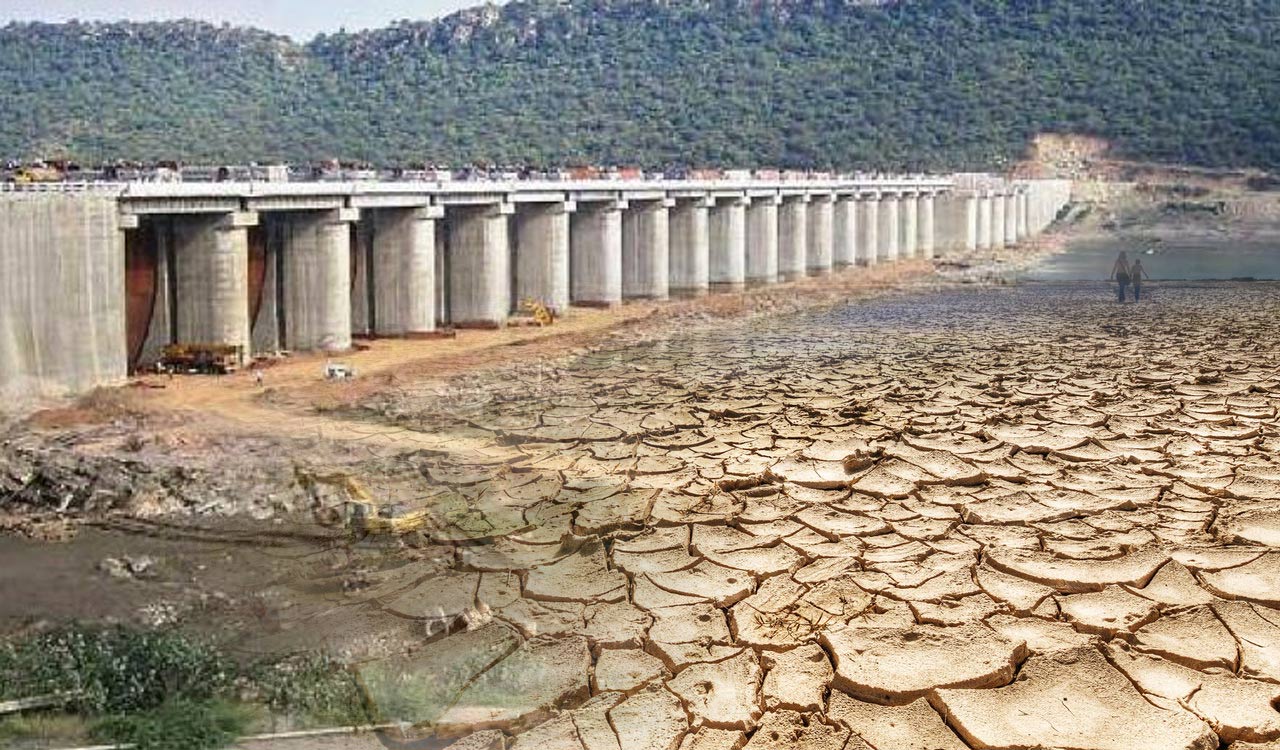


Hyderabad: Telangana is heading towards a potential drinking water crisis as deficient monsoon rains, coupled with the impact of El Nino, have sharply depleted reservoir storage and groundwater reserves, raising concerns over the State’s preparedness to tackle an emerging water emergency.
With July already halfway through and no widespread rainfall in sight, major reservoirs supplying drinking water under Mission Bhagiratha are rapidly approaching dead storage levels. In several habitations, drinking water is already being supplied only once a week, indicating the growing stress on water resources.
The State’s 29 reservoirs, which feed 123 water treatment plants under Mission Bhagiratha, are the primary source of drinking water for rural habitations. Against a combined storage capacity of 1,059 TMC ft, all major reservoirs currently hold only 333.44 TMC ft, a steep decline from 522.31 TMC ft recorded during the corresponding period last year.
The situation is particularly worrying in north Telangana. The Sriramsagar Project (SRSP) has only about 3 TMCft of usable water above dead storage, while nearly 0.5 TMCft is required every month for drinking water needs. Reservoirs such as Lower Manair, Yellampalli, Kadam, Jurala, Nagarjuna Sagar, Nizamsagar, Singur, Koilsagar, Ramanpadu, Akkampalli Balancing Reservoir, Wyra, Udayasamudram, Dharmasagar and several others are also witnessing critically low storage.
Hyderabad and several districts, including Karimnagar, Warangal, Nalgonda, Khammam, Mahabubnagar, Kamareddy, Medak and Sangareddy, depend on these reservoirs for drinking water. Officials have indicated that water availability in Manjira, Singur and the Godavari system is sufficient only until the end of September under present conditions.
Irrigation authorities have also been asked to maintain at least 16 TMCft in Singur to safeguard Hyderabad’s drinking water requirements. They have warned that the Singur catchment currently has water sufficient for only about 45 days and have directed preparation of alternative plans for areas dependent on the reservoir. Officials are conducting daily reviews of reservoir storage to assess water availability for the next 45, 90 and 180 days.
Groundwater levels have also continued to deteriorate. The average groundwater level in Telangana stood at 9.46 metres below ground level (mbgl) in June, compared with 9.26 mbgl in May, while several districts have witnessed a sharp decline over the past year.
As a precaution, authorities are preparing contingency measures, including supplying water through local drinking water sources, deepening and flushing existing borewells, hiring additional borewells where necessary, and constructing rainwater harvesting structures near Mission Bhagiratha borewells to improve groundwater recharge.
Despite these measures, concerns persist over the absence of substantial water in reservoirs under Krishna and Godavari Rivers. Telangana Retired Engineers Association had recently suggested that available flows in the Pranahita-Godavari system could be utilised to replenish reservoirs linked to Mission Bhagiratha and improve groundwater recharge. However, the ruling Congress appears to be against the idea. But unless timely steps are taken and widespread rainfall materialises soon, Telangana could face one of its most severe drinking water crises in recent years.

Related News