Economic Survey credits BRS government policies for Telangana’s growth
The Economic Survey 2025-26 credits several policy initiatives of the previous BRS government for Telangana’s economic growth, highlighting gains in agriculture, services, startups, employment and governance reforms, even as the State continues to draw national recognition.


Hyderabad: Two years after the change of guard in Telangana, key policy decisions and flagship initiatives rolled out during the previous BRS government continue to shape Telangana’s economic trajectory, with several of them now drawing national recognition. The latest Economic Survey 2025-26, released on Thursday, recorded a series of such structural gains across various sectors, including agriculture and services.
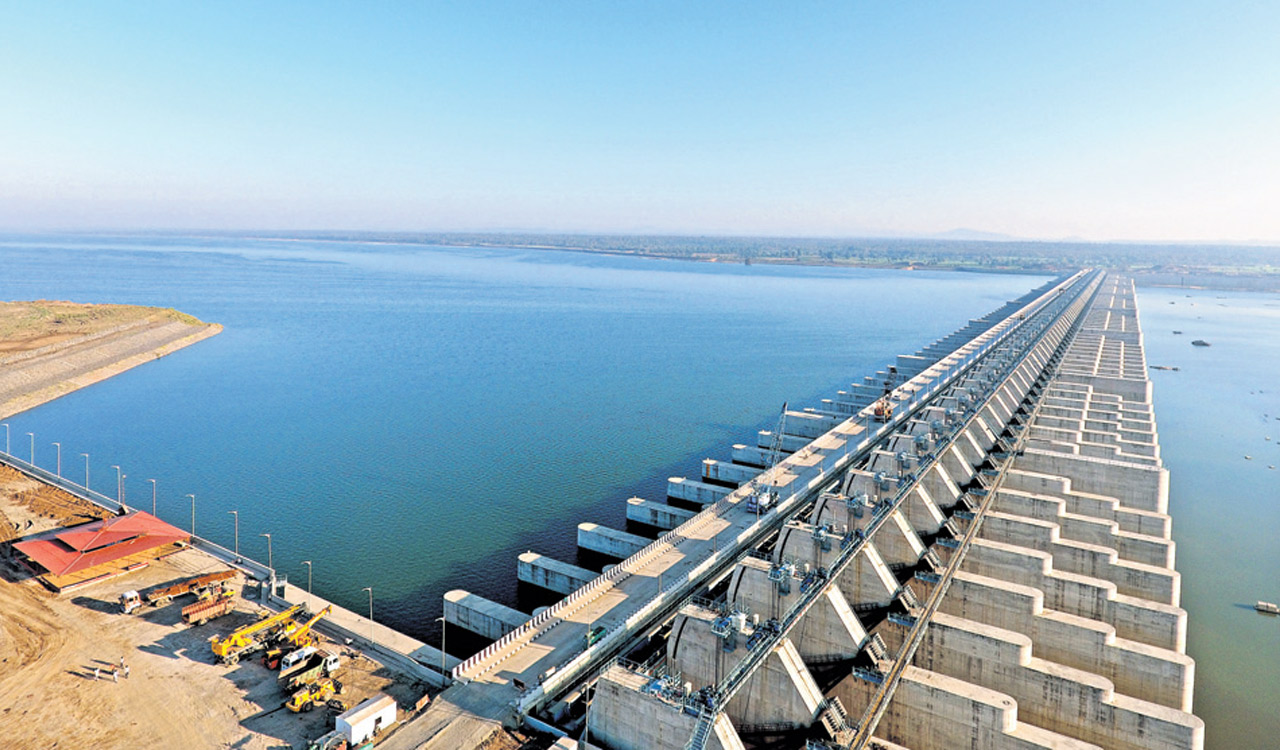
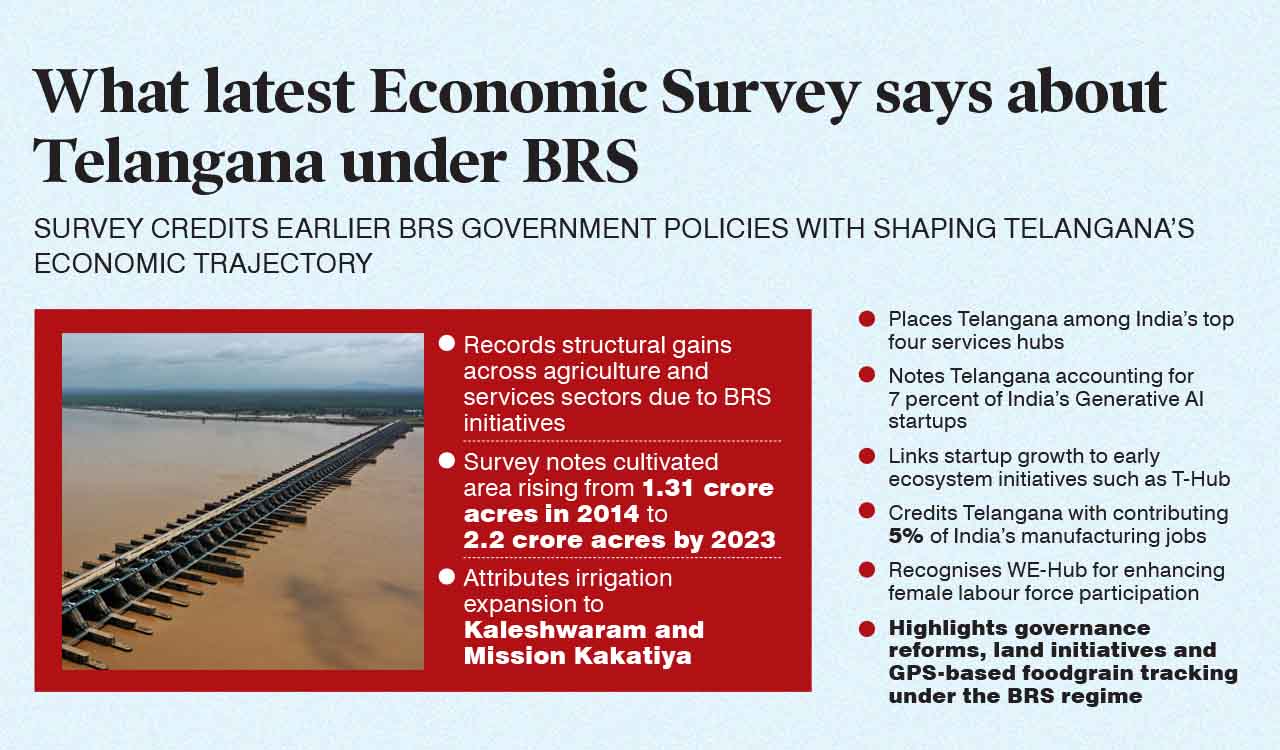
Notwithstanding the naysayers and the current Congress government’s attempts to discredit the Kaleshwaram Lift Irrigation Project, the Union government observed a dramatic shift in cultivation. The report noted that “the cultivated area in Telangana, which stood at 1.31 crore acres in 2014, increased to 2.2 crore acres by 2023 due to major flagship projects such as the Kaleshwaram Lift Irrigation Project and Mission Kakatiya (tank rejuvenation).”
The report credited the previous BRS government with improving access to irrigation facilities, aligning crops with natural resource endowments and promoting the use of climate-resilient high-yielding variety seeds, which are crucial for improving yields.
Telangana’s rise as a services powerhouse also finds mention. The State found a place among the country’s top four dynamic hubs, along with Karnataka, Maharashtra and Tamil Nadu, which together account for nearly 40 percent of services output, driven by modern, high-productivity services such as IT, finance and professional services.
The State also played a key role in India’s booming startup ecosystem. Citing NASSCOM data, the Survey recorded that Telangana ranks fourth, accounting for 7 percent of India’s Generative AI startups, behind only Karnataka, Maharashtra and Delhi. The growth is widely linked to early ecosystem-building efforts such as T-Hub, which helped nurture the startup culture.
On employment, Telangana contributed five percent of India’s manufacturing jobs despite having less than three percent of the national population, placing it among the top seven States driving industrial employment.
The Survey also highlighted Telangana’s WE-Hub as a model for enhancing female labour force participation, recognising its role in connecting women with startup ecosystems and investors to promote women entrepreneurs.
On governance reforms, it pointed to Telangana’s single digital land platform, the Dharani portal, which has since been changed to Bhu Bharati by the Congress government, integrating the revenue, stamps and registration departments as part of a broader push towards transparent land records. Labour and regulatory reforms were also appreciated, with Telangana among the States that have removed restrictions on women working in a wider range of industries and commercial establishments. The State also found a place among those that repealed outdated provisions, amended legacy statutes and decriminalised minor offences.
In food security logistics, Telangana was listed among six States where the GPS-based Vehicle Location Tracking System for foodgrain transport has been fully implemented, improving transparency and efficiency.

Related News