Editorial: Ethanol fuel policy needs a balanced blend
Though higher ethanol blending can boost energy security and reduce the oil import bill, concerns of vehicle users and environmentalists must also be addressed
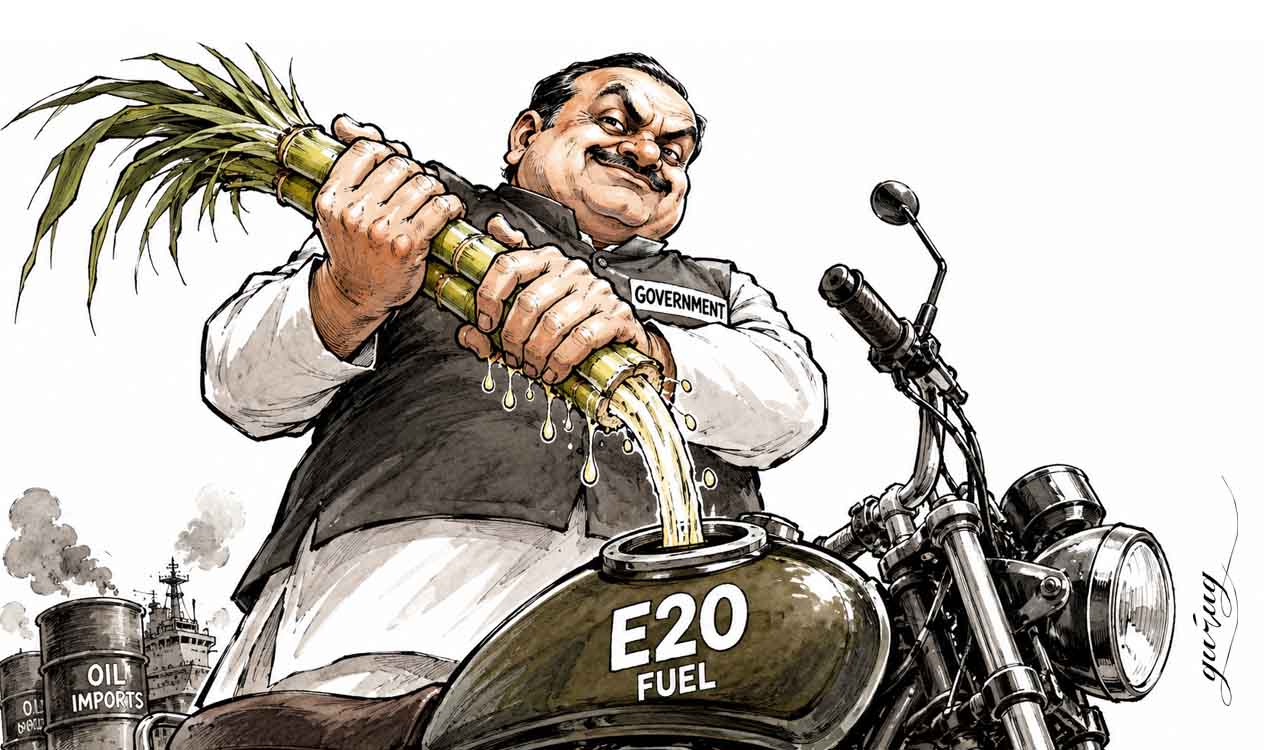


For an economy exposed to volatile global oil markets, exploring alternative fuel sources not only makes immense economic sense but also helps the cause of energy security. The war in West Asia has once again underscored this harsh reality, which is particularly relevant for India as it meets nearly 85% of its crude oil requirements through imports. One way to effectively insulate ourselves from external shocks is to significantly step up ethanol blending as part of a policy to diversify fuel sources. At present, India is implementing the E20 fuel policy — blending 20% ethanol with petrol. With E20 fuel being sold across the country from April 1 this year, India is ahead of its original 2030 target in reaching the significant milestone in energy transition. While there is a strong case for increasing the proportion of ethanol blending to enhance energy security and reduce the oil import bill, concerns of vehicle users and a section of environmentalists should also be addressed fully. There are concerns among vehicle users over reduced mileage, engine corrosion, long-term wear and tear, and warranty issues. The owners of older vehicles should have been offered schemes to help them transition to E20-compatible engines. Ethanol production from sugarcane and rice is highly water-intensive. As ethanol demand has grown, increased sugar production and diversion toward fuel have exacerbated groundwater depletion in already water-stressed regions. The impact on food security is another area of concern.
Though current foodgrain stocks are above the buffer norm, a high probability of an El Niño episode this year could adversely affect monsoon patterns and paddy production. In such a scenario, expanding ethanol production from food-based feedstock could intensify pressure on food availability, making it imperative for policymakers to tread cautiously. Moving from E20 to higher blending ratios would require not only new investments in distilleries, both molasses-based and grain-based, but also expansion of existing facilities. Storage and transportation infrastructure for ethanol would need to be scaled up significantly to accommodate increased supply. These are capital-intensive adjustments that require investment, careful planning, and policy coordination. Also, the automotive ecosystem may not be fully prepared for higher blending levels. Since 2023, new vehicles being sold in India have been made E20-compliant. While the majority of vehicles running in India are not even E20-compliant, moving to higher blends would require further engine modifications. Without such adjustments, consumers could face reduced fuel efficiency and higher maintenance costs, undermining public acceptance of the policy. No doubt, there are multiple uses of ethanol-blended petrol. An increased use of ethanol will ease India’s dependence on crude oil imports and save more than $4 billion annually. This shift not only improves energy security but also provides a buffer against volatile global oil prices, enhancing India’s economic stability. However, significant challenges remain in implementation.
Also Read
Related News