Editorial: Hollowing out of the ‘middle’ — widening gulf between the rich and poor
Paris-based World Inequality Lab’s 2026 report paints a grim picture of highly skewed wealth distribution, urging nations to rethink their growth models
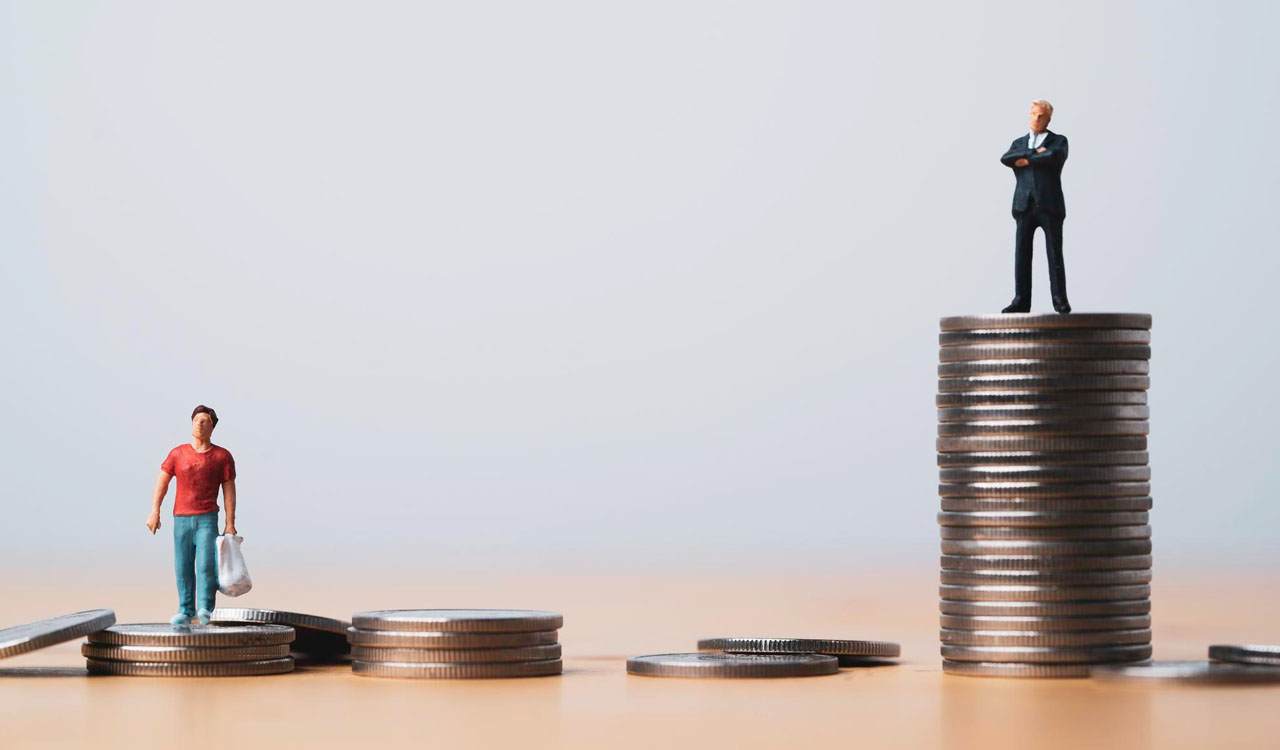


While ‘survival of the fittest’ aptly describes the evolution of living organisms through natural selection, ‘survival of the richest’ appears to be the mantra of modern human history. Across the world, it is the wealthy few who get to dominate a vast majority of the poor. Despite numerous welfare models, the gap between the rich and the poor continues to widen. The latest World Inequality Report 2026 presents a grim picture of wealth distribution that is so skewed that the nations must rethink the foundations of their growth models. Produced by the Paris-based World Inequality Lab, a network of over 200 researchers building on the pioneering work of economists like Thomas Piketty, it represents the global gold standard in tracking distributional accounts. The report says that the richest 10% of the world’s population now owns three-quarters of all personal wealth. Worldwide, living standards are stagnating for many, while wealth and power are increasingly concentrated at the top. Alarmingly, fewer than 60,000 people — 0.001% of the world’s population — control three times as much wealth as the entire bottom half of humanity. It is also found that the top 10% of income-earners earn more than the other 90% combined, while the poorest half captures less than 10% of total global earnings. In almost every region, the top 1% was wealthier than the bottom 90% combined. As a result of this unfair economic model, a tiny minority commands unprecedented financial power, while billions remain excluded from even basic economic stability.
In the case of India, the top 1% population is holding an income share of 22-23%. Though India is regarded as a fast-growing economy, the benefits have largely bypassed the base. The bottom 50% earn less than the global average of their peers, even in purchasing power parity terms. The wealth outcomes are even more skewed, with the top 1% now commanding nearly 40% of the country’s total wealth, a figure that has surged since the 1990s. The report has flagged a disturbing trend: hollowing out of the “middle”. The middle 40% in the country captures only about 30% of total income, significantly lower than the 40-45% seen in more equal economies. This implies that India is not building a broad-based consumer class but rather a dual economy consisting of a tiny, hyper-prosperous elite and a vast, struggling majority. A dangerous implication here is that inequality erodes trust in institutions, fuels political polarisation, reduces participation among poorer citizens and residents, and creates social tensions of different kinds. The findings should prompt policymakers to find ways and means to bridge the ever-increasing gap. Efforts to reduce poverty should make a qualitative difference on the ground. While economists are generally not keen on the imposition of a wealth tax, the government must ensure that the super-rich contribute their fair share to the exchequer.

Related News