Editorial: Hyperloop, a big technological leap
Hyperloop can solve two crucial problems India faces – traffic congestion and carbon emissions
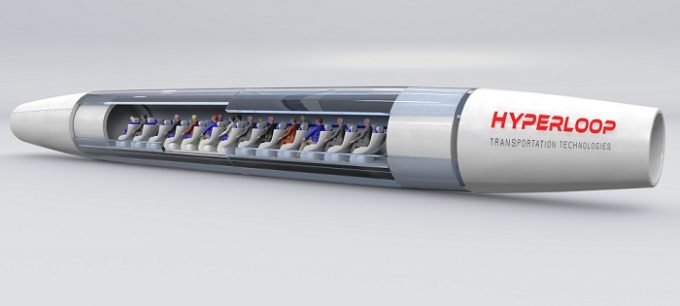


A common lament against India is that despite being endowed with immense talent and human resources, it always lags behind developed countries in pioneering innovations of global impact. Poor spending on research and development (R&D) — less than 1% of the GDP — has been the bane of Indian science. However, the recent successful demonstration of the first hyperloop test track, a high-speed futuristic transportation system, brings much-needed cheer and optimism. It showcases the technological prowess of the Indian research community, despite functioning under a highly bureaucratised system. Hyperloop involves an electromagnetically levitating pod within a vacuum tube, thus eliminating friction and air drag, and potentially allowing the pod to reach speeds up to 1,000 kilometres per hour. The Indian Institute of Technology (IIT), Madras, with support from the Ministry of Railways, has developed the hyperloop test track which is 422 metres long and allows a high-speed train to travel in a near-vacuum tube. Union Minister Ashwini Vaishnaw’s announcement that the Railways will start the first commercial project when the technology has been thoroughly tested and ready is a welcome development. The project is an excellent demonstration of how government-academia collaboration can drive innovations. IIT, Madras, has been given a grant of $2 million and another $1 million is on the anvil for developing the project. The hyperloop track showed that about 350 km can be covered in just 30 minutes. This means that if it is implemented in the real world, passengers can travel from Delhi to Jaipur, which is roughly 300 km, in less than half-an-hour.
Another advantage of this high-speed mass transport system is that it will be marked by immunity to weather, and collision-free commute which can move at twice the speed of a plane, with low power consumption. The science behind it is revolutionary. At its core, hyperloop is engineered to be the fastest mode of surface transportation. Passenger pods move through low-pressure tubes at speeds close to commercial airlines. The Hyperloop can solve two crucial problems India faces – traffic congestion and carbon emissions. While the indigenously developed hyperloop technology holds immense potential to transform India’s mass transport landscape, its implementation poses significant challenges including high construction costs, complex land acquisition, the need for vast infrastructure changes, and a lack of established regulatory frameworks. Building a hyperloop system requires substantial financial investment, including the cost of constructing the vacuum-sealed tube network, specialised pods, and sophisticated control systems, which could be a major barrier to India’s infrastructure budget. The rise and fall of Hyperloop One, backed by American billionaire Richard Branson, should serve as a cautionary tale for how complicated building a hyperloop is. The company was hailed for building the world’s first passenger ride on a high-speed levitating pod system in 2020. However, it shut down because it couldn’t secure any contracts to develop a working hyperloop.
Also Read

Related News