Editorial: Credible progress, but a long way to go
India has made remarkable progress in reducing poverty, but hunger, widening inequality, unemployment, and inadequate job opportunities reveal the challenges that remain
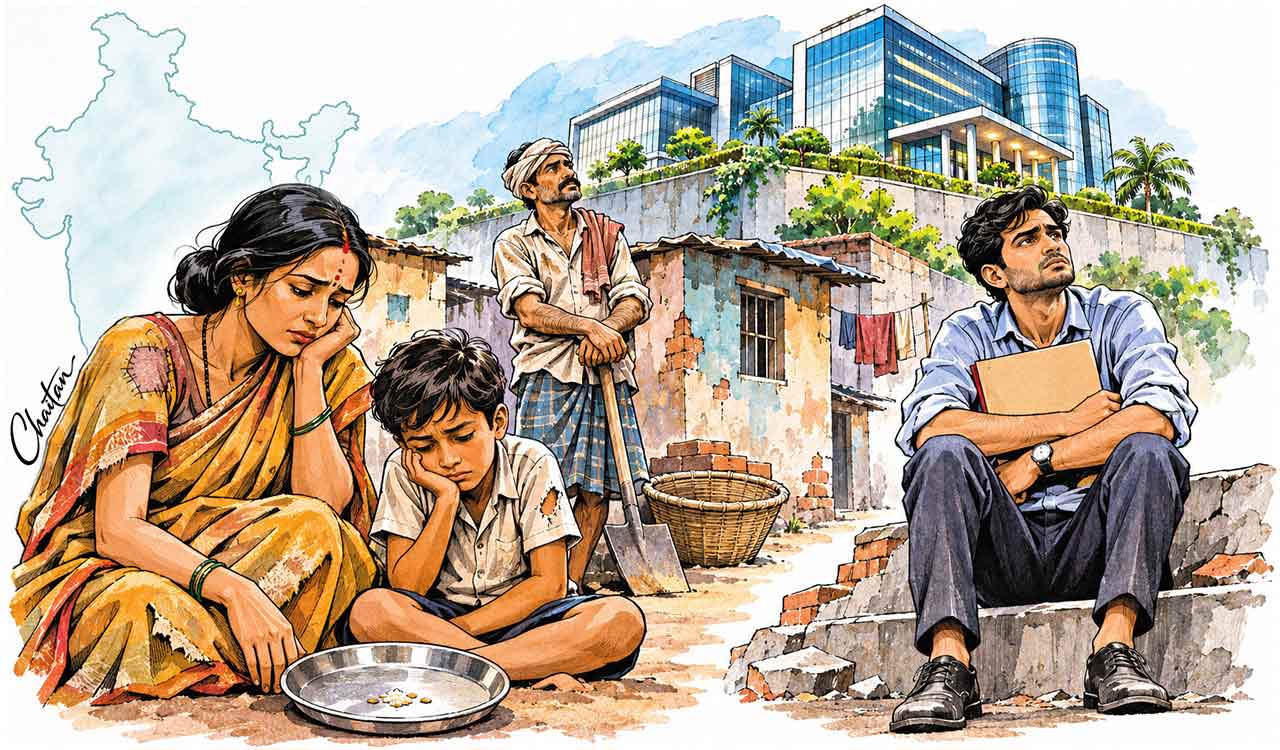


The drastic reduction in poverty levels in India over the last decade is a heartening development, but one should not lose sight of the multiple public policy challenges that lie ahead. According to the World Bank’s Poverty and Equity Brief 2026, India has recorded one of the fastest rates of poverty reduction globally, lifting an estimated 496 million people out of extreme poverty between 2011 and 2023. This is certainly a milestone worth celebrating. However, jubilation must not overshadow the problems that persist. The government must focus on job creation, social security, and greater female participation in the workforce. India’s rank in the 2026 Global Hunger Index — 100th among 122 countries — is a sobering reminder that economic growth does not automatically translate into adequate nutrition and better health outcomes. Child stunting—29.3% among kids under five—and wasting (19%) demand urgent attention. These indicators highlight the gap between rising household consumption and the nutritional well-being of vulnerable sections. The share of India’s population living in extreme poverty fell sharply from 27.1% in 2011 to 2.6% in 2023, marking a significant improvement in the country’s poverty indicators. The decline was also visible at the lower-middle-income poverty threshold of $4.20 per day, measured at 2021 purchasing power parity (PPP). The proportion of people living below this threshold dropped from 57.7% to 16.1% during the same period. However, there are many unresolved issues. The World Bank report itself points to persistent inequalities. Wage disparities remain stark: median earnings among the top 10% of workers were about 13 times those of the bottom 10% in 2023.
Moreover, rising youth unemployment and stagnant real earnings underline the need for better-quality jobs. Increasing inequality, jobless growth, and the agrarian debt cycle are among the challenges. Only 23% of non-farm paid work is formal, while youth unemployment of 13.3% climbs to 29% among graduates. Just 31% of women are in paid work, an enormous untapped engine of growth. The World Inequality Lab 2024 highlights that India’s top 1% controls over 40% of national wealth, indicating a systemic failure to fulfil Article 39(c) of the Constitution, which mandates the state to prevent the concentration of wealth. It is also true that rising consumption and expanded social welfare measures, including food subsidies, have contributed to poverty reduction. The World Bank’s projections suggest that poverty at the $4.20-a-day threshold could fall from 14.2% in 2026 to 12.1% by 2028. The findings underline India’s considerable progress while highlighting the need to address regional inequalities, improve employment quality and raise real earnings to sustain these gains. The World Bank defines poverty as a pronounced deprivation in well-being, in which individuals lack sufficient income or consumption to meet a minimum standard of living. The concept extends beyond income deprivation to include inadequate access to food, healthcare, education, housing, and other necessities.
Also Read

Related News