Editorial: RSS’ outreach to youth
RSS chief Bhagwat's recent remarks were apparently aimed at cautioning the BJP leadership about its attitude towards the youth
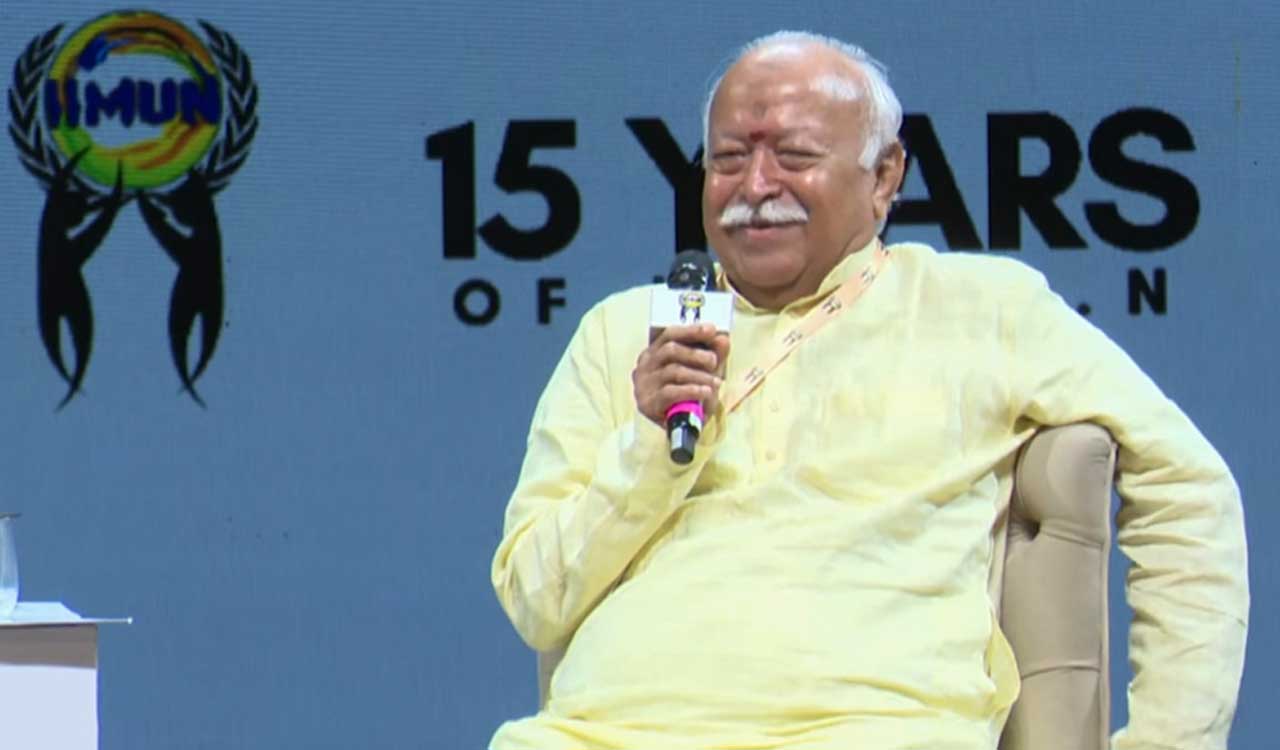


One often gets to witness a familiar ‘good cop, bad cop’ game being played out in Sangh Parivar politics. RSS chief Mohan Bhagwat’s latest comments on Gen Z protests must be seen in this context. Addressing a youth event in Mumbai, the chief BJP’s ideological fountainhead admitted that there were shortcomings in the NDA government’s handling of the student protests at Jantar Mantar. In an interesting formulation, the Sarsanghchalak cautioned against branding young protesters as anti-national, and stressed that concerns over India’s education system were genuine and required engagement rather than dismissal. There is a familiar pattern to his interventions, be it in the case of farmers’ agitation and LGBTQ rights in the past. Bhagwat’s tone of wiser counsel must be understood in the context of the Sangh’s long-standing role as the ideological mentor that periodically urges its political arm towards course correction. The RSS supremo argued that protest was a legitimate form of democratic dialogue and governments must engage with agitators in finding solutions to the problems. The interventions by the RSS chief typically acknowledge the government’s broad direction while identifying deficiencies in implementation, communication or political strategy. The latest remarks were apparently aimed at cautioning the BJP leadership about its attitude towards the youth. Bhagwat’s remarks, made in the wake of a nationwide outrage over exam irregularities and the July 20 police crackdown on youngsters in New Delhi, reaffirm a fundamental democratic principle: protest is a legitimate form of dialogue. It remains to be seen how the BJP and its government respond to his message.
The Centre was forced to accede to the students’ demand for the resignation of Dharmendra Pradhan as Union education minister. The optics changed fast since then. Prime Minister Narendra Modi, who once addressed young Indians almost exclusively through the grand abstraction of Viksit Bharat, is now doing selfie videos and informal reels. BJP ministers have been instructed to get active on Instagram. For Punjab and Uttar Pradesh voters heading toward the 2027 Assembly elections, and for the country bracing for 2029, the uncomfortable question voters are entitled to ask is not whether Modi has finally noticed the plight of the youth. It is why it took a street revolt to make him look. The youth unrest is not occurring in a vacuum. It sits atop a genuinely deteriorating economic backdrop that the reel campaign cannot paper over. Bhagwat’s acknowledgement that the grievances of young people are genuine reflects the growing frustration among students over issues such as paper leaks, unemployment and the quality of education. His call for greater investment in education and meaningful engagement with the youth highlights the urgent need for institutional reforms rather than dismissive rhetoric. The RSS is not only reaching out to the young generation but also showing the BJP how to go about it.
Also Read

Related News