Editorial: Stop harassing sex workers
By drawing a clear distinction between voluntary adult sex work and commercial sexual exploitation through trafficking, the Supreme Court ruling strengthens the rights and dignity of consenting adult sex workers
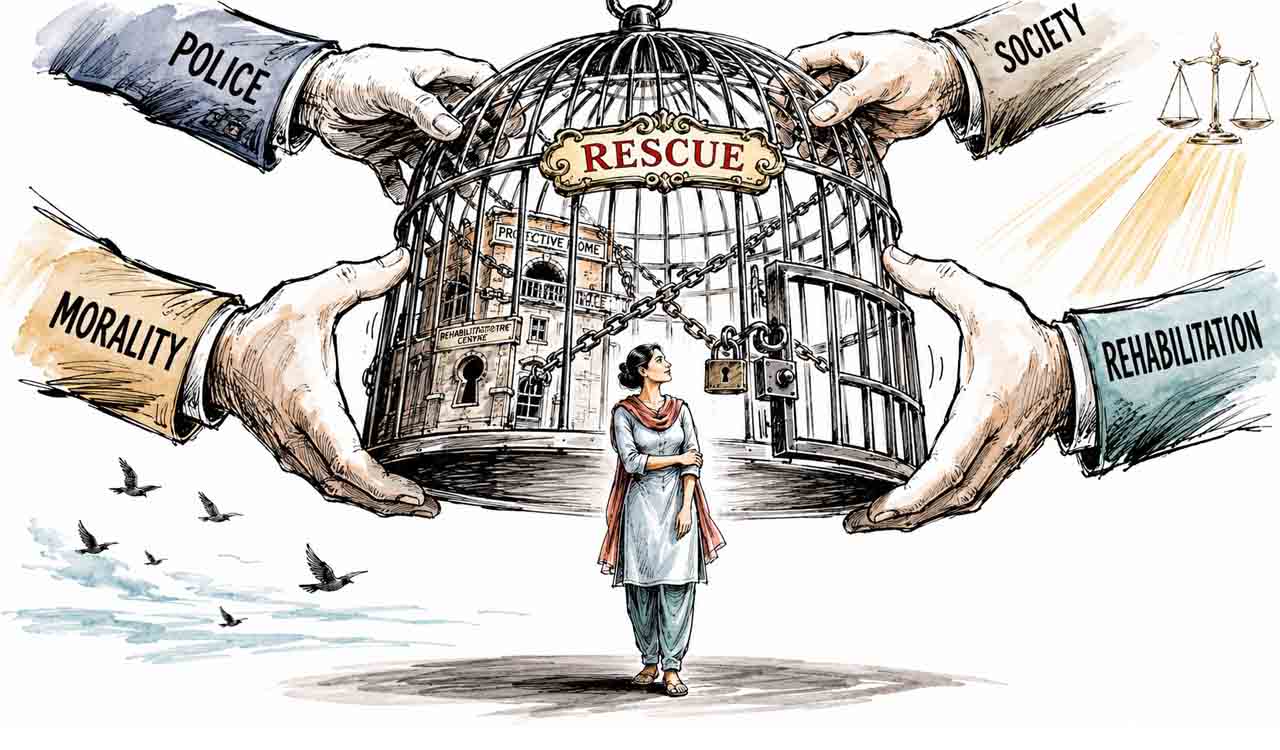


One often finds a common thread of lazy moralising running through media coverage of incidents involving the arrest of sex workers in police raids. A liberal sprinkling of patronising sermons is thrown in, and judgements are passed on declining moral standards among women and how they are falling prey to immoral, materialistic culture. Typically, in these police raids, women are ‘rescued’, bundled into vans, paraded before cameras, and deposited in protective homes. This overarching patriarchal mindset defines societal prejudices against prostitution. By characterising a person as immoral or fallen, it becomes easier for law enforcement and civil society alike to treat voluntary adult sex workers as people who are less deserving of dignity and legal protection. The Supreme Court has now categorically said this must stop. In a landmark ruling, putting the Immoral Traffic (Prevention) Act (ITPA) in its proper perspective, the apex court observed that the provisions of the 70-year-old law do not empower the police to crack down on adults engaged in voluntary sex work, as the practice itself is not illegal. It has drawn a clear distinction between voluntary adult sex work and commercial sexual exploitation through trafficking. The SC bench, comprising Justice JB Pardiwala and Justice R Mahadevan, said the police should refrain from harassing adults participating in sex work of their own free will. The victims cannot be treated as passive objects of rescue and rehabilitation, and their choices and autonomy must be respected.
The top court also rejected the paternalistic assumptions under the existing framework of Section 17 of the ITPA. It noted that the provision often treats all persons rescued from prostitution-related situations in the same manner, regardless of whether they were trafficked, coerced, or had voluntarily engaged in sex work. Such a ‘one-size-fits-all’ approach does not take into account the different realities of those produced before magistrates. The court’s ruling places emphasis on consent and individual circumstances in matters concerning rehabilitation and protective placement. A clear distinction must be made between victims of trafficking — who need protection, rehabilitation, and the full force of the law on their side — and consenting adult sex workers, who need something entirely different: to simply be left alone. The ITPA, enacted in 1956, is a product of post-Independence moral anxiety and has led to predictable consequences. It has driven sex work underground, away from the oversight and protection that a regulated environment might offer. It has made sex workers entirely dependent on pimps and middlemen who extract a price for providing the protection the law withholds. And it has handed the police a weapon — not to protect the vulnerable, but to harass. The Supreme Court has now exposed the harsh realities behind the curtain of this apparatus. The legal and constitutional response to trafficking cannot be built on an assumption that every person engaged in prostitution is necessarily a trafficked victim.
Also Read

Related News