Fact vs fiction: Government debunks myths around India’s E20 fuel programme
The Centre rejected several viral claims about India's E20 fuel programme, saying scientific studies found no significant engine, warranty or safety issues. It said ethanol blending supports energy security, reduces emissions, saves foreign exchange and benefits farmers while following established global practices
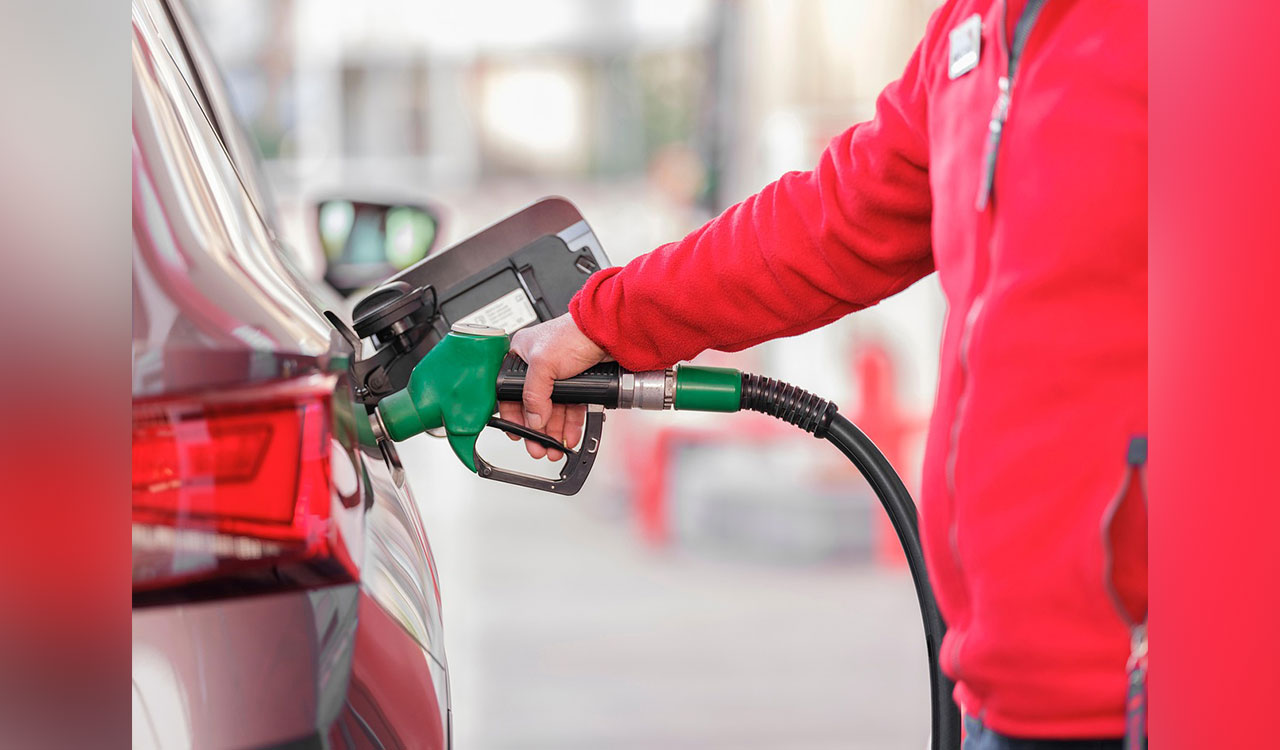


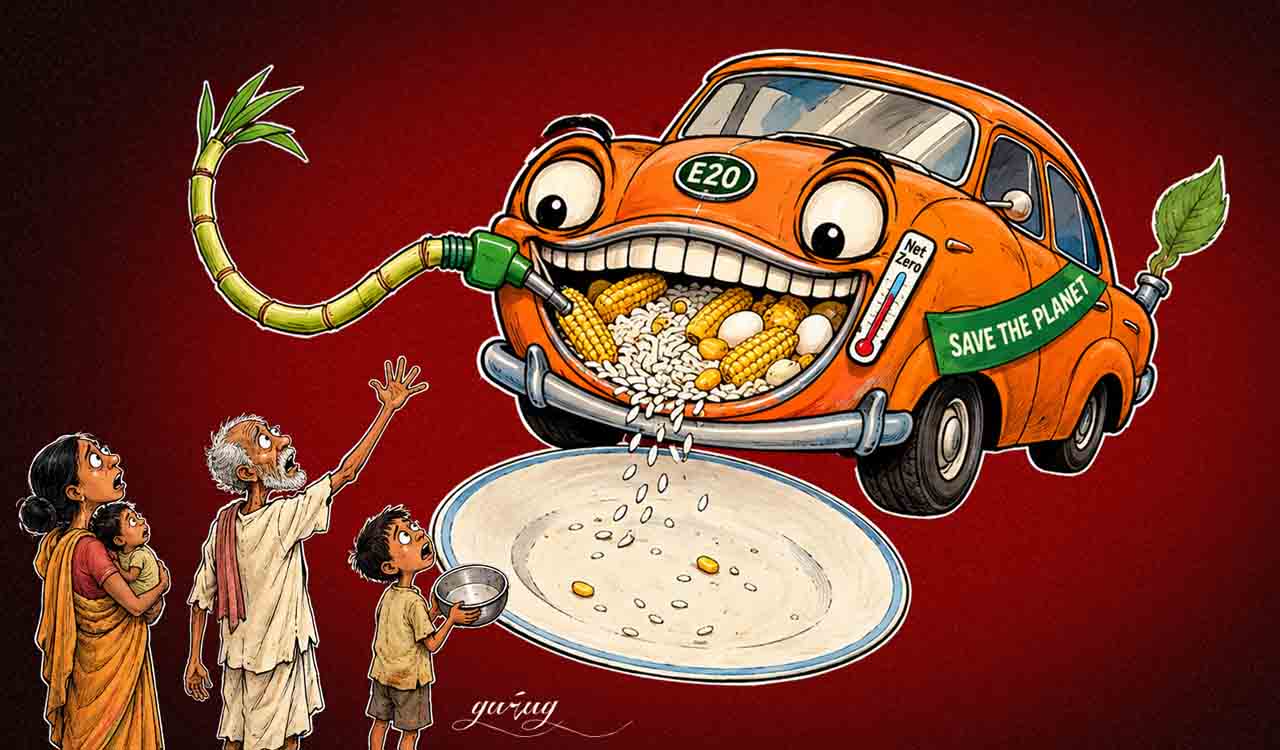
New Delhi: As India expands its Ethanol Blended Petrol (EBP) Programme, a series of claims surrounding E20 fuel have gained traction on social media, raising concerns over water consumption, food security, vehicle performance, engine compatibility and environmental impact.
However, a review of scientific studies, technical assessments and official clarifications, showed that many of these claims are either misleading or factually incorrect.
One of the most widely circulated assertions is that producing one litre of ethanol requires 10,000 litres of water.
The data argued that this figure incorrectly attributes the entire agricultural water footprint of crops such as paddy to ethanol production.
It pointed out that paddy and wheat are primarily cultivated because of the Minimum Support Price (MSP) system and assured procurement by the Food Corporation of India (FCI) for national food security, rather than for ethanol production.
The actual industrial water consumed inside modern ethanol distilleries is stated to be around 3–5 litres per litre of ethanol, with Zero Liquid Discharge (ZLD) technology enabling extensive recycling.
Another recurring criticism has described E20 as an untested experiment. Government agencies reject this characterisation, noting that ethanol has been used as a transport fuel for well over a century.
Henry Ford’s 1908 Model T was designed to operate on ethanol, gasoline, kerosene or combinations of these fuels. Today, ethanol-blended fuels are widely used internationally.
The United States has adopted E10 as its standard petrol, with E15 expanding under government support and millions of flex-fuel vehicles capable of using blends up to E85.
Brazil currently mandates E27 fuel and has decided to increase blending to around 35 per cent, while more than 80 per cent of new passenger vehicles sold there are flex-fuel models. Countries including Canada, Thailand, Japan and several European nations also use ethanol blends in transport fuels. Officials therefore describe India’s E20 rollout as being aligned with established global practices.
Concerns regarding vehicle mileage have also featured prominently in public discussions. According to studies led by the Automotive Research Association of India (ARAI) in collaboration with Indian Oil Corporation Limited (IOCL), the Indian Institute of Petroleum (IIP), Dehradun, and the Society of Indian Automobile Manufacturers (SIAM), field trials covering 40,000 kilometres for passenger cars and 20,000 kilometres for two-wheelers found no significant adverse impact on vehicle performance.
Questions over engine damage and corrosion have likewise been addressed through technical studies. Following directions issued by the Government in 2014, ARAI conducted detailed assessments of material compatibility and emission performance in partnership with IOCL, IIP-Dehradun and SIAM.
The studies reportedly found no issues relating to drivability, cold starting, or compatibility with metallic and plastic components.
The same trials also recorded environmental benefits, with carbon monoxide emissions reduced by around 50 per cent in two-wheelers and approximately 30 per cent in four-wheelers, while unburnt hydrocarbon emissions declined by about 20 per cent compared with conventional petrol.
Claims suggesting that motorists could lose insurance coverage or manufacturer warranty by using E20 fuel have also been rejected. According to the data, both insurance companies and automobile manufacturers have clarified that using E20 fuel does not invalidate insurance policies or vehicle warranties, provided the fuel meets prescribed specifications.
SIAM has similarly stated that warranty obligations remain applicable for vehicles operating on E20 fuel. The Press Information Bureau’s Fact Check unit also described such claims as incorrect.
Social media has also witnessed viral posts alleging that ants and bees are attracted to vehicle fuel caps because ethanol contains sugar. Bharat Petroleum Corporation Limited (BPCL) dismissed these claims, explaining that fuel-grade ethanol undergoes fermentation and distillation processes that remove residual sugars before blending.
In addition, fuel ethanol contains denaturants that repel insects, while the characteristic hydrocarbon odour of petrol dominates after blending. BPCL further noted that ethanol-blended petrol produces lower fuel vapour than conventional petrol, leaving no identifiable attractant for insects.
Another controversy arose after reports claimed that the Government had described E20 as an “experiment” during proceedings before the Supreme Court. The Office of the Attorney General for India subsequently clarified that the case related solely to contractual provisions governing ethanol procurement from Dedicated Ethanol Plants by Oil Marketing Companies, including annual allocation methodology and the interpretation of the “best endeavour” clause.
According to the Attorney General’s Office, no submission was made describing the E20 programme as an experiment, and media organisations were urged to report judicial proceedings accurately.
The Ministry of Petroleum and Natural Gas has also addressed concerns that E20 fuel allows water to enter vehicle fuel tanks. The Ministry stated that water ingress is undesirable irrespective of the type of fuel being used and emphasised that modern vehicles are equipped with safeguards designed to prevent such contamination.
Several viral videos have purported to show sugarcane juice being mixed directly with petrol or ethanol-blended fuel separating into different layers. The Ministry has dismissed these videos as fabricated and misleading.
Responding to criticism that ethanol plants deplete groundwater, pollute the environment and harm agriculture, the government said modern ethanol facilities operate under strict environmental regulations.
The government has also highlighted the broader achievements of the Ethanol Blended Petrol Programme between Ethanol Supply Year 2014-15 and May 2026. According to official figures, the programme has generated foreign exchange savings exceeding Rs 1.90 lakh crore, facilitated more than Rs 1.60 lakh crore in payments to farmers, reduced carbon dioxide emissions by around 930 lakh metric tonnes and substituted over 310 lakh metric tonnes of crude oil.

Related News