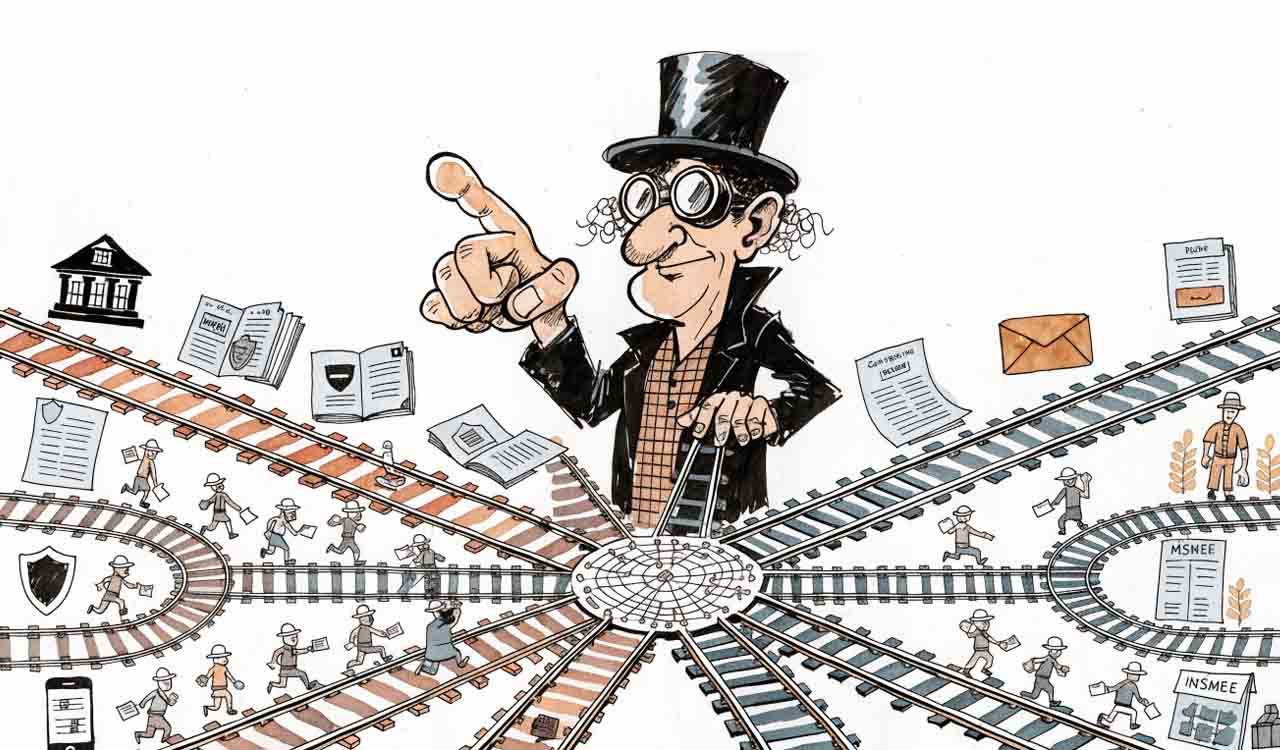
Opinion: Fuelling cars, emptying plates—the hidden costs of India’s ethanol policy
The drive for ethanol comes at the cost of water security, food affordability and vulnerable households


By Vivek Singh and Dr Gaurav Sushant
India is focusing on promoting E20 petrol as a major step towards ensuring energy security, reducing oil imports, supporting the rural economy and advancing climate action. Policymakers assume that higher ethanol blending rates will diversify energy sources and reduce the carbon footprint of hydrocarbons. Nevertheless, the ethanol push may overshadow some critical questions about whether a country with acute water stress, pervasive malnutrition, and food insecurity can afford to sacrifice scarce resources for the sake of fuel.
Ethanol has been championed as a green alternative on environmental grounds, but a sustainable energy transition calls for weighing the costs and benefits across different domains, including water, food, health and equity. That is why ethanol-fueled vehicles and the policy that promotes them warrant a closer look.
Immediate Concern
First, the most immediate concern is the impact of ethanol production on water security. India is home to roughly 18 per cent of the world’s population, but has only 4 per cent of the world’s freshwater resources. With 600 million people already living under high to extreme water stress, the situation is approaching catastrophic levels. According to the Composite Water Management Index report published by NITI Aayog in 2018, 70 per cent of water in India was already polluted, reflecting severe water quality challenges across the country.
Turning crops into fuel has consequences far beyond the petrol pump. In a country with a vast informal workforce, higher food prices, pressure on water and rising household costs could hit the poorest hardest, even as India pursues its carbon-reduction goals
With that in mind, ethanol deserves special scrutiny. After all, ethanol is mostly made from water-intensive feedstocks such as sugarcane and corn (maize). Enhancing ethanol blending will therefore necessarily increase demand for these crops, and ultimately, affect water availability. At a time when many parts of India are already grappling with a water crisis, meeting fuel security goals at the cost of water security could be a costly mistake.
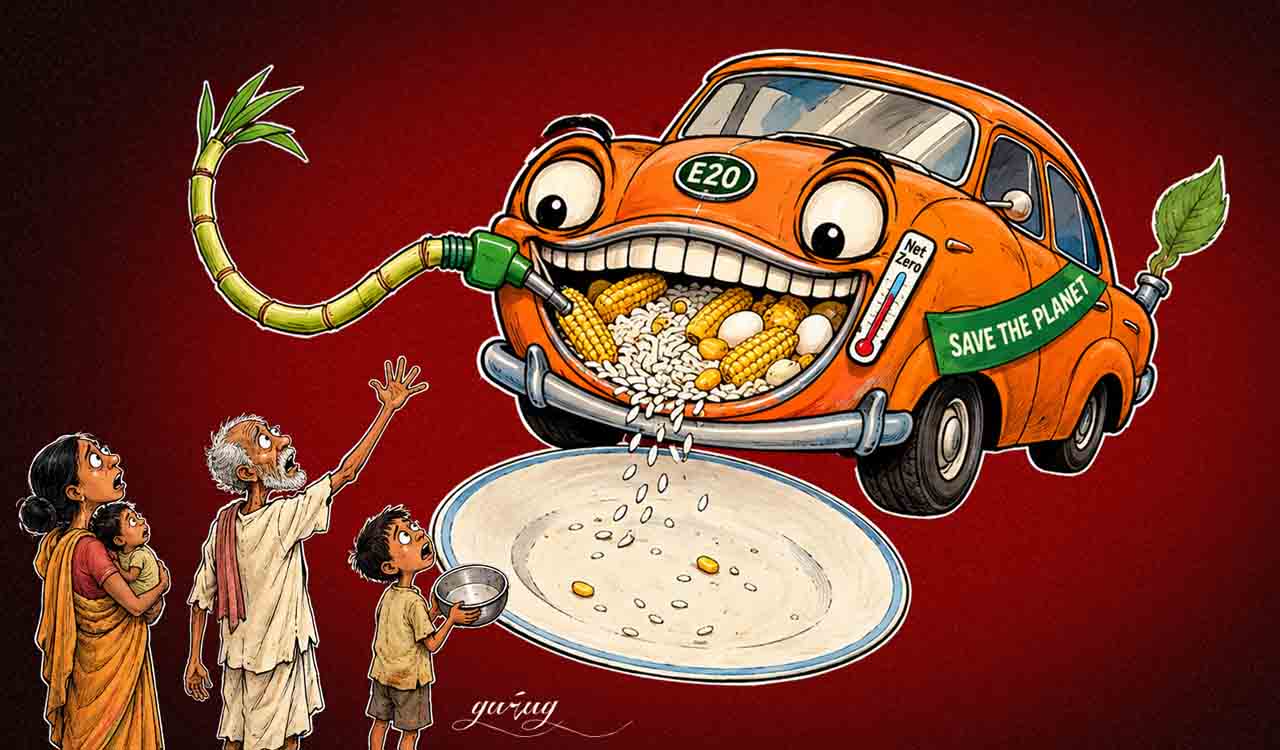
Second, there is concern that ethanol production could affect food security in India. Since ethanol requires water and arable land for feedstock production, expanding its use threatens the country’s capacity to produce food. This is a matter of national security as well as social justice, given the high levels of malnutrition in the country.
Disingenuous Argument
Although ethanol proponents insist that using feedstocks for fuel will not affect food production, this argument is disingenuous at best. India faces periodic foodgrain surpluses and, hence, has more than enough to satisfy its needs. At the same time, there are deep-seated issues with food distribution and severe food insecurity.
The ethanol industry poses a major risk by diverting scarce resources into fuel production when they could be used to address India’s complex food distribution and supply chain problems. In addition, ethanol production involves significant opportunity costs in terms of land, labour and capital.
For example, India used to use broken rice as livestock feed, but it is now in great demand for ethanol production. As a result, feedgrain prices are rising, which in turn increases the costs of raising animals in the dairy and poultry industries. These costs are then passed on to consumers, who face higher prices for eggs, milk and poultry meat.
Overall, the ethanol-fuelled inflationary spiral has far-reaching consequences. By increasing the prices of healthy food, the ethanol industry pushes vulnerable populations toward cheap, calorie-dense, but nutritionally poor food. As a result, chronic malnutrition, hidden hunger and related health issues such as stunting among children and anaemia among women become major public health concerns.
In addition, the ethanol-fuelled rise in prices aggravates India’s severe poverty problem by lowering the purchasing power of the bottom 20 per cent of the population. For reference, according to the Ministry of Statistics and Programme Implementation Household Consumption Expenditure Survey, food accounts for around 46 per cent of rural households and 39 per cent of urban household consumption. For lower-income and marginalised sections, this share is around 60 per cent, leaving them highly exposed to rising food prices and sudden market shocks.
Challenge to SDGs
Ethanol-fuelled cars also pose a significant challenge to India’s sustainable development goals. In pursuing net-zero emissions, India runs the risk of undermining its own development agenda. Promoting ethanol-blended petrol will exacerbate India’s water and food security challenges while also aggravating the poverty problem.
Ethanol production is estimated to require massive amounts of groundwater and put a strain on the country’s water resources, threatening Sustainable Development Goal (SDG 6) (Clean water and sanitation). An aggressive promotion of the use of ethanol-blended transport fuels can also result in negative implications for food security. It can lead to an increase in the cost of feed, thus resulting in higher prices for meat, milk, and eggs.
This can create significant challenges for low-income households, which would have to spend a large share of their income on food. Moreover, such a spike can cause a shift towards cheaper, less nutritious food. Ultimately, aggressive promotion can undermine the goals of zero poverty and zero hunger, defined by Sustainable Development Goals 2 and 1.
On the other hand, the benefits of ethanol-blended petrol are far from clear-cut. Ethanol has lower energy density than gasoline, which means that more fuel is required to travel the same distance. The ethanol industry also affects many livelihoods, ranging from farmers to transport workers and mechanics.
While automakers are adapting to the new environment by manufacturing E20-compatible cars, millions of older vehicles are not equipped to handle such high ethanol blends. As a result, car owners may incur higher maintenance costs, while ethanol-fuelled cars may have lower fuel efficiency. In the context of India’s huge informal sector, these costs will be especially crippling for low- and middle-class families. In other words, ethanol-fueled cars will penalise millions of car owners in pursuit of national carbon-reduction targets.
Taken together, these costs constitute the hidden toll of ethanol-fuelled vehicles. As a result, state-mandated ethanol production requires higher groundwater exploitation and threatens to make food less affordable. This, in turn, has negative implications for India’s water security, public health, and poverty.
Hence, moving toward E20 ethanol calls for reconsidering the entire fuel production chain, scrutinising whether it truly serves national interest, and understanding the full set of opportunity costs. While India should strive to reduce its oil dependency, it must proceed carefully, evaluating the trade-offs associated with alternative fuels
A sustainable solution would be to promote a shift to clean electricity and public transport to decouple energy production from ethanol, food, and water.
(Vivek Singh is a PhD Research Scholar, School of Social Sciences and Humanities, and Dr Gaurav Sushant is Assistant Professor [Senior], Department of Languages, School of Social Sciences and Languages, VIT University, Vellore)

Related News