Hasina accuses unelected rivals of using courts to oust her, thanks PM Modi for support
Former Bangladesh PM Sheikh Hasina accused a small group of unelected politicians of seizing state power and using courts to eliminate her politically. In an exclusive interview, she termed the verdict against her biased, flagged foreign interference, and thanked Prime Minister Modi for support during her crisis.
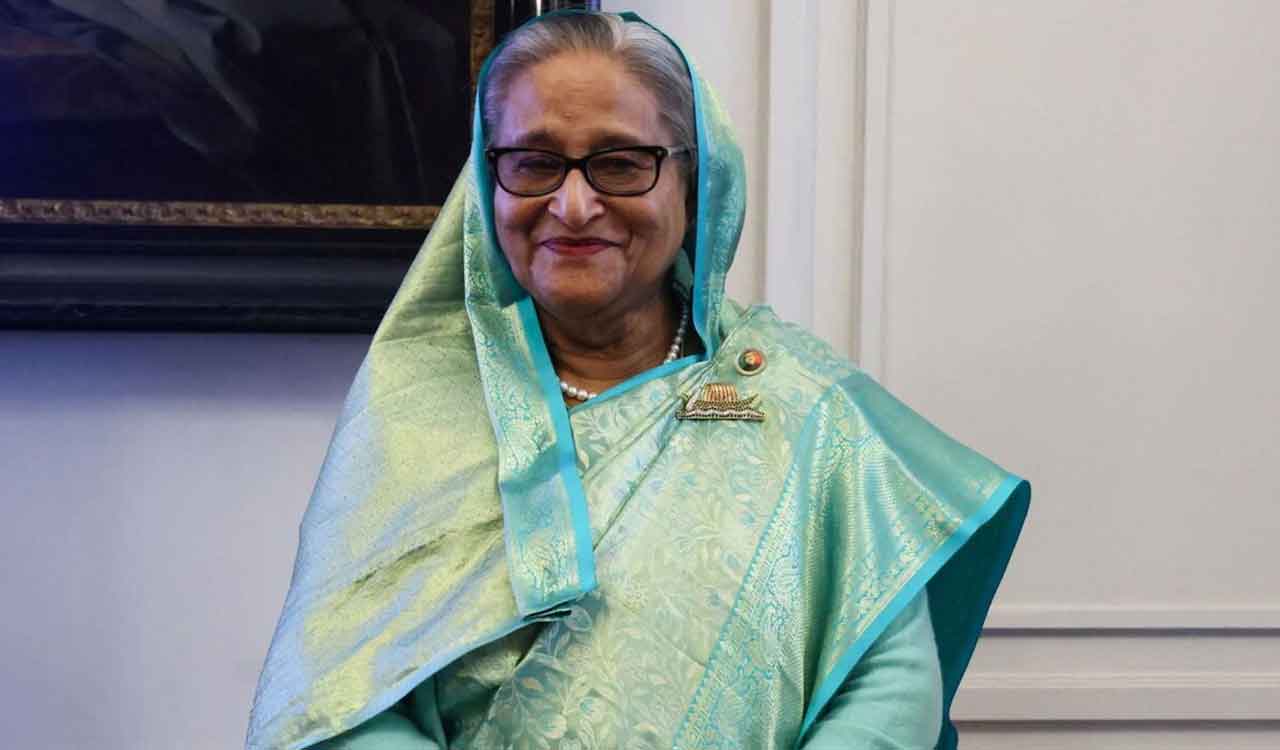


New Delhi: Former Bangladesh Prime Minister Sheikh Hasina has said that a group of small, self-serving, unelected politicians have seized the levers of state, who are using the court to remove a political rival. She also expressed gratitude to PM Modi, saying, “grateful to Prime Minister Narendra Modi” and the people of India for their support during her time of crisis.
In an email interview with IANS, Hasina also strongly criticised the interim government in Dhaka, calling the verdict against her “biased and politically motivated,” while raising concerns over electoral reforms, foreign interference, and the banning of the Awami League.
Below is the full interview:
IANS: How do you assess Prime Minister Modi’s role in Bangladesh’s current situation?
Sheikh Hasina: India is a vital neighbour and partner. I value Prime Minister Modi’s support and the longstanding ties between our countries. At a personal and diplomatic level, I am grateful for the refuge I have been afforded in a time of danger. Strong bilateral relations with India are in Bangladesh’s interest, and they can help ensure lasting regional stability.
IANS: How has Prime Minister Modi helped you in your time of crisis?
Sheikh Hasina: I do not wish to talk about private conversations and relationships; however, I will say that I remain grateful to the people of India for their continued support.
IANS: You have called the verdict of the ICT “biased and politically motivated”. Why?
Sheikh Hasina: These charges have been brought by a kangaroo court that is controlled by a cadre of my political opponents, who have seized power undemocratically. A small group of self-serving and unelected politicians has seized the levers of the state and is using the court to try and remove a political rival.
Numerous respected and unaligned legal voices around the world have spoken up to voice the same opinion. I wasn’t given proper legal representation at the trial, nor the chance to challenge the very weak and unconvincing evidence that was offered against me. The whole process was a judicial farce contrived to deliver a predetermined verdict.
IANS: Do you believe that the Mohammed Yunus-led interim government is working with foreign forces hostile to Bangladesh’s interests?
Sheikh Hasina: I do not wish to delve too far into speculation, but there are troubling signs of outside interference in our national affairs. I have repeatedly warned against foreign meddling that exploits domestic divisions. Any credible allegations that are made should be investigated transparently. Bangladesh must be free to resolve its problems through its own institutions and sovereign will, not through outside influence.
IANS: Do you believe the upcoming elections in Bangladesh have already been managed by the current government?
Sheikh Hasina: Free, fair and participatory elections are the foundations of legitimate government. If the interim authorities seek to manage outcomes rather than enable a level playing field, this would be an assault on our democracy. I call for independent international observers, clear electoral timetables and guarantees that all parties and candidates can campaign without intimidation.
However, banning the Awami League makes all of those recommendations obsolete as millions of our supporters will likely stay at home. You cannot ban the most popular party in the country and present it as being free and fair.
IANS: Will your party take part in the elections or boycott them?
Sheikh Hasina: As it stands, my party is banned from participating in next year’s elections. This is not a boycott; this is disenfranchisement of millions of voters. Should this still be the case when the elections are held, you will probably see our supporters simply stay at home rather than participate in a faulty election.
IANS: Has religious and political persecution in Bangladesh crossed all limits, as some claim?
Sheikh Hasina: Any persecution on grounds of religion or politics is unacceptable. I reject violence and oppression in all forms. Under my leadership, we sought law and order while protecting civic rights. If abuses have occurred, they must be investigated and individual culpability established through fair legal processes. Blanket claims should not substitute for proper, impartial inquiry.
IANS: Khaleda Zia is in critical condition, and Bangladesh has deployed a force to guard her in the hospital. How would you like to remember her?
Sheikh Hasina: I am gravely concerned to hear that Begum Khaleda Zia is ill and will pray that she can make a recovery.
IANS: Your niece, UK lawmaker Tulip Siddiq, was sentenced in absentia in a land deal case. Your reaction?
Sheikh Hasina: Trials in absentia and the conviction of a British lawmaker raise serious questions about due process and fairness. My family members have always denied wrongdoing. I believe justice must be open, transparent and consistent with international standards. Yunus is using these prosecutions as a smokescreen to distract attention from his own governance failings and to suppress a political party that was elected nine times since Independence. This verdict serves only the political interests of Yunus and his ragtag coalition of extremists and opportunists.
It certainly doesn’t serve Bangladesh’s interests, not least because it worsens our diplomatic relations with the UK, an important trading and development partner. The way these proceedings have been handled has damaged confidence in Bangladesh and will draw concern from the international community.
IANS: Bangladesh is undergoing severe economic distress. What, in your view, are the reasons?
Sheikh Hasina: Bangladesh’s long-term fundamentals remain strong, but short-term turmoil has clearly hit growth, investor confidence and reserves. Even my harshest critics would agree that we spearheaded an economic miracle in Bangladesh, one I am extremely proud of. Restoring stability, rebuilding investor confidence, and moving quickly on credible fiscal and structural reforms must be the priority now to ensure all that progress isn’t washed away. The IMF and independent analysts have already flagged slowing growth and elevated inflation, which will inevitably hurt the most vulnerable in our country.
IANS: Is Pakistan capturing institutions and critical resources of Bangladesh after your departure?
Sheikh Hasina: It is in Bangladesh’s national interest to have a constructive relationship with Pakistan, but it must be measured and balanced. We cannot allow for this unelected government to speed ahead headlong and with total disregard into ever deeper ties with Pakistan. Bangladesh must guard its sovereignty and remember its integral role in the region to ensure continued stability.
IANS: There are rumours that a foreign hand — particularly the United States — was behind your ouster. Your response?
Sheikh Hasina: The United States has publicly denied involvement, and so far, no definitive proof has been presented in the public domain that contradicts this. Accusations without evidence risk distracting from the real work of restoring stability, accountability and national unity.

Related News