Historic event: First dead satellite safely assisted for re-entry to avoid space debris
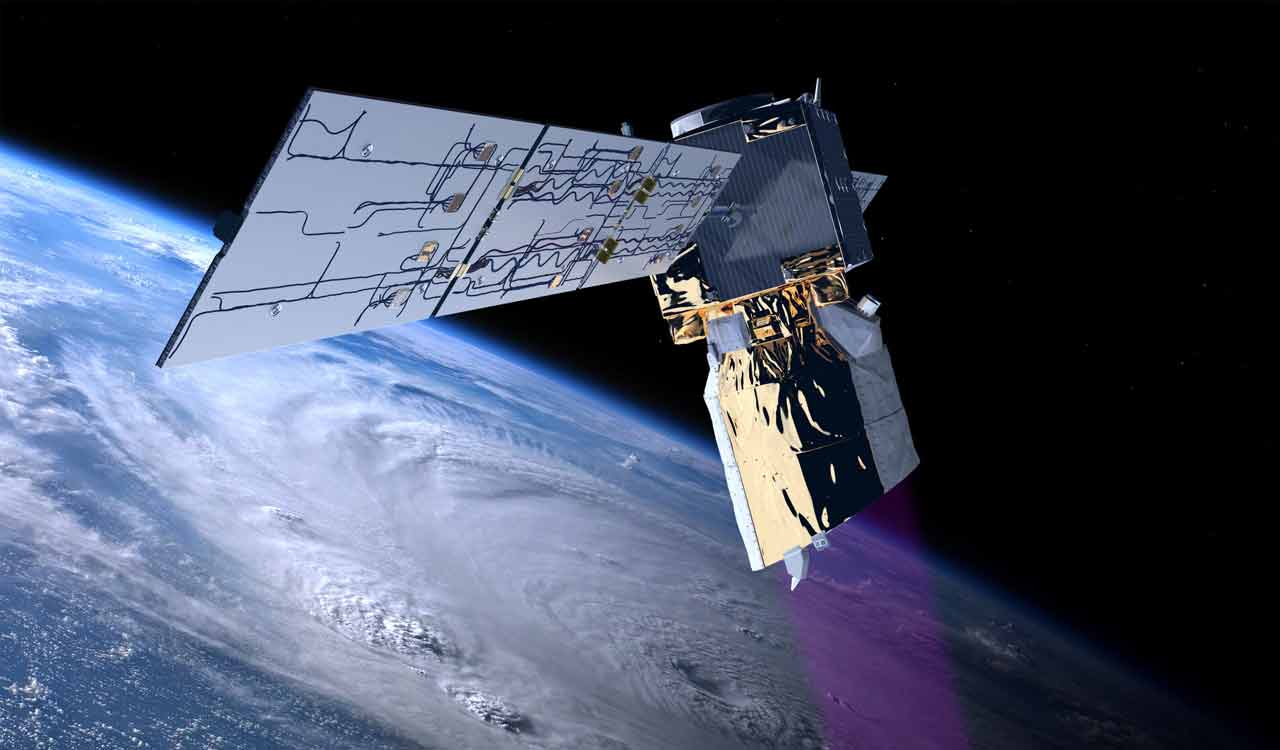
ESA's Aeolus spacecraft, renowned as the wind mission, skillfully executed a re-entry into Earth's atmosphere under the guidance of ESA mission officials after depleting its fuel. It successfully touched down in Antarctica on July 28.


Paris: The European Space Agency’s (ESA) Aeolus has become the first ever dead satellite that was assisted back to earth in a bid to avoid space debris.
The Aeolus spacecraft, also known as ESA’s wind mission, was guided to re-enter Earth’s atmosphere, after running out of fuel by the mission officials at ESA. It landed in Antarctica on July 28.
Also Read
The US Space Command “confirmed Aeolus reentered Earth’s atmosphere on 28 July at around 21:00 CEST (12:30 am IST) above Antarctica,” ESA Aeolus Mission wrote on Twitter.
Launched in August 2018 to monitor Earth‘s winds, the 1,360 kilograms satellite surpassed scientific expectations and exceeded its planned life in orbit. It has been hailed as one of ESA’s most successful Earth observation missions.
The reentry comes after a series of complex manoeuvres that lowered Aeolus’ orbit from an altitude of 320 km to just 120 km to reenter the atmosphere and burn up.
Crucially, these manoeuvres — the first assisted reentry of its kind — positioned Aeolus so that any pieces that may not have burned up in the atmosphere would fall within the satellite’s planned Atlantic ground tracks.
“This pioneering reentry was a monumental task faced with determination, skill and effort to make space safer and more sustainable,” Tommaso Parrinello, Aeolus and CryoSat ESA Mission Manager wrote on Twitter.
“Every team involved, from the Aeolus mission team to mission control, space debris and industry, has achieved something truly special,” Parrinello added.
After running out of fuel and without intervention, Aeolus would have reentered Earth’s atmosphere naturally within a few weeks from now — but with no control over where this would happen. But, ESA went above and beyond for Aeolus and attempted a new way of assisting its reentry to make it even safer.
A team of spacecraft engineers, flight dynamics experts and space debris specialists at ESA’s ESOC mission control centre in Germany used the satellite’s remaining fuel to carry out a series of burns to lower Aeolus and place it into the best position to reenter.
“This is quite unique, what we’re doing. You don’t find really examples of this in the history of spaceflight,” Holger Krag, head of ESA’s Space Debris Office, said during a press briefing.
“This is the first time to our knowledge [that] we have done an assisted reentry like this,” Krag added.
Satellites and rocket parts fall back to Earth roughly once a week, and pieces that survive have only very rarely caused any damage, so the risk of Aeolus causing harm was always incredibly small. In fact, the chance of being struck by a piece of debris is three times less than being struck by a meteorite.
The success of Aeolus’ reentry can potentially be applied for other satellites that are at the end of their lives, the officials said.
Aeolus mission not only benefited science in terms of contributing to climate research, but its data were also used operationally in weather forecasts, which proved essential during the Covid lockdown when aircraft, which carry weather instruments, were grounded, they said.

Related News
-

India, France step up space cooperation with new private-sector deals
-
Preity Zinta relishes her favourite Kadhi Chawal in Paris while down with fever
-
BAPS Swaminarayan Hindu Mandir in Paris set for historic September inauguration
-
European troops, warplanes join Paris Bastille Day parade in show of unity for Ukraine