How solar particles interact with planets and celestial bodies
The Sun releases a constant stream of particles and magnetic fields called the solar wind. This solar wind slams worlds across the solar system with particles and radiation which can stream all the way to planetary surfaces unless thwarted by an atmosphere, magnetic field, or both. Comet As the comet gets closer to the Sun, […]
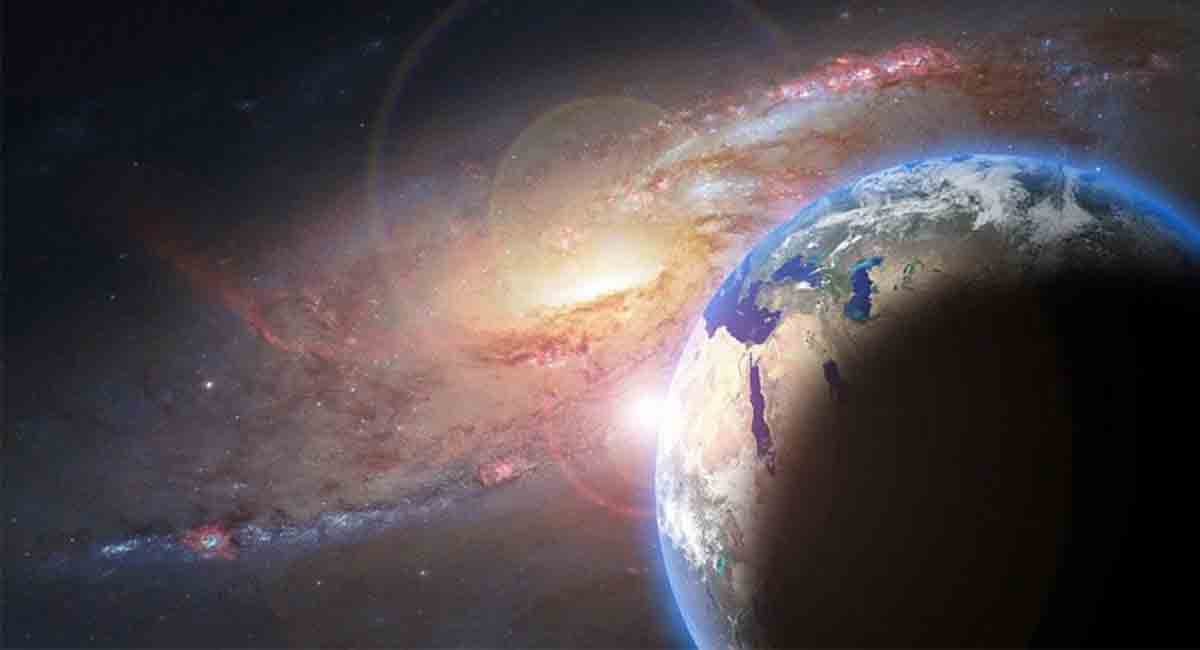


The Sun releases a constant stream of particles and magnetic fields called the solar wind. This solar wind slams worlds across the solar system with particles and radiation which can stream all the way to planetary surfaces unless thwarted by an atmosphere, magnetic field, or both.
Comet
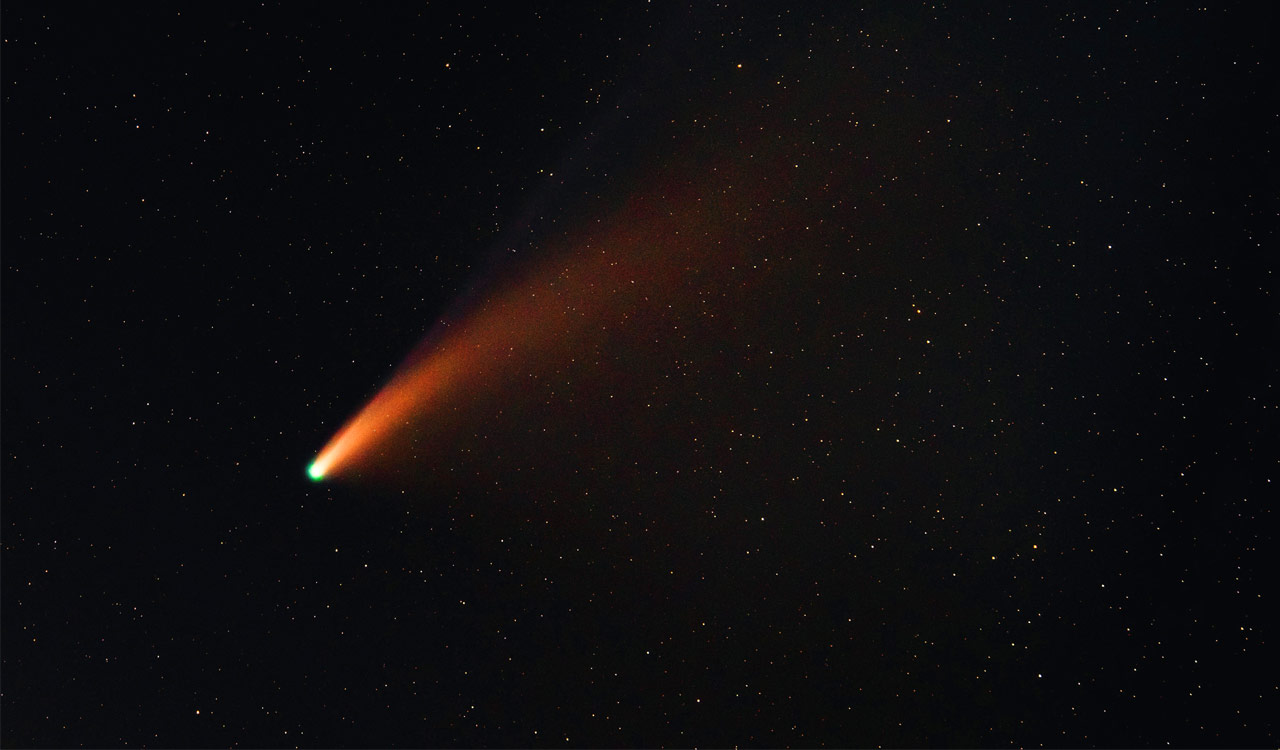
As the comet gets closer to the Sun, the sputtering will eventually stop because the comet will release more gas and the coma will become impenetrable. When this happens, the solar wind ions will always collide with atoms in this atmosphere or be deflected away before striking the surface. The first evidence that this deflection took place at 67P/C-G and measured with the Rosetta Plasma Consortium Ion and Electron Sensor by Thomas Broiles of the Southwest Research Institute (SwRI) in San Antonio, Texas. The deflection is largest for the lighter ions, such as protons, and not so much for the heavier ions derived from helium atoms. For all ions the deflection is set to increase as the comet gets closer to the Sun and the coma becomes ever denser.
Asteroids
Without magnetic fields or atmospheres of their own, asteroids receive the brunt of the solar wind. When incoming particles strike an asteroid, they can kick some material off into space, changing the fundamental chemistry of what’s left behind. Sunlight can move asteroids! Like Earth, asteroids rotate. At any given moment, the Sun-facing side of an asteroid absorbs sunlight while the dark side sheds energy as heat. When the heat escapes, it pushes the asteroid ever so slightly off its course. Over millions of years, this force, called the Yarkovsky effect, can noticeably alter the trajectory of smaller asteroids. Similarly, sunlight can also alter the rotation rate of small asteroids. This effect, known as YORP, affects asteroids depending on their size, shape, and other characteristics. Sometimes, YORP causes small bodies to spin faster until they break apart. Other times, it may cause their rotation rates to slow.
MARS
NASA’s Mars Atmosphere and Volatile Evolution (MAVEN) mission has identified the process that appears to have played a key role in the transition of the Martian climate from an early, warm and wet environment that might have supported surface life to the cold, arid planet Mars is today. MAVEN data have enabled researchers to determine the rate at which the Martian atmosphere currently is losing gas to space via stripping by the solar wind. The findings reveal that the erosion of Mars’ atmosphere increases significantly during solar storms. The magnetic field carried by the solar wind as it flows past Mars can generate an electric field, much as a turbine on Earth can be used to generate electricity. This electric field accelerates electrically charged gas atoms, called ions, in Mars’ upper atmosphere and shoots them into space.
Jupiter
New Earth-based telescope observations show that auroras at Jupiter’s poles are heating the planet’s atmosphere to a greater depth— and that it is a rapid response to the solar wind. The solar wind impact at Jupiter is an extreme example of space weather. Within a day of the solar wind hitting Jupiter, the chemistry in its atmosphere changed and its temperature rose, as researchers found. An infrared image captured during their observing campaign in January, February and May of 2017 clearly shows hot spots near the poles, where Jupiter’s auroras are. The scientists based their findings on observations by the Subaru Telescope, atop the summit of Mauna Kea in Hawaii.
Earth
On the Earth’s surface, we are protected from solar wind by the magnetosphere —a bubble created by the Earth’s magnetic field.
When the solar wind hits the magnetosphere, waves of energy are transferred along the boundary between the two. When solar wind pulses strike the magnetosphere, the waves that form not only race back and forth along Earth’s field lines, but also travel against the solar wind. In intense cases, these particles leak through the magnetic field of the Earth, particularly near the north and south poles and cause problems to electrical equipment and satellites.
Moon
Lunar surface is continuously bombarded by the solar wind plasma because the Moon has neither an atmosphere nor a global intrinsic magnetic field that could deflect the plasma flow around it. The particles of the solar wind, upon reaching the lunar surface disturb the atoms in lunar dust. The ions in the solar wind are heavier, and are capable of actually displacing loose lunar dust material upon collision with the moon’s surface. Most of this displaced material is ejected into space.
Now you can get handpicked stories from Telangana Today on Telegram everyday. Click the link to subscribe.
Click to follow Telangana Today Facebook page and Twitter .

Related News
-

Venus and Jupiter to dazzle sky-watchers in rare conjunction on June 9
-
Rare interstellar comet 3I/ATLAS captivates astronomers as it speeds through solar system
-
Perplexity launches Comet, an AI-powered web browser that redefines the internet experience
-
Rare planetary parade visible in Hyderabad skies: How to witness it