From Lotus growth in 1940 to pollution now: Tracing Hussain Sagar’s troubles
Archival records show the Nizam government tackled creeping lotus, water hyacinth and malaria mosquito breeding in Hussain Sagar in 1940, using an underwater cutter designed by State Mechanical Engineer S.K. Iyer.


Hyderabad: Even before modern lake-restoration drives involving floating harvesters in Hussain Sagar made headlines, the Nizam government was grappling with plant growth, including water hyacinth and creepers, and malaria mosquito breeding in the lake.
Archival records of the Nizam government show that a memo issued in April 1940 warned of rapidly spreading water hyacinth in the lake.
The Public Works Department, which inspected the lake near the power house, found that the infestation was creeping lotus spreading from cooling ponds towards the Bulkapur channel inlet and power house condenser inlet.
According to an archival record available with the Telangana State Archives and Research Institute, the Nizam government faced a peculiar issue in the lake. Manually pulling out creepers was expensive and delayed regrowth for only about a fortnight.
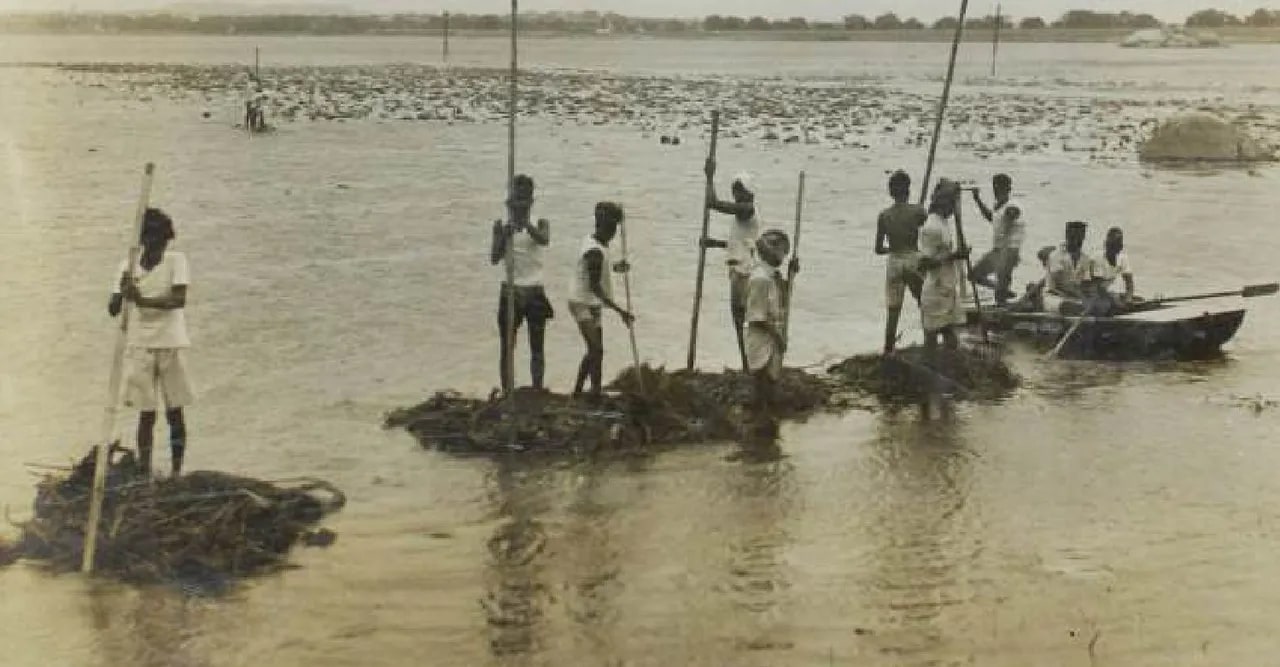
Armstead, a mint master who had dealt with the issue a few years earlier in the Power House cooling ponds, told the Public Works Department that merely cutting and uprooting the plant was not enough. He suggested injecting super-heated steam into the plant’s roots. However, the department found the suggestion expensive and said it might not work, as some roots were embedded at a depth of up to 20 feet of water.
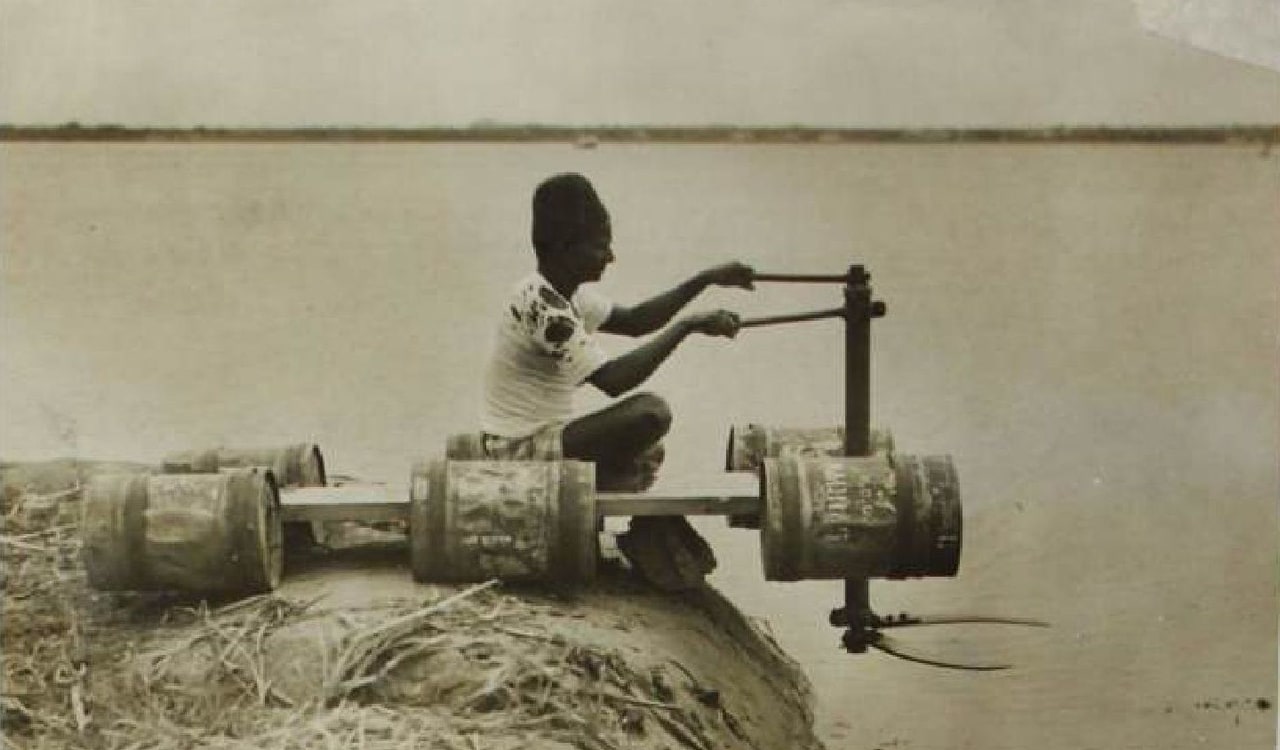
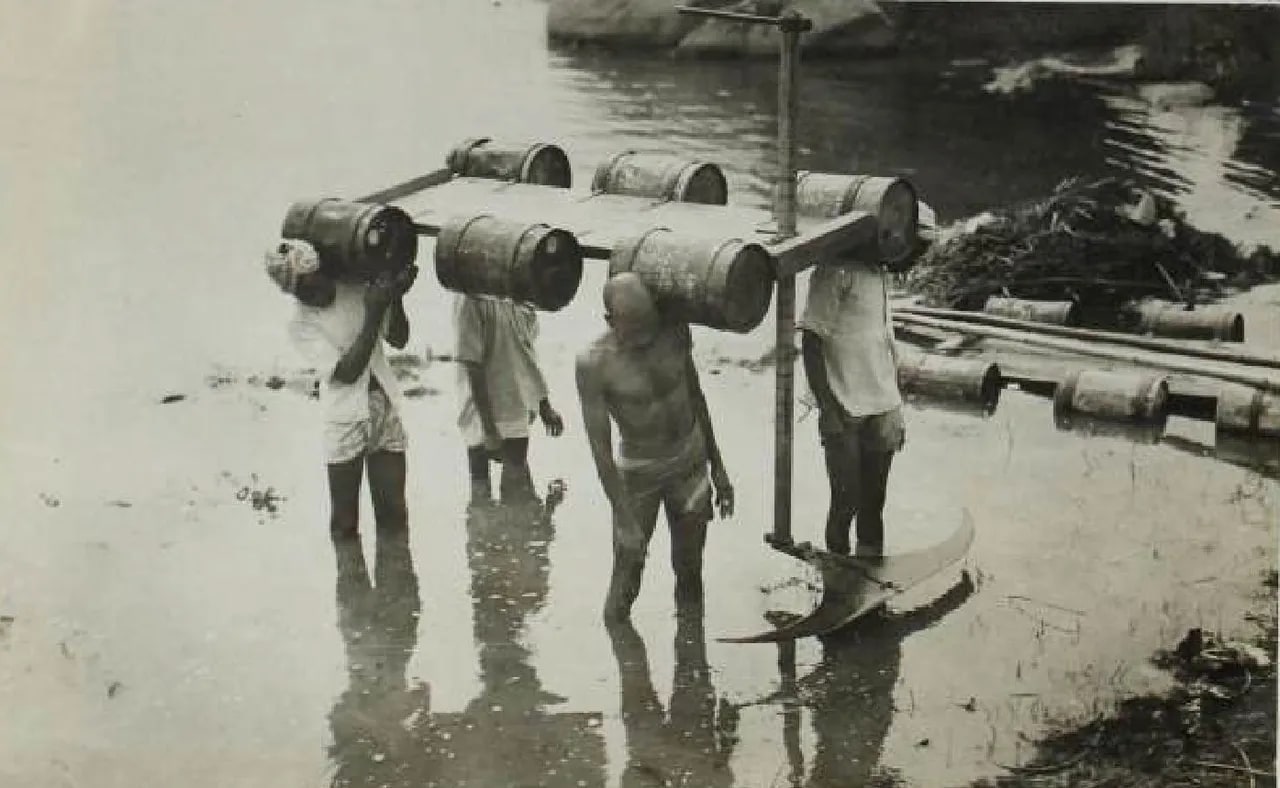
To tackle the issue, State Mechanical Engineer S.K. Iyer was entrusted with designing a machine that could operate underwater. He developed a cutter that was efficient in operation and inexpensive. The machine cleared nearly 60 per cent of the growth along the foreshore in less than two weeks.
Following the machine’s success, the department sought to manufacture eight rafts with cutters, four shears, and eight plain rafts with one punt at an estimated cost of Rs 2,650. In addition, Rs 1,260 was proposed for weeding and cutting maintenance work for two years, with a monthly expenditure of Rs 50. This included Rs 15 a month for three men, Rs 5 towards cutter and punt repairs, and five per cent charges for miscellaneous and unforeseen works. It took nearly two years to cut fresh shoots that appeared from time to time.
The Nizam government, which was facing a malaria menace, also took up anti-larval measures in the lake after it became a breeding ground for malaria mosquitoes. The then Director of Medical and Public Health sought 75 labourers to clear thick overgrowth along the lake edges for three months. The director also sought 20 labourers to be employed permanently to oil the edges and prevent mosquito breeding.

Related News