Hyderabad researchers decode Evolutionary GPS of mites and ticks
Hyderabad scientists decoded the ‘Evolutionary GPS’ of mites and ticks, showing they belong to two independent groups. Using 90 arachnid genomes, the study reveals their evolutionary history and helps predict disease transmission and potential new pathogen vectors.
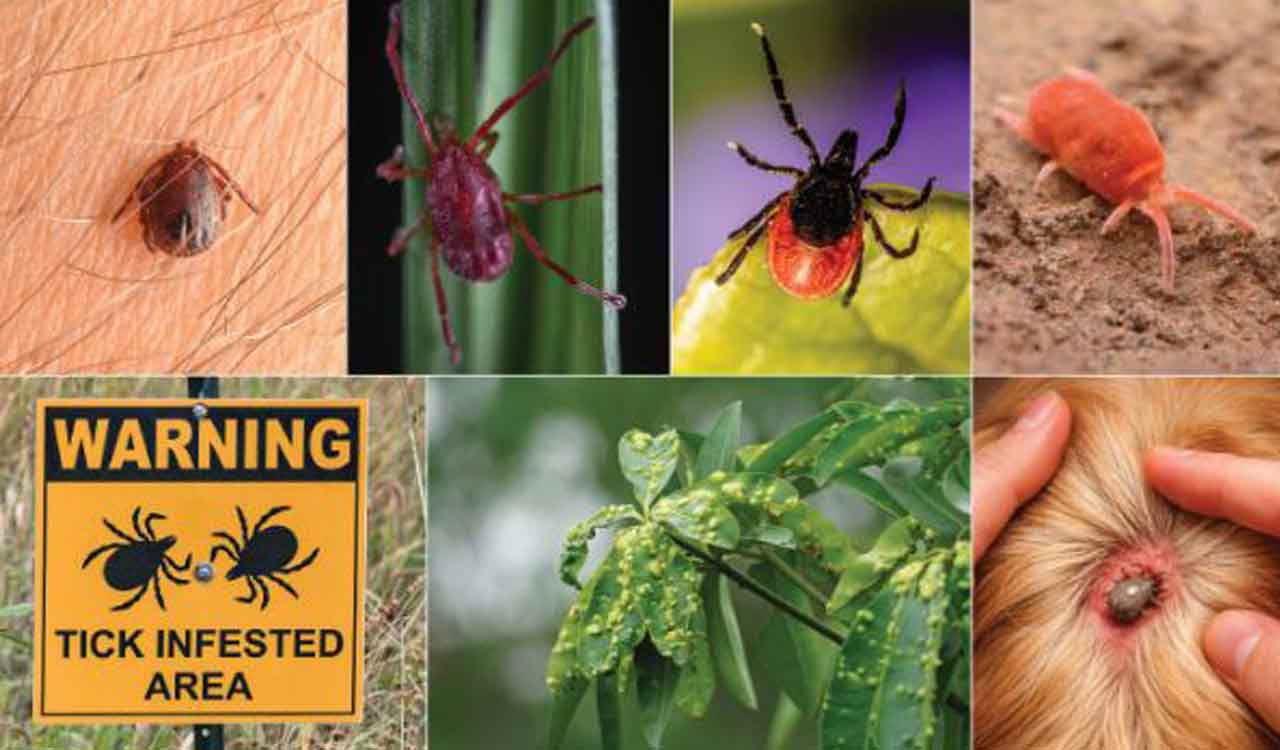


Hyderabad: Genetic researchers from Hyderabad, in groundbreaking research on eight-legged arachnids, the blood-sucking ticks that cling to pets and dust mites in our carpets, have decoded their ‘Evolutionary GPS’ to navigate the complex history of these creatures.
It turns out that mites and ticks did not descend from a single ancestor. Instead, they belong to two distinct groups that originated independently. Until now, their family tree was a ‘notorious knot’ that scientists struggled to untie.
However, a study published in the prestigious Cell (January 2026) led by Dr Siddharth Kulkarni of the Hyderabad-based Centre for Cellular and Molecular Biology (CCMB), has provided an ‘Evolutionary GPS’ to navigate the complex history of these creatures.
The research, conducted alongside undergraduate students from IISER Thiruvananthapuram, analysed a massive dataset of 90 different arachnid genomes, the largest of its kind to date. But they didn’t just count genes; they tracked the physical order of genes on chromosomes across millions of years.
“Think of it like a deck of cards. Over millions of years, the cards (genes) get shuffled. But if you find two different groups of mites that have the exact same ‘hand’ of cards in the same order, you know they share a common ancestor. By tracking these movements, we were able to treat the genomic structure as a GPS coordinate, pinpointing where different species branched off,” explains Dr Kulkarni.
The two distinct groups that originated independently include Acariformes, comprising the majority of mite species and Parasitiformes, including ticks and the remaining mite varieties.
Evolutionarily, arachnids tend to transmit similar pathogens. By mapping their family tree, researchers can now better predict the disease-causing abilities of different species. Mapping their interrelationships can help researchers predict the spread of known infections and identify potential new vectors before outbreaks occur, the study suggests.

Related News