Opinion: Beyond misclassification: Recognising dignity, opportunity for DNTs
De-notified, Nomadic, and Semi-nomadic Tribes must be enumerated separately in 2027 Census and given legal recognition for socio-economic uplift


By Vijay Korra
On 11 February 2026, the Ministry of Tribal Affairs replied in the Rajya Sabha to a question on whether the government is considering a proposal to create a separate reservation category for the De-notified, Nomadic, and Semi-nomadic Tribes (DNTs), on a par with SCs, STs, and OBCs. The Centre stated that it is not considering granting legal and constitutional recognition to the DNTs.
Also Read
In January, officials from the Ministry of Social Justice clarified that no such proposal or plan is under consideration to classify DNTs as a separate category. These replies come against the backdrop of petitions submitted by leaders of DNT associations at the national level to the Census Commissioner of India, urging that in the upcoming Census of 2027, DNTs should be enumerated in a separate column and their community names registered.
Misclassification denies many DNTs caste certificates, blocking access to reservations and welfare benefits, and creating an identity crisis
They argue that this could pave the way for a distinct category for DNTs. They also urged officials from the Ministry of Social Justice to reclassify the DNTs, as the classification carried out after their de-notification in 1952 was highly unscientific, driven by political and caste calculations.
Colonial Legacy
The British colonial rulers declared certain nomadic and semi-nomadic communities as “born criminals” and “habitual offenders,” bringing them under the draconian Criminal Tribes Act, 1871 (CTA). More than 200 nomadic and semi-nomadic communities were notified as criminal, with additional communities added through amendments, the last of which occurred in 1924. The CTA was implemented in South India under the Madras Presidency in 1911. The law required registration, surveillance, and monitoring. Communities were confined to closed camps, where they were taught “civilisation,” provided education and vocational training, and most importantly, exploited for their labour — often unpaid or poorly paid, akin to bonded labour — under the guise of reform.
These reformatory camps were managed by the Salvation Army, a Christian missionary society led by former British army officials. Evidence shows that camp life harmed the DNTs more than it helped, erasing their history, culture, festivals, and social and occupational practices, which the colonial rulers deemed uncivilised. The CTA was repealed in 1949 following the recommendations of the Ananthasayanam Ayyangar Committee (1949–50), and the communities were de-notified in 1952. They were then placed in SC, ST, and OBC categories based on their socio-economic and historical background. Over the 81 years of the CTA’s enforcement, the lives of DNTs deteriorated markedly, revealing the inherent brutality of the reformatory camps.
Misclassification of DNTs
This raises critical questions: Were the de-notified tribes classified unscientifically? What was the basis for their classification? Is reclassification possible now? Can they be given a separate category? The classification of de-notified tribes was indeed highly unscientific. Their historical, cultural, linguistic traditions, festivals, socio-occupational aspects, and associated traits were neglected, while caste-political calculations prevailed.
Communities with similar backgrounds were placed under different reservation categories across States. For instance, the Lambadi community was given OBC status in Rajasthan, Vimuktha Jati status in Maharashtra, ST status in erstwhile Andhra Pradesh, and SC status in Karnataka and Punjab. Similar inconsistencies exist for communities such as Yerukalas, Pardhis, Nakkalas, Dasaris, Dommaras, and Kanjars.
Further, many DNTs were not of tribal origin but from the Varna system, yet they were annexed under tribal nomenclature after de-notification in independent India. Today, most DNT communities are placed in OBC categories, with only a few in SC and ST categories. This prevents them from competing with better-off OBCs due to poverty, illiteracy, lack of housing, land, assets, and the decline of traditional caste-based occupations.
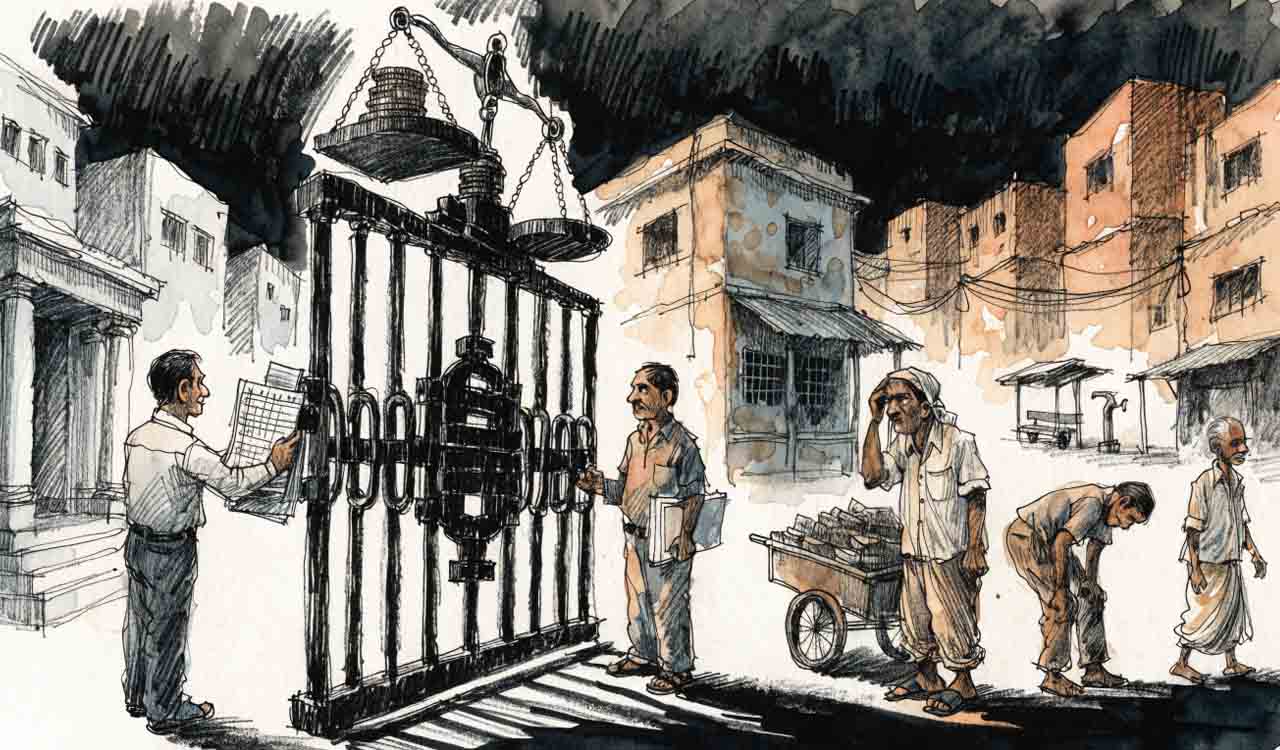
Misclassification has also created myths and misunderstandings among government machinery, leading to the denial of caste certificates for many DNTs, without which they cannot access reservation and welfare benefits. The lack of statutory entitlements, such as permanent addresses and caste certificates, has created an identity crisis. Even after their de-notification, they remain chronically poor, disadvantaged, secluded, isolated, neglected, and deprived of dignity.
Recognising their plight, the Centre set up the Balakrishna Renke Commission (2008) and the Bhiku Ramji Idate Commission (2018) to map and suggest welfare measures. The Idate Commission estimated that there are more than 1,500 DNTs with a population of 15 crore. Most communities survive through caste-based traditional occupations such as singing, storytelling, fortune-telling, acrobatics, begging, rag-picking, and caste-based prostitution.
Studies suggest that their living standards are worse than those of SC and ST communities. They are frequently accused of theft, crime, and illicit activities, and are often suspected by the police. They face exclusion from the labour market, high illiteracy, unemployment, poverty, hunger, starvation, and poor health conditions, while being treated as outliers and secondary citizens.
Correcting Misclassification
Solutions to many of their problems lie in rectifying the unjust misclassification.
• First, they must be enumerated in the upcoming Census of 2027 in a separate column, with community names registered. This will pave the way for a distinct category.
• Second, the government should seriously consider the demand for reclassification based on language, culture, religious practices, social norms, occupational practices, nomadic lifestyle, and current socio-economic conditions. Though this may disrupt existing structures, it is worth the risk for the uplift of DNTs.
• Third, rectification can resolve hurdles such as caste certificates and statutory documents, addressing the identity crisis.
• Fourth, all DNTs can be accorded a separate scheduled category on a par with SCs, STs, and OBCs.
• Fifth, as the Supreme Court has allowed sub-categorisation among SCs, STs, and OBCs, governments can sub-categorise DNTs within existing categories.
• Sixth, these communities should no longer be associated with “ex-criminal” tags; a new nomenclature, such as “Most Backward Class,” could be considered.
• Lastly, the use of “nomadic” and “semi-nomadic” nomenclature must be prohibited due to its association with the CTA of 1871.
If India wishes to become a developed country and the third-largest economy by 2047, it cannot neglect its most marginalised sections. Poverty and inequality will not lead to holistic development.
(The author is Associate Professor, Centre for Economic and Social Studies [CESS], Hyderabad)

Related News