Hyderabad to get next-gen water quality monitoring system from GHMC, IIT-Kharagpur, AIIMS
The GHMC, IIT Kharagpur and AIIMS New Delhi have signed an MoU to launch advanced water quality monitoring in Hyderabad. The project, set to begin later this year, will establish a next-generation surveillance and early-warning system using AI and plasma spectroscopy to detect contaminants and strengthen water governance across Telangana.


Hyderabad: The Greater Hyderabad Municipal Corporation (GHMC), IIT Kharagpur and All India Institute of Medical Sciences (AIIMS) New Delhi are set to launch advanced water quality monitoring initiatives, including setting up of a water surveillance and early-warning system for Hyderabad.
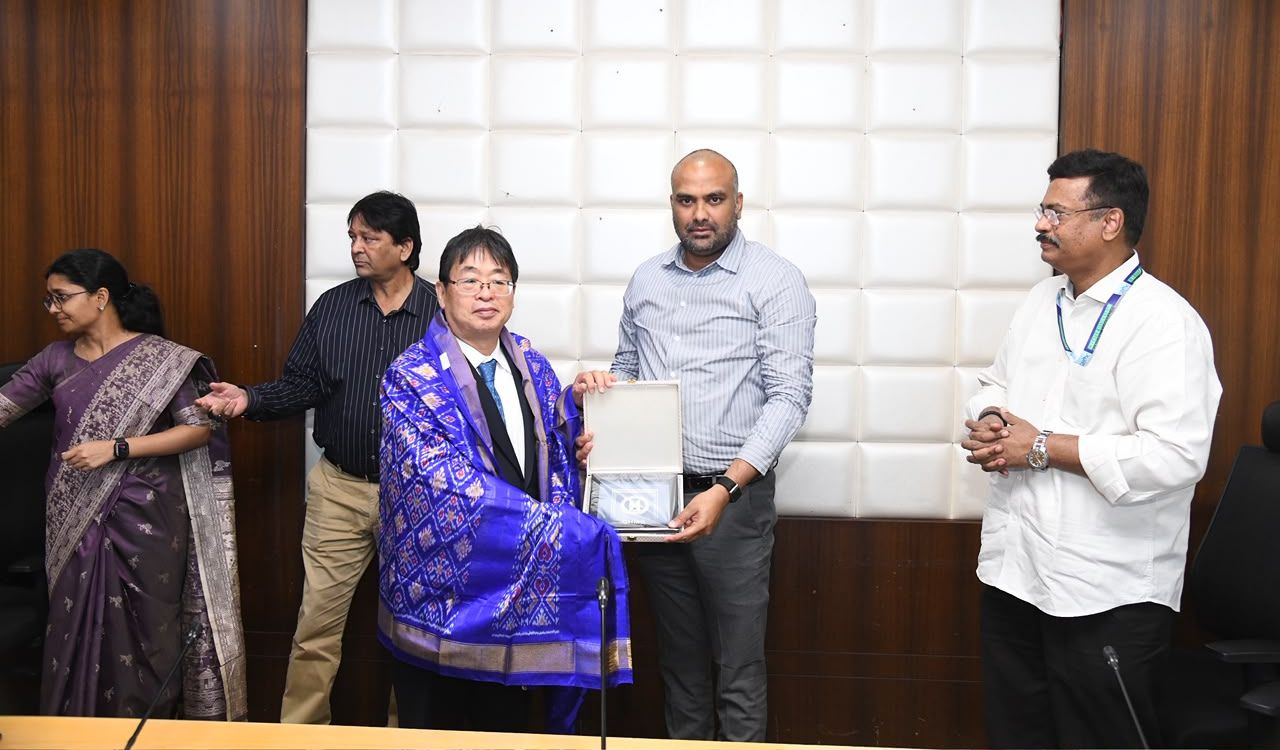
A memorandum of understanding was signed by GHMC, IIT Kharagpur and (AIIMS) New Delhi in the presence of Special Chief Secretary, MA&UD, Jayesh Ranjan and GHMC Commissioner RV Karnan here on Thursday.
The project, which is expected to commence in the third quarter this year, will establish a next-generation water surveillance and early-warning system for Hyderabad. It will combine advanced scientific research, artificial intelligence and real-time environmental monitoring to protect public health and strengthen long-term water governance across Telangana, a press release said.
As part of the initiative, 25,000 water samples will be collected across the Hyderabad metropolitan region, generating approximately 1.9 million individual analytical data points covering chemical, elemental and microbiological parameters, it said.
The proposed platform uses advanced non-thermal plasma spectroscopy and artificial intelligence to analyse the complete optical signature of a sample. This enables rapid identification of a broad range of contaminants, including heavy metals, industrial chemicals, microbial indicators, and emerging pollutants, while also identifying anomalous patterns that may signal previously unrecognized risks, it said.
The technology already demonstrated the ability to detect contaminants at parts-per billion levels with accuracy comparable to or exceeding gold-standard laboratory methods, it added.

Related News