IITH conducts 10-day AI training programme for medical students
IIT Hyderabad trained 15 final-year MBBS students in a 10-day programme exploring AI in medicine, drug development and biology. Projects covered cancer detection, antimicrobial resistance, medical imaging and metabolic disorders, while discussions highlighted research opportunities and gaps in local datasets
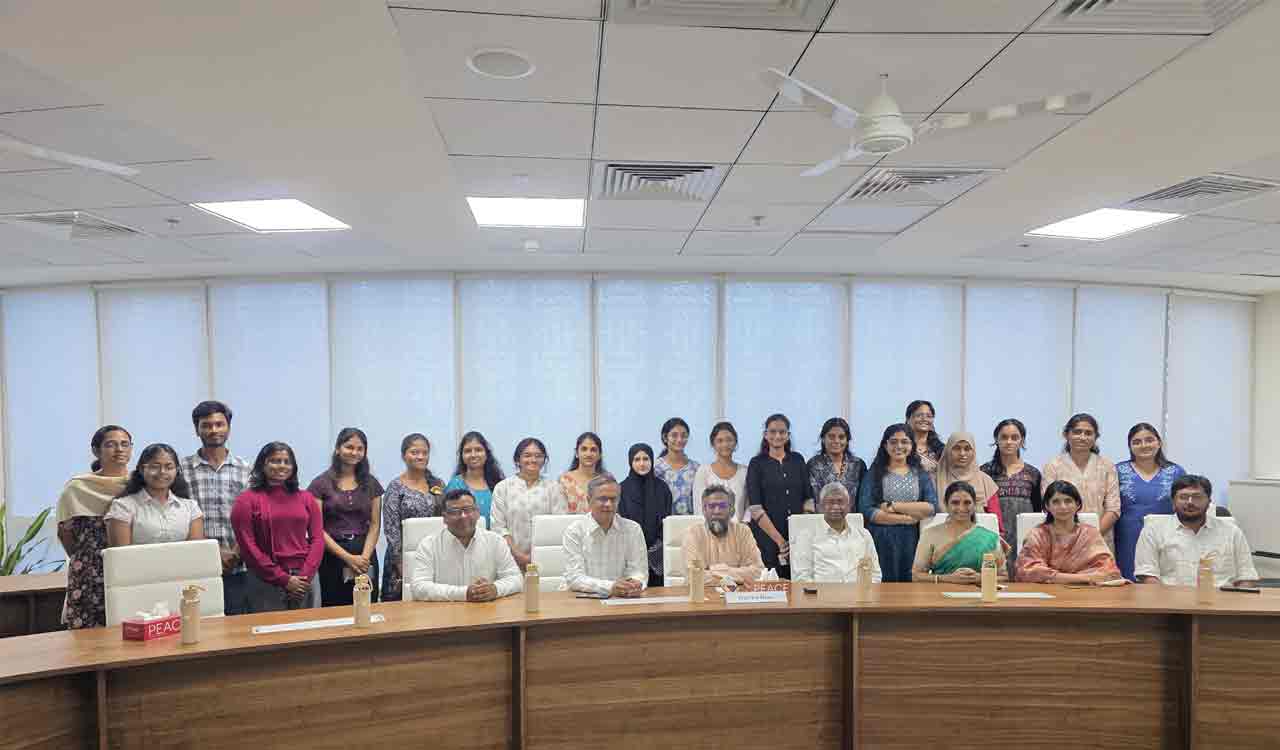


Sangareddy: The Indian Institute of Technology Hyderabad (IITH) has conducted an intensive 10-day academic training programme on “AI in Medicine, Drug Development and Biology” for 15 final-year MBBS students from Apollo Institute of Medical Sciences and Research (AIMSR).
The programme introduced students to applications of artificial intelligence (AI) in medicine, drug discovery and development, and healthcare. It aimed to familiarise future medical professionals with computational approaches to biomedical research and the potential of AI-driven technologies in clinical practice.
The programme was organised by the research group of Prof. G. Narahari Sastry, a faculty member in IITH’s Department of Biotechnology and Dean (Sponsored Research and Consultancy). The AIMSR delegation was led by Dean Dr. K. Manohar and Chief Operating Officer K. Aparna Reddy.
While medical training equips students with clinical knowledge and practical skills, working with large datasets and developing machine-learning models are generally not part of the MBBS curriculum. The programme gave students an opportunity to explore these areas and gain an understanding of how computational tools can be applied to research questions in clinical practice and biomedical science.
Through lectures, demonstrations, mentoring sessions and hands-on projects, students explored topics at the intersection of medicine, computational science and engineering. They undertook short exploratory projects using existing open-access datasets. These included the early identification of cancer using long-term blood parameters, antibiotic prescription informed by antimicrobial resistance profiles, disease detection and classification using medical images, and the prediction of metabolic disorders using clinical and demographic factors.
The hands-on experience also highlighted the importance of medical expertise in informing AI models and evaluating their predictions. Students identified gaps in the availability of open clinical datasets representing the Indian population.
Discussions during the programme also identified areas where further training and collaborative research could be beneficial. These included personalised medicine using genomic tools, early detection of non-communicable diseases, accurate diagnosis through medical image analysis, decision support during critical surgeries, and the use of simulations and virtual reality in surgical training.
IITH Director Prof. B. S. Murty said interdisciplinary training and research, along with the use of emerging AI technologies, were important for addressing today’s complex challenges. He said IITH was actively encouraging such collaborations through its academic and training programmes.
Prof. Sastry said a key component of the programme was a research-oriented project that culminated in a presentation and a three-minute video. The exercise enabled students to explore scientific questions, apply analytical thinking and communicate their findings.
AIMSR Dean Dr. Manohar said disease diagnosis could be strengthened by supplementing clinical examinations with technology.
“With the growing burden of non-communicable diseases worldwide, if there is a tool which can diagnose diseases like diabetes earlier, based on family history and biological markers, it would be very valuable,” he said.

Related News
-

25 rural women graduate from FlySakhi drone programme at IIT Hyderabad
-
IIT-H signs MoU with Mie University, Japan for academic and research collaboration
-
Telangana POPSKs facilitate over 1.66 lakh passport transactions in 2025-26: Chief PMG
-
IIT Hyderabad announces October cohort of Applied AI certification programme