India-New Zealand Free Trade Agreement (FTA): An explainer
India and New Zealand signed a Free Trade Agreement boosting exports, investment, and skilled mobility. India gains 100% duty-free access to NZ, while New Zealand secures selective market entry. The pact strengthens Indo-Pacific trade ties and targets $20 billion investment inflows
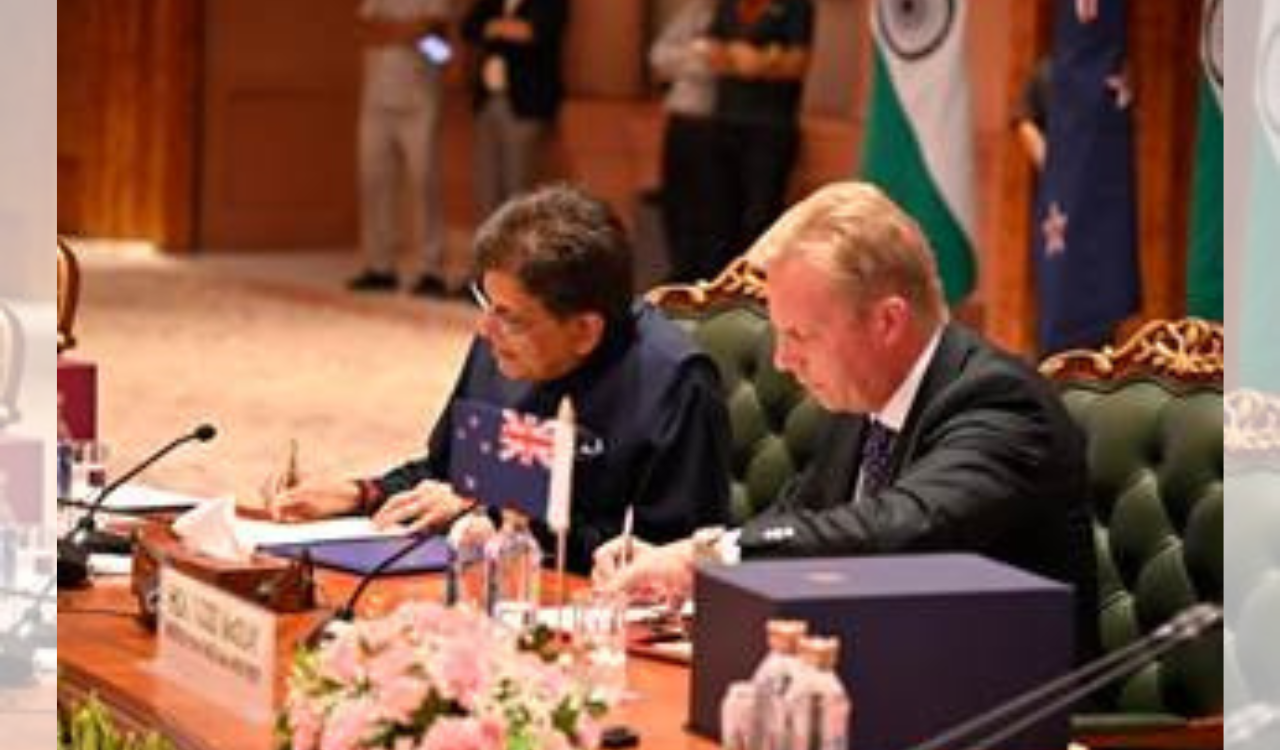


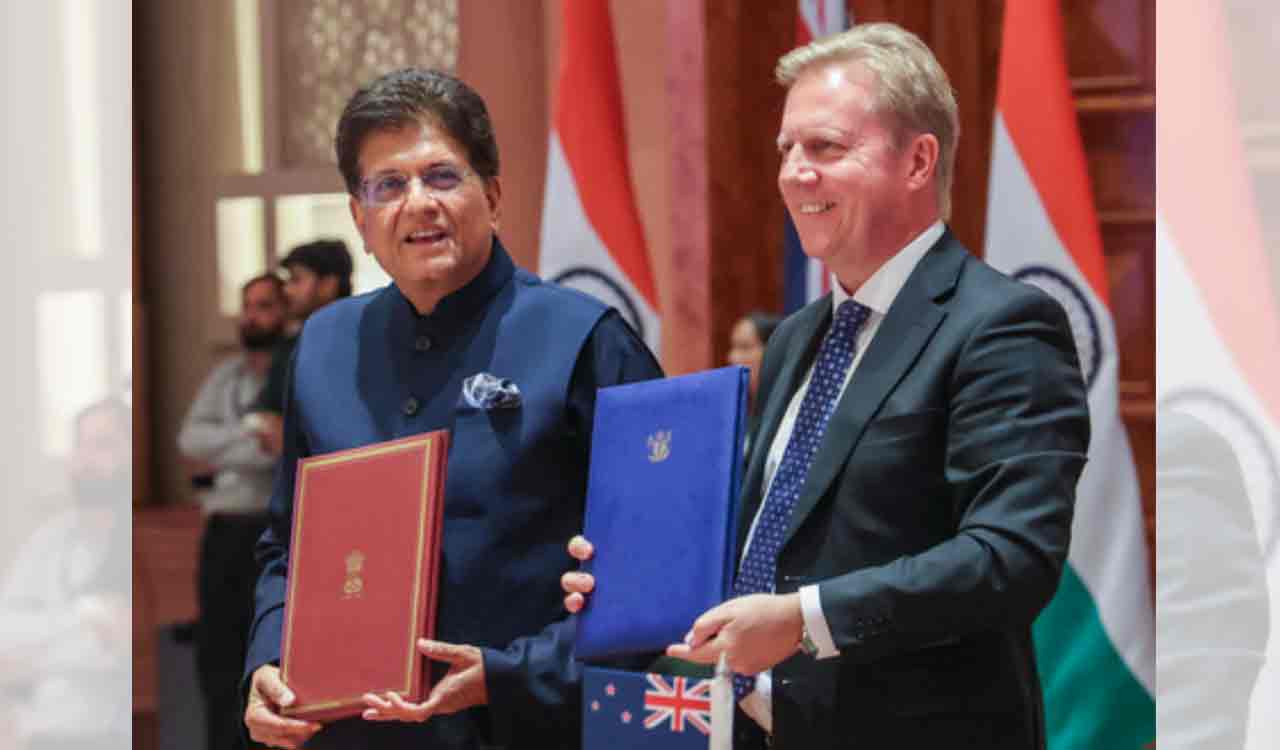
New Delhi: India and New Zealand on Monday signed a free trade agreement (FTA) to boost two-way commerce in goods and services and promote investments. The pact will come into force on actually decided date agreed by both sides.
Here are a few questions and answers to understand the main strategic gain of this deal:
FTA
An economic arrangement between two or more countries where they agree either to end or significantly reduce customs duties on the maximum number of goods traded between them, besides cutting down barriers that can hinder or promote two-way commerce and investments.
India-New Zealand FTA Brief
Negotiations were first launched in 2010, stalled in 2015 after nine rounds, and revived in March 2025.
March 16, 2025: Negotiations resumed afresh December 22, 2025: Announced conclusion of talks April 27, 2026: FTA signed
Benefits for India
The FTA provides duty-free access for 100 per cent of India’s exports to New Zealand. Earlier, New Zealand maintained peak tariffs of up to 10 per cent on key Indian exports, including ceramics, carpets, automobiles, and auto components.
New Zealand has committed to invest (FDI) USD 20 billion over 15 years. India has secured commitments across a wide range of high-value services sectors, including IT and IT-enabled services, professional services, education, financial services, tourism, construction and other business services.
The FTA Opens Skilled Employment Pathways through a new Temporary Employment Entry Visa pathway for Indian professionals in skilled occupations, with a quota of 5,000 visas at any given time and a stay of up to three years. Duty-free wine and spirits exports from India, while wines from the Oceania country will enter the domestic market at a concessional duty, which will be reduced over a period of 10 years.
Benefits for New Zealand
India, following the template used in its trade agreement with Australia, has offered market access on 70 per cent of tariff lines (or product categories). The country will give duty-free access to 54.11 per cent of New Zealand exports from day one of the implementation of the free trade agreement, and these goods include sheep meat, wool, coal and several forestry and wood products, a move which is expected to make these items cheaper for Indian consumers. Duty concessions on agricultural goods like apples, kiwifruit, manuka honey, and albumins (including milk albumin), but with quotas and minimum import prices (MIP).
Duties on several seafood items, such as mussels and salmon, will be eliminated over a period of seven years. The levy will be removed on a number of iron, steel and scrap aluminium items over a period of 10 years or less.
Sensitive farm products, including apples, kiwifruit, manuka honey, and albumins (including milk albumin), are managed through tariff-rate quotas (TRQs), supported by minimum import prices (MIPs) and safeguard measures. Further, the import duty on avocados and persimmons by India will be eliminated in 10 years.
Sensitive Goods
To protect the interests of farmers and MSMEs, India has not extended any import duty concessions to New Zealand on several sensitive sectors, including dairy, animal products, vegetables, sugar, copper, and aluminium.
Products that are kept in the exclusion list are: Dairy (milk, cream, whey, yoghurt, cheese, etc), animal products (other than sheep meat), vegetable products (onions, chana, peas, corn, almonds, etc), sugar, artificial honey, animal, vegetable or microbial fats and oils. The list also includes arms and ammunition, gems and jewellery, copper and articles (cathodes, cartridges, rods, bars, coils), aluminium and articles thereof (ingots, billets, wire bars).
Investments
New Zealand has committed to facilitating USD 20 billion in foreign direct investment into India over 15 years. At present, India has received just about USD 89 million FDI during April 2000 and December 2025.
Importance for India
For India, the agreement strengthens access to a high-income, rules-based Pacific market and supports its broader Indo-Pacific economic strategy. For New Zealand, it offers more secure entry into one of the world’s fastest-growing large economies at a time of rising global trade uncertainty. New Zealand’s Indian diaspora of over 300,000 people , about 5 per cent of its population provides a strong bridge for trade and investment. Easier visas, faster student pathways and lower education costs could further boost services trade.
Bilateral Trade
Bilateral merchandise trade stood at USD 1.3 billion (USD 711.1 million in exports and USD 587.13 million in imports) in 2024-25, while total trade in goods and services reached about USD 2.4 billion in 2024, with services trade alone reaching USD 1.24 billion, led by travel, IT, and business services.
India exports include aviation fuel, pharmaceuticals, motor vehicles, petroleum products, readymade garments, and machinery; while imports include wood and wood products, iron and steel, raw wool, dairy products, scrap metals, coal and farm-linked inputs.

Related News