India to stay fastest-growing at 6.8-7.2%: Economic Survey
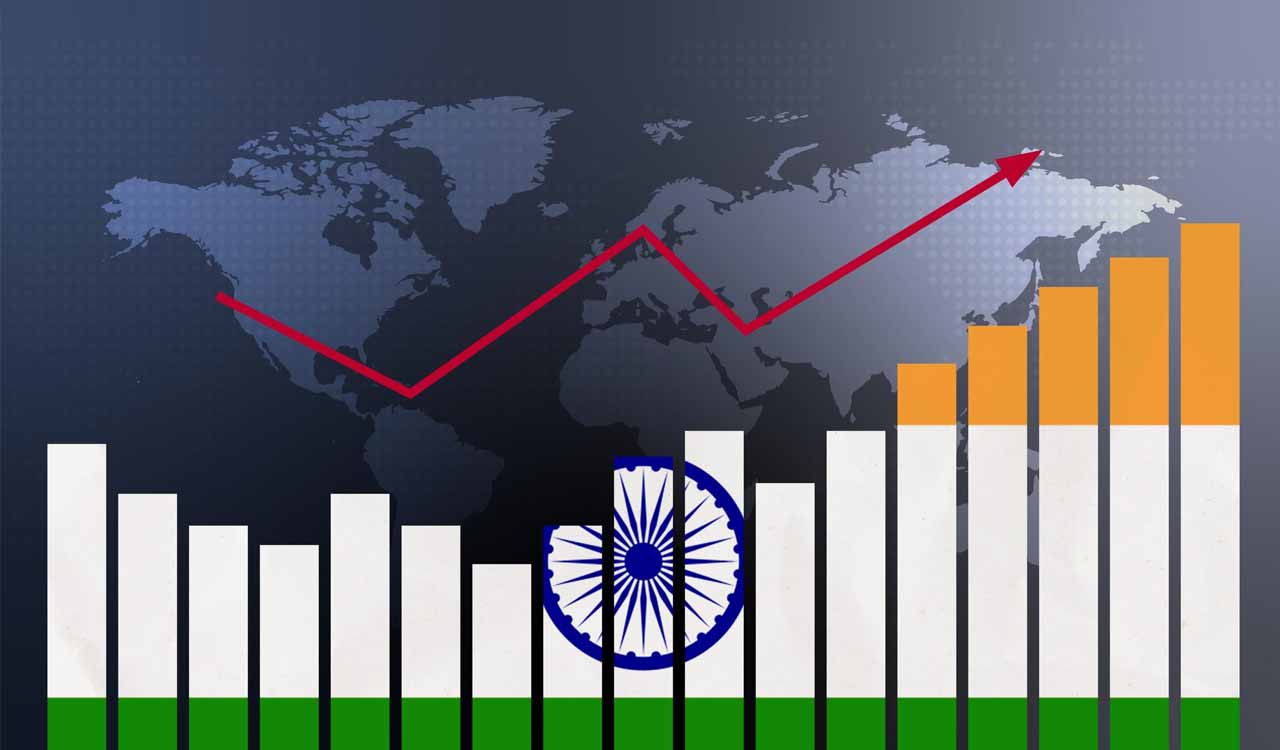
India’s economy is projected to grow 6.8–7.2 per cent in 2026-27, according to the Economic Survey, which flagged global trade risks and US tariffs, but maintained that strong fundamentals, policy reforms and resilient demand will keep growth momentum intact


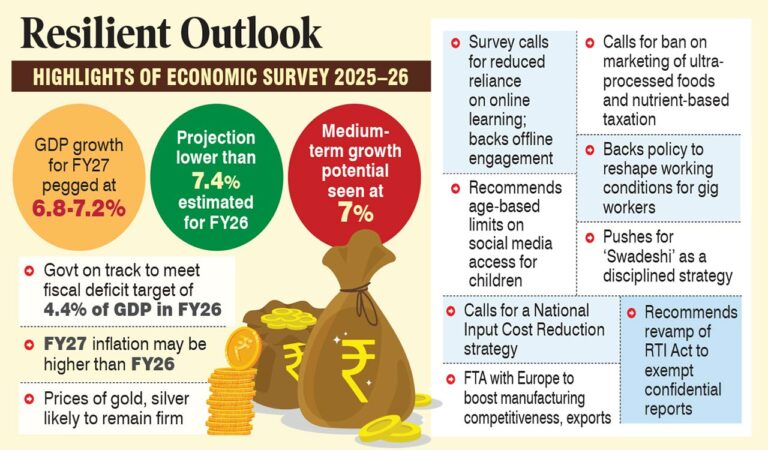
New Delhi: India’s economy is projected to grow by 6.8-7.2 per cent in the fiscal year starting April, the government’s pre-Budget Economic Survey said Thursday, reaffirming the country’s status as the world’s fastest-growing major economy despite trade risks and global volatility clouding the outlook.
The forecast for 2026-27 is slower than the 7.4 per cent projection for the current financial year, driven by consumption and investment.
“The cumulative impact of policy reforms over recent years appears to have lifted the economy’s medium-term growth potential closer to 7 per cent”, from 6.5-6.8 per cent earlier, the annual report card on the economy said.
“The outlook, therefore, is one of steady growth amid global uncertainty, requiring caution, but not pessimism.” While the current year GDP growth estimate of 7.4 per cent is higher than the 6.3-6.8 per cent range that the survey had forecast last year, the projection for the next year retains India’s world-beating economic expansion despite trade tensions with the US. India, which has been slapped with the highest 50 per cent tariffs on goods it sends to the US, remains one of the few large economies that is yet to sign a trade deal with Washington.
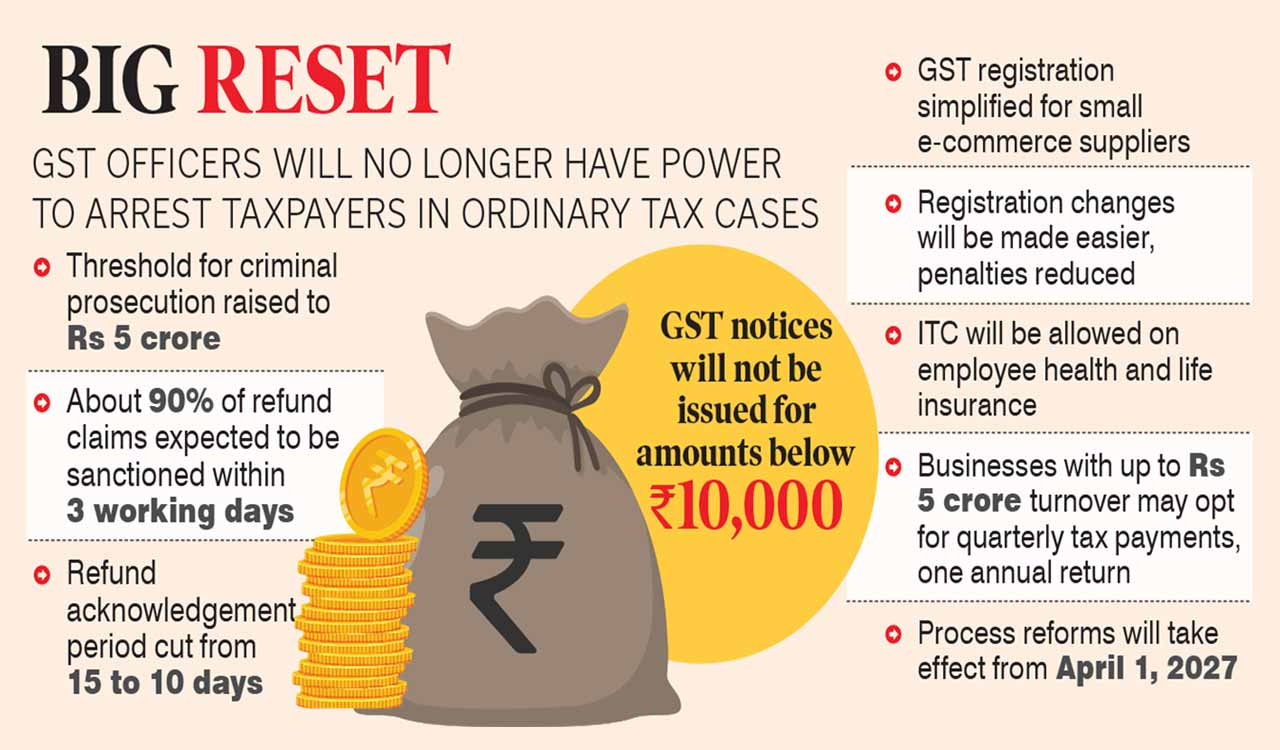
In response to the labour-intensive sector-hurting tariffs, the Modi government has unleashed policy and tax reforms, including cutting GST rates, raising the bar for levy of income tax, an overhaul of labour laws to ease compliance burden on businesses, and concluded four free trade agreements since May 2025, including a mega deal with the European Union.
While inflation is low, balance sheets of firms and households are healthier, and consumption demand remains resilient, US tariffs have led to the rupee falling 5 per cent, and it is now “punching below its weight”.
“The rupee’s valuation does not accurately reflect India’s stellar economic fundamentals,” the survey said, even though the “undervalued” currency “offsets, to some extent, the impact of higher American tariffs on Indian goods”.
The macroeconomic conditions, however, “provide resilience against external shocks and support the continuation of growth momentum”, it said.
The International Monetary Fund forecasts 6.2 per cent growth in the coming financial year, if steep tariffs remain in place.
The Economic Survey, authored by Chief Economic Adviser V Anantha Nageswaran, said the “ongoing trade negotiations with the United States are expected to conclude during the year, which could help reduce uncertainty on the external front”.
One of the tools the survey suggested to counter global trade and other headwinds was the implementation of ‘Swadeshi’ as a disciplined strategy.
Stating that while not all import substitution is either feasible or desirable, it said Swadeshi is inevitable and necessary in the wake of export control and technology denials by developed nations.
It called for a ‘National Input Cost Reduction’ strategy.
From a revenue buoyancy standpoint, both direct and indirect tax collections been robust for the current FY26, in particular growth of non-corporate tax collections (within that, individual tax collections) is notably growing faster than other components of overall mix, and that clearly underlines the changing dynamics of tax collection buckets, administrative reforms and even the measure of success for future tax reforms.
The survey also emphasises the significance of the new Income tax legislation, due to take effect from April 1st, with the aim to provide for simplicity and structural clarity for taxpayers, and encourage voluntary compliance.
The document unveiled before Finance Minister Nirmala Sitharaman presents the annual Budget for 2026-27 on February 1, flagged shortcomings in India’s export policies, particularly for agriculture.
The world’s second-largest agricultural producer by value could reach USD 100 billion in exports of agricultural, marine, and food and beverage products within four years, the survey said, while warning that frequent policy changes risk disrupting supply chains, fuelling uncertainty and driving foreign buyers to alternative sources, with lost export markets difficult to recover.
It also called for considering a series of steps to reduce the cost of capital and diversifying sources of financing beyond banks. It recommended, among other steps, reducing tax on debt instruments.
The report called for setting age-based limits on access to social media apps to counter “digital addiction”. As well as reducing dependence on online teaching tools, which expanded during Covid-19, in favour of offline engagement.
It also suggested promoting simpler devices for children, such as basic phones or education-only tabs, with content filters.
The survey advocated a ban on marketing on ultra-processed foods (UPFs) from 6 am to 11 pm across all media platforms, and restrictions on the marketing of infant and toddler milk and beverages.
It cautioned against broader financial contagion if the AI boom fails to deliver the anticipated productivity gains, which may lead to a correction in overly optimistic asset valuations.
It also pitched for a policy to reshape the terms of work for gig workers as well as revamp the RTI Act to exempt confidential reports.

Related News