Indian teens forced to choose junk food by rigged food environment: study
A nationwide Indian study shows adolescents face a ‘food environment’ favoring cheap, unhealthy options while healthy foods remain expensive and scarce. Experts recommend taxing HFSS foods, restricting advertising to teens, and addressing economic barriers to curb obesity and malnutrition
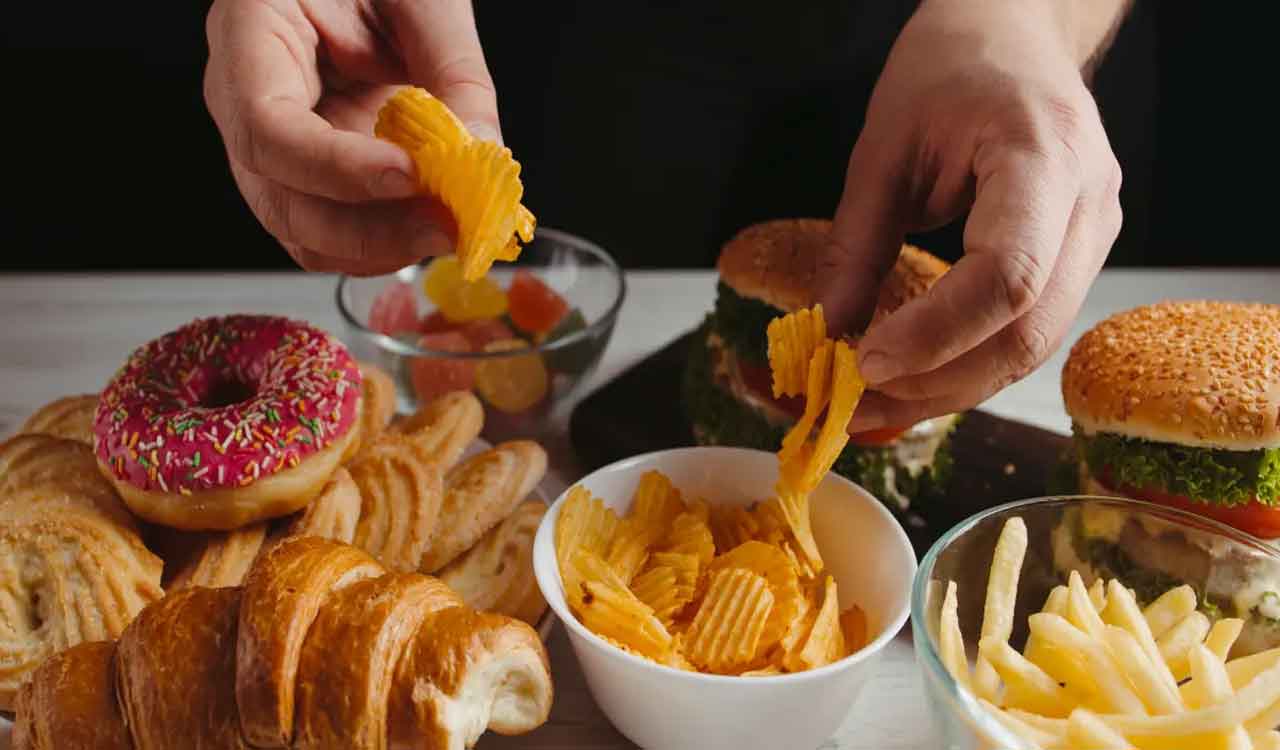


Hyderabad: While it is common to blame adolescents for making poor dietary food choices, a landmark Indian study suggests that the deck is stacked against them. Covering over 1,43 lakh adolescents countrywide, including major urban centres like Hyderabad, the research reveals that India’s youth are trapped in a ‘food environment’ that makes unhealthy food loud, cheap and inescapable, while healthy options remain out of reach.
The study, led by Hyderabad-based National Institute of Nutrition (NIN) in collaboration with UNICEF, PHFI and others, indicated that for many young Indians, making healthy food choices is an illusion.
Healthy food is very expensive and hard to find and afford..Contrastingly, ultraprocessed unhealthy food, laden with sugar, fat and high calories, is everywhere and easily accessible, the study indicated.
The research found that 67.6 percent of adolescents identify advertisements as the primary driver of their food choices. Unlike the static posters of the past, today’s marketing is “always on, following teens through social media algorithms and celebrity endorsements.
“When unhealthy food is louder and easier to access, the healthier option doesn’t even get a seat at the table,” the study indicated.
Economic barriers remain the steepest hurdle. Nearly one in three adolescents (30.7 percent ), in the study stated that they cannot afford to eat healthy foods. While a packet of ultra-processed instant noodles or chips can be bought for Rs 5 or Rs 10 at any street corner, fresh fruit and protein-rich nuts remain luxury items for a significant portion of the population.
This price gap creates a ‘nutrition trap’ where the cheapest calories are also the deadliest.
The results also highlight the dual burden of malnutrition in the country. On the one hand, about 24 percent of Indian adolescents remain underweight, the number of those living with obesity is skyrocketing and is projected to hit 27 million by 2030.
“We are seeing a historic shift, as in 2025, obesity rates among 5 to 19-year-olds officially surpassed underweight rates globally, a trend India is mirroring with alarming speed,” the report said.
As a counterweight to the present situation, policy makers and nutritional scientists from across the country led by NIN has recommended imposition of a health tax on High Fat, Sugar and Salt (HFSS) foods and Sugar Sweetened Beverages (SSBs), and the restriction of advertisement of such food products to children across all formats such as television and internet, as a measure to combat adolescent obesity and Non-Communicable Diseases (NCDs).
Lets Fix our Food Initiative:
- Additional health tax of 20 to 30 percent on sweets and confectionaries
- Health tax of 32 percent on sugar sweetened beverages
- 20 percent increase in prices can reduce overweight/ obesity by 3 percent and type-2 diabetes by 1.6 percent
- Taxes will increase revenue for government can be used to subsidize health food like fruits
- Such a health tax is already being implemented in 70 countries
- Restrict advertisements of high sugar and salt food products to children across all formats
- Stringent implementation of Prevention of Misleading Advertisements, 2022
- Mandatory clear labels devoid of confusing technical data to simple warning labels on front
- Empowering students through schools to decode the marketing they see daily

Related News