‘Monumental setback’: Cong slams Modi govt over Pakistan’s role in US-Iran peace moves
Indian National Congress criticised Narendra Modi’s foreign policy, calling Pakistan’s growing role in US-Iran talks and Asim Munir’s closeness to Donald Trump a major diplomatic setback for India
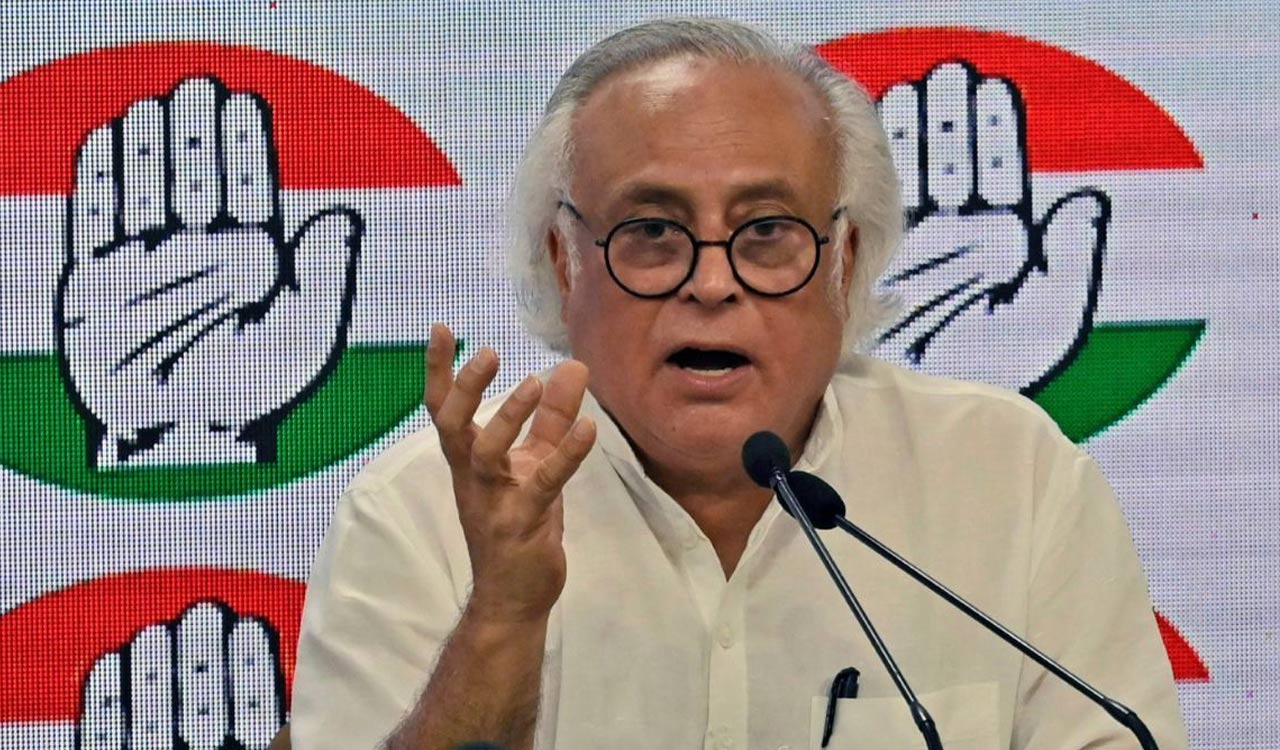


New Delhi: The Congress on Monday took a swipe at the Modi government over Pakistan’s role in the US-Iran peace talks, saying Pakistan Army chief Field Marshal Asim Munir becoming a “huge favourite” of American President Donald Trump is a “monumental setback” for India which needs a complete overhaul of its diplomatic engagement strategy.
The opposition party claimed that Prime Minister Narendra Modi is “simply incapable” of the overhaul of India’s diplomatic engagement strategy that is needed.
In a post on X, Congress general secretary in-charge communications Jairam Ramesh said, “The ‘dalal’ country, as the erudite and always nattily dressed External Affairs Minister described it, is reportedly hosting the second round of US-Iran peace talks today.”
After the completion of the first round of these talks on April 12th, Pakistan borrowed US$ 6 billion from Saudi Arabia and Qatar to repay a US$ 3.5 billion loan taken from the UAE and to retire a US$ 1.43 billion tranche of Eurobonds, he pointed out.
Pakistan’s economy is clearly in dire straits and it depends on largesse given to it by friendly countries, Ramesh said.
“But it is for now playing a pivotal diplomatic role after having given sanctuary to Osama Bin Laden and other terrorists, bombing drug rehabilitation centres in Afghanistan, and most recently orchestrating the Pahalgam terror attack a year ago,” the Congress leader said.
It is abundantly clear that the substance and style of Prime Minister Modi’s regional and global engagement and narrative management have failed to isolate Pakistan which has received a whole new branding — different from what Dr. Manmohan Singh had been able to achieve after the terror attacks in Mumbai in November 2008, Ramesh said.
“That Field Marshal Asim Munir — whose provocative and inflammatory remarks provided the oxygen for the Pahalgam terror attack — has become such a huge favourite of President Trump is a particularly severe setback for India,” the Congress leader said.
“That the Field Marshal and his colleagues seem to have succeeded in managing the Trump ecosystem of family and associates much better than India is obvious. It is a monumental setback for Mr. Modi’s foreign policy,” Ramesh said.
“India needs a complete overhaul of its diplomatic engagement strategy and tactics – which Mr. Modi is simply incapable of doing,” he said.
The US and Iran held rare direct talks in Pakistan on April 11 and 12 in Islamabad aimed at ending their conflict, but the talks concluded without any agreement.
Trump has announced a fresh round of talks, raising hopes of extending a two-week ceasefire that expires by Wednesday.
Trump announced that American negotiators will be in Islamabad on Monday for peace talks with Iran.
However, there was no confirmation from the Iranian side about Tehran’s participation in the second round of talks.
Meanwhile, Pakistan Prime Minister Muhammad Shehbaz Sharif, during his telephonic conversation with Iran’s President Masoud Pezeshkian, reaffirmed the country’s “honest” and “sincere” efforts to advance regional peace and security.
During the approximately 45-minute conversation on Sunday, the two leaders engaged in detailed exchanges on the current regional situation, the Prime Minister’s Office (PMO) said in a statement.
Sharif assured that Pakistan would “remain fully committed to its honest and sincere efforts to advance regional peace and security.” He thanked the Iranian leadership for their constructive conversations with Field Marshal Syed Asim Munir during the latter’s visit to Tehran this week, and also conveyed his regards to Iran’s Supreme Leader, Ayatollah Mojtaba Khamenei.
Pezeshkian thanked the Pakistan prime minister and Field Marshal for the country’s strong commitment to the success of peace efforts, while affirming that relations between Iran and Pakistan would continue to grow stronger in the days ahead.

Related News