Nearly 4 GW of solar capacity in Rajasthan hit by transmission constraints
About 4,300 MW of solar projects in Rajasthan face full daytime curtailment due to limited transmission capacity, threatening Rs 20,000 crore of investments. Industry urges short-term relief, dynamic line rating, and better evacuation mechanisms to prevent stranded renewable assets
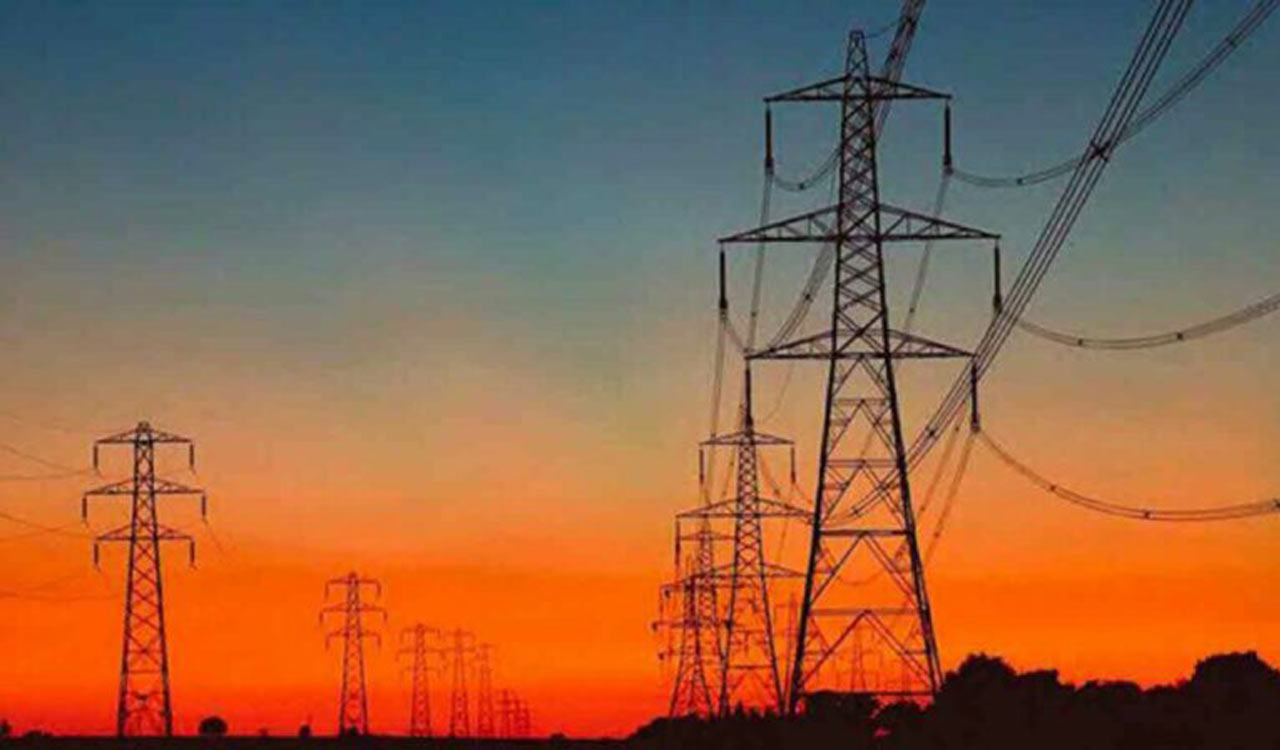


New Delhi: Nearly 4,300 MW of solar power capacity in Rajasthan faces complete daytime curtailment due to inadequate transmission infrastructure, putting projects worth about Rs 20,000 crore at risk, industry sources said.
A total of 26 solar projects, developed by companies including Adani, ReNew, Serentica, Juniper, Zelestra, ACME and Amp Energy, are currently supplying power under the temporary general network access (T-GNA) framework, as their associated transmission systems are yet to be commissioned.
With available transmission margins exhausted, power generation from these plants has been fully curtailed during daytime hours, sources said.
According to data from the Northern Regional Load Despatch Centre (NRLDC), Rajasthan has around 23 GW of commissioned renewable energy capacity, while transmission capacity stands at about 18.9 GW.
This entire transmission capacity has been allocated to projects with long-term general network access (GNA), leaving over 4 GW of capacity operating under T-GNA without evacuation capability.
Industry officials said that despite the commissioning of the 765 kV Khetri-Narela transmission line, only about 600 MW of additional transmission capacity became available, while over 4,300 MW was simultaneously operationalised under long-term GNA, effectively exhausting surplus margins.
In an e-mail dated December 11, NRLDC withdrew the No Objection Certificates for the 26 projects following the commissioning of the line and operationalisation of long-term GNA.
Developers warned that prolonged curtailment could severely impact project viability and debt servicing, and flagged the issue as a growing systemic risk as generation capacity continues to outpace transmission additions in renewable-rich states such as Rajasthan.
Industry representatives have urged the government to consider short-term relief measures, including implementation of a Special Protection Scheme to improve evacuation under T-GNA, and dynamic reallocation of unused GNA margins to T-GNA projects during low utilisation periods. They also called for the use of Dynamic Line Rating to maximise real-time transmission capacity and prevent renewable assets from turning stranded.
“Most of the 4.3 GW capacity is well within its notified connectivity start date. However, due to delay in commissioning of their ATS (associated transmission system), they are forced to deliver power under T-GNA. There is also no formal channel through which a generator can ascertain in advance about the additional transmission capacity that will be available from commissioning of a new line,” an industry official said.
The projects facing 100 per cent curtailment belong to multiple renewable power companies including Adani, ReNew, Serentica, Juniper, Zelestra, ACME, and Amp Energy.
According to sources, the government had earlier said that commissioning of 765 kV Khetri-Narela transmission line would significantly reduce 55 per cent peak hour curtailment faced by renewable energy (RE) generators operating under T-GNA arrangement.
“However, as per the latest Grid India data, after the addition of Khetri-Narela line, only 600 MW of transmission capacity has been added in the system. But the Central Transmission Utility of India operationalized 4,375 MW of capacity under long-term GNA, which exhausted the entire surplus available capacity and left almost no transmission availability for projects operating under T-GNA,” said another official with a leading RE company that operates solar projects in Rajasthan.
According to an e-mail communication by NRLDC on December 11, the No Objection Certificate to these 26 projects has been withdrawn due to commissioning of 765kV Khetri-Narela D/C lines and operationalisation of long- term GNA. “All above plants are requested not to violate the NOC in terms of Schedule or Actual,” the e-mail said.
The officials said that with limited evacuation available and no visibility on additional transmission capacity, the 4 GW RE projects face a serious concern on project viability and debt servicing.
To avoid stranded capacity, the industry has proposed that a T-GNA-only approach can be adopted for all future RE capacity additions in Rajasthan until evacuation margins are demonstrably available, the head of a generating company said.
“Of the 23 GW operational RE capacity in Rajasthan, the transmission capacity is 18.9 GW. If this was equitably distributed among all generators, the peak hour curtailment would be only 15 per cent, which on an annualized basis would be insignificant for all generators,” he added.
According to industry officials, the government must take immediate short-term relief measures to prevent complete shutdown. For instance, the government can look to implement a Special Protection Scheme (SPS), which will lead to significant improvement in capacity for evacuation under T-GNA.
SPS allows transmission corridors to operate closer to their true physical capability, as it mitigates risk from sudden outages. It thus prevents cascading failures by shedding minimal pre-identified generation only when essential, instead of pre-emptively curtailing the entire 4 GW.
They said that the government can also look at the mechanism of dynamic reallocation of unused GNA margins. During winter season and low generation periods, there is a possibility that the capacity is not utilized fully during peak hours for RE developers with long-term GNA. The margin available from GNA should be diverted to T-GNA projects for increased evacuation corridors.
“We recommend evaluating margins using DLR (Dynamic Line Rating) principles and allowing real-time reallocation of unused GNA margins to T-GNA generators to maximize system utilization,” said the head of the generating company.

Related News
-

Eight killed, 17 seriously injured as minibus falls into ditch on Delhi-Mumbai Expressway in Rajasthan’s Kota
-
Ex-MP Ratan Singh’s son dies under suspicious circumstances; wife, grandson named in murder complaint
-
Rajasthani labourer electrocuted while installing railings at Khammam school
-
Supreme Court orders probe into illegal factories along Rajasthan rivers