NMC directs medical colleges to monitor doctors’ prescriptions
The National Medical Commission has asked medical colleges to form committees to monitor prescription practices and ensure legible handwriting. Doctors have been advised to write generic drug names clearly, while experts stress transparency to improve patient safety.
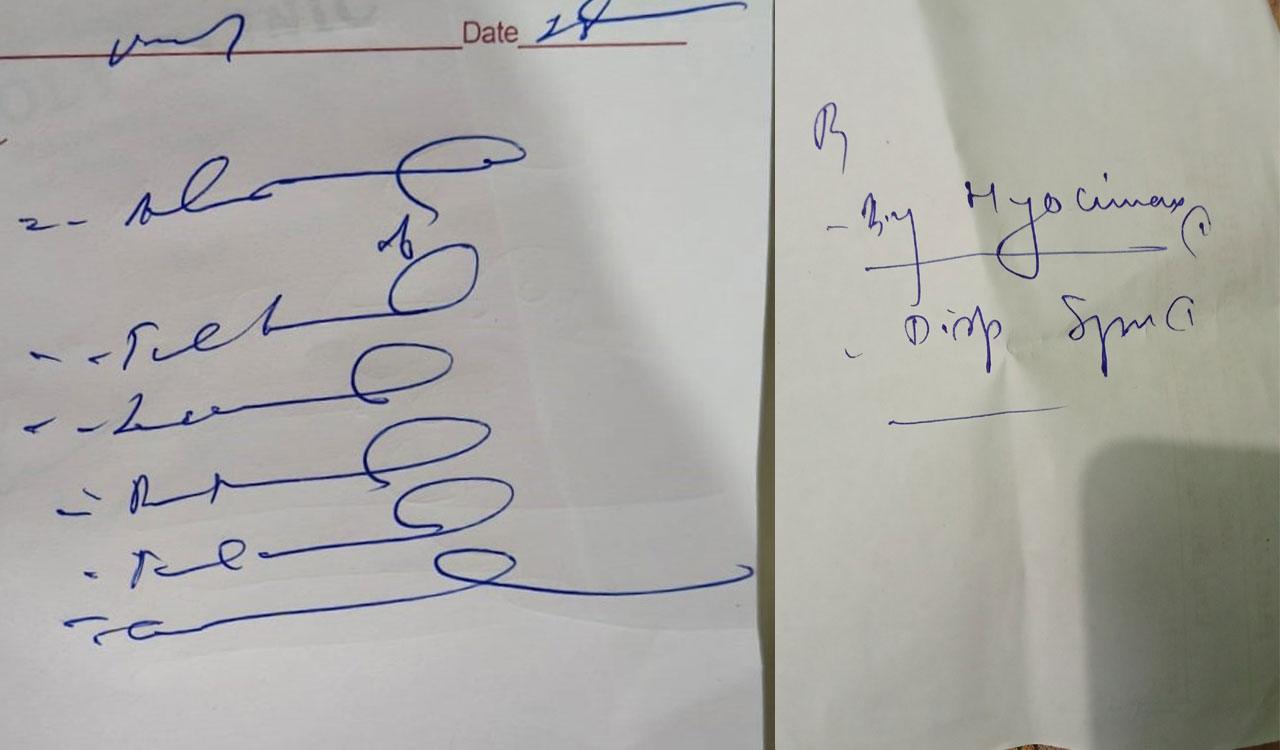


Hyderabad: In a significant move to ensure doctors’ prescriptions are legible and are regulated, the National Medical Commission (NMC) has directed the medical colleges to constitute a committee for monitoring.
The special committee in government and private medical colleges will monitor the prescription practices and oversee the inclusion of ‘Importance of Legible and Clear Handwriting in Medical Prescriptions’ in the MBBS curriculum.
In a letter to State Principal Secretaries (Health), the Post Graduate Medical Education Board (PGMEB) of NMC said, “Every medical college shall establish a dedicated Sub-Committee, under the Drugs and Therapeutics Committee (DTC), for monitoring prescriptions and ensuring compliance with the statutory, regulatory, and ethical standards”.
The NMC directive requires the committee to develop structured plans for systematic appraisal, frequent review of prescription patterns and the recommendation of corrective measures.
Physicians have also been instructed to prescribe drugs with generic names legibly and preferably in capital letters.
Welcoming the NMC decision, a senior member of Telangana Medical Council (TGMC) and Pulmonologist from Osmania General Hospital (OGH), Dr M Rajeev, noted that while this is a positive step, further measures are needed.
“For public health protection, it should be mandatory for every prescription to display the doctor’s name, qualifications and Medical Council registration number. This ensures greater transparency and accountability,” he said.
Dr Rajeev emphasised that including a registration number and stamp provides legal protection in medico-legal issues, demonstrates professional ethics, and builds community trust.
“Such a practice makes practitioners responsible, significantly reduces errors in dosage, duration and usage instructions, prevents life-threatening drug interactions and serves as a vital medical record for future treatments,” Dr Rajeev said.
Legal Framework and Regulations (medical prescriptions):
- NMC (MCI) Regulations: Doctors must include their name, qualifications, registration number, signature/stamp, and date on legible prescriptions.
- Drugs & Cosmetics Act (1940/1945): Pharmacies are legally prohibited from dispensing medicines based on illegible or unregistered prescriptions.
- Pharmacy Act (1948): Only a Registered Pharmacist can dispense medicines, and only against a valid, legal prescription.
- Enforcement: Drug Inspectors and TGMC hold powers to inspect pharmacies and take disciplinary action against non-compliant practitioners.

Related News