North-eastern Hyderabad faces growing groundwater stress amid weak monsoon
Weak monsoon rains have resulted in only a marginal rise in groundwater levels across north-eastern Hyderabad, raising concerns over water availability. Officials and residents’ welfare associations have flagged indiscriminate borewell drilling and excessive groundwater extraction as major concerns.
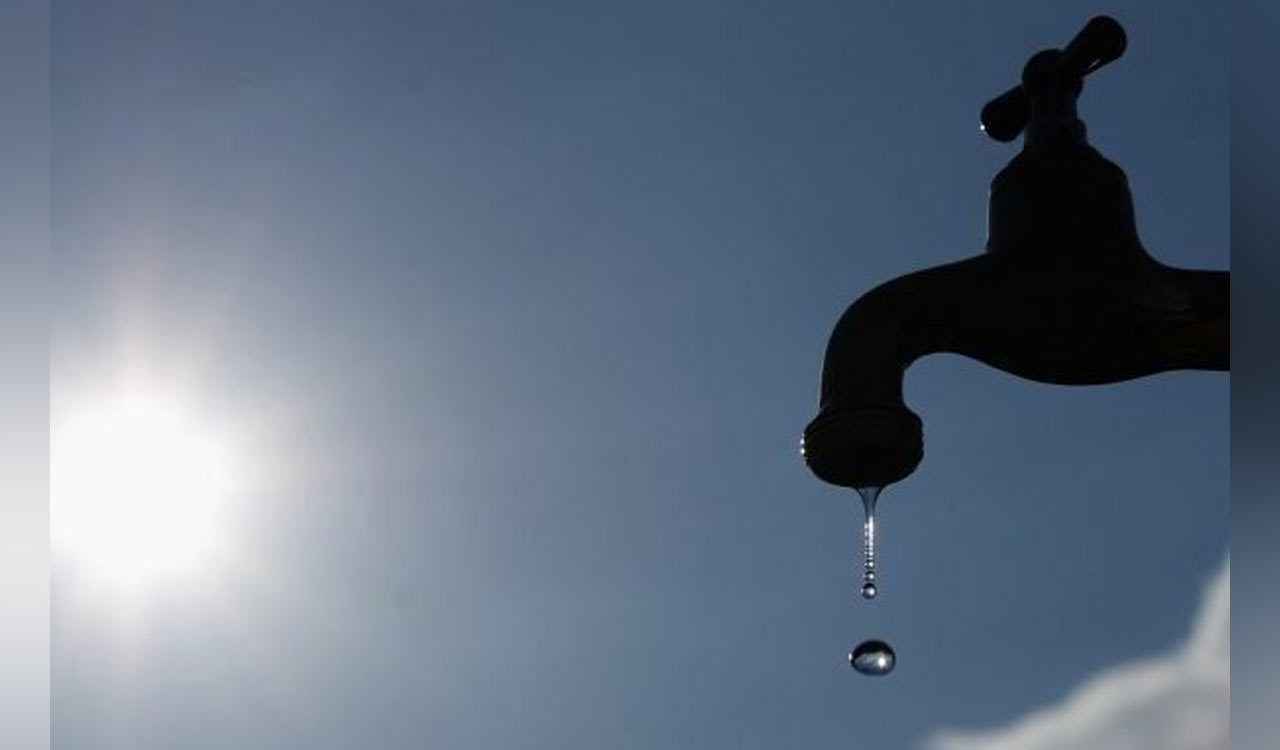


Hyderabad: The absence of adequate rains this monsoon season has ended up adding little to the groundwater table in the north-eastern parts of Hyderabad, with residents continuing to report worries over groundwater availability across several areas.
The situation has raised concerns over the sustainability of borewells and day-to-day water access as groundwater levels did not record much rise, with markedly lesser rains this season so far.
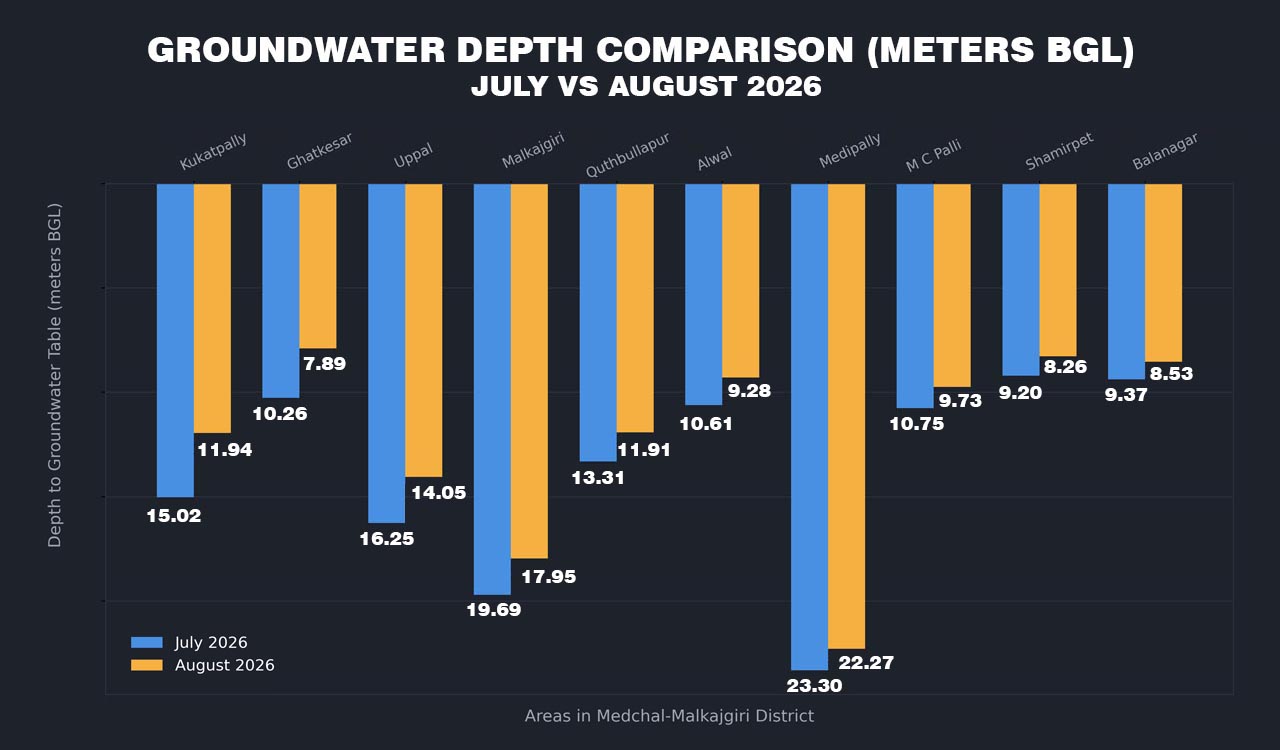
The Ground Water Department reports measuring the water table using piezometers show a marginal rise in the last one month in the 15 mandals of Medchal-Malkajgiri district.
The GWD report between July and August stated that groundwater has been observed at an incremental rise of 3 metres below ground level (BGL) to 0.35 metres BGL. Kukatpally mandal stood top in Medchal-Malkajgiri district in groundwater rise with 3.08 metres below ground level (BGL), while Bachupally area registered the lowest rise of 0.35 metres BGL.
A GWD senior official told Telangana Today that the groundwater resources remain under pressure due to massive borewell digging that creates a water crisis by draining underground aquifers faster than nature can refill them. “The rainfall reported in this monsoon in the north-eastern parts of Hyderabad couldn’t refill the groundwater,” the official said.
House owners in residential areas are allowing borewells to be drilled indiscriminately and illegally, leading to massive groundwater extraction, said the official.
Residents’ Welfare Associations (RWAs) in Malkajgiri have urged the Telangana government to address a sharp rise in unauthorised borewells over recent months, saying the practice has depleted the local water table, dried up existing residential borewells and caused severe water scarcity for households.

Related News