Opinion: China’s bid to lead a changing world order
Beijing’s latest White Paper on global governance is an attempt to shape the debate on who sets the rules of the international system in an increasingly multipolar world


By Brig Advitya Madan
While attention remains fixed on conflicts in West Asia and their aftermath, one development with potentially far-reaching consequences for the future of international politics has attracted surprisingly little attention: China’s June 17, 2026, White Paper on global governance. Running to 36 pages and titled More Just and Equitable Global Governance: China’s Principles, Proposals and Actions, the document offers perhaps the clearest articulation yet of how Beijing views the future international order and its own place within it.
Also Read
Five Themes
The White Paper was unveiled at a high-profile press conference led by Foreign Minister Wang Yi alongside senior officials from China’s state planning apparatus and the Communist Party. Structured around five broad themes, it examines contemporary global challenges, China’s Global Governance Initiative, Beijing’s contributions to international governance, the direction of future change, and collective action at what it describes as a critical historical juncture.
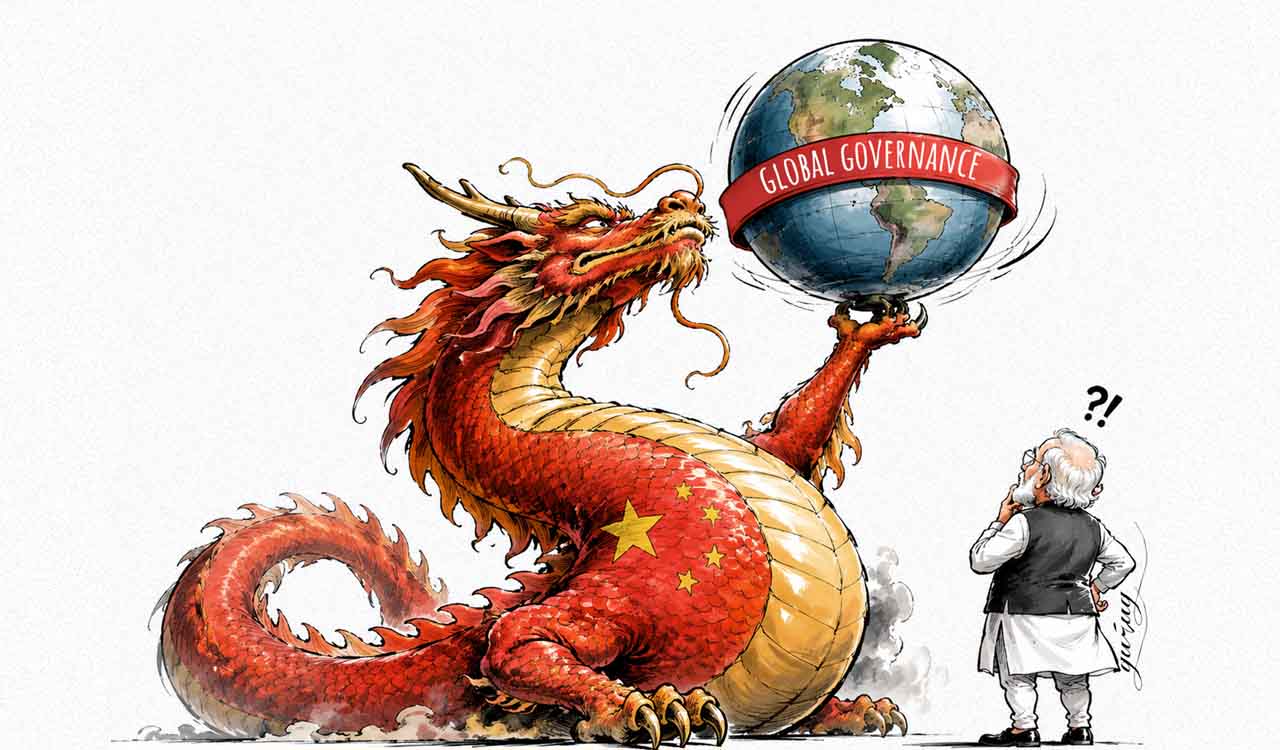
Taken together, these themes reveal a China that increasingly sees itself not merely as a participant in the international system but as one of its principal architects.
At the heart of the document lies a critique of the existing order. Without naming the United States directly, the White Paper refers to countries that have initiated trade and technology wars, withdrawn support from international institutions and pursued unilateral policies.
The references are unmistakable. In recent years, Washington has either withdrawn from or suspended support for institutions and programmes such as UNESCO, the World Health Organisation, UNRWA, UNFPA, the Green Climate Fund, and several United Nations initiatives. Beijing appears to view these developments as evidence of growing strains within the post-Cold War international framework.
Central Message
The timing of the White Paper is therefore significant. It comes at a moment when debates over tariffs, technological competition, regional conflicts and the future of multilateral institutions have intensified. Beijing has sought to present itself as a defender of multilateralism, international law and the centrality of the United Nations. Wang Yi argued that the “law of the jungle” is re-emerging in international affairs, while the document repeatedly calls for respect for sovereignty, sovereign equality and the purposes and principles of the UN Charter.
The central political message of the White Paper is that the world is moving towards multipolarity. According to Beijing, the era of a unipolar international order is gradually giving way to a more dispersed distribution of power, with the Global South emerging as a decisive force in world politics. China notes that UN membership has expanded from 51 countries in 1945 to 193 today. It further argues that the Global South now accounts for more than 60 per cent of the world economy in purchasing power parity terms and contributes nearly 80 per cent to global economic growth.
For India, the challenge is to ensure that the transition towards multipolarity broadens global participation rather than merely replacing one concentration of influence with another
This emphasis on the Global South is not accidental. China is seeking to position itself as a leading voice for developing countries across Asia, Africa and Latin America. The White Paper argues that global financial institutions and decision-making structures continue to reflect the balance of power that emerged after the Second World War rather than contemporary economic realities.
In that sense, Beijing’s message is likely to resonate with many countries that have long demanded reforms of institutions such as the International Monetary Fund, the World Bank and the United Nations Security Council.
The document also seeks to portray China as a responsible stakeholder in international affairs. It highlights the country’s role as the second-largest contributor to the UN peacekeeping budget and the largest contributor of peacekeeping personnel among the permanent members of the Security Council. More than 50,000 Chinese peacekeepers have participated in 29 UN missions, while China maintains a standby peacekeeping force of 8,000 troops. These contributions reinforce Beijing’s argument that it is already playing a significant role in maintaining international stability.
Important Limitation
Yet the White Paper also reveals an important limitation. While China calls for a more equitable international order, it remains cautious about assuming the financial burdens historically associated with global leadership. Unlike the United States in the decades following the Second World War, Beijing is not proposing major new funding commitments to global institutions.
This restraint is also visible in China’s evolving approach to the Belt and Road Initiative, where large-scale lending has increasingly given way to more selective and targeted projects. The document, therefore, reflects considerable ambition, but not necessarily a willingness to shoulder substantially greater global financial responsibilities.
Nevertheless, Beijing’s effort to shape the international narrative should not be underestimated. The White Paper must also be viewed alongside President Xi Jinping’s Global Governance Initiative, which seeks to provide an intellectual framework for China’s vision of international cooperation. It repeatedly rejects zero-sum competition, unilateral tariffs and bloc politics, presenting China’s preferred alternative as one based on consultation, development and multilateral decision-making under the UN framework.
Whether this vision gains wider acceptance will depend on more than rhetoric. The effectiveness of China’s message will ultimately be judged by whether other countries perceive its actions as consistent with the principles it advocates. For many states, the credibility of any claim to global leadership rests not only on policy declarations but also on conduct.
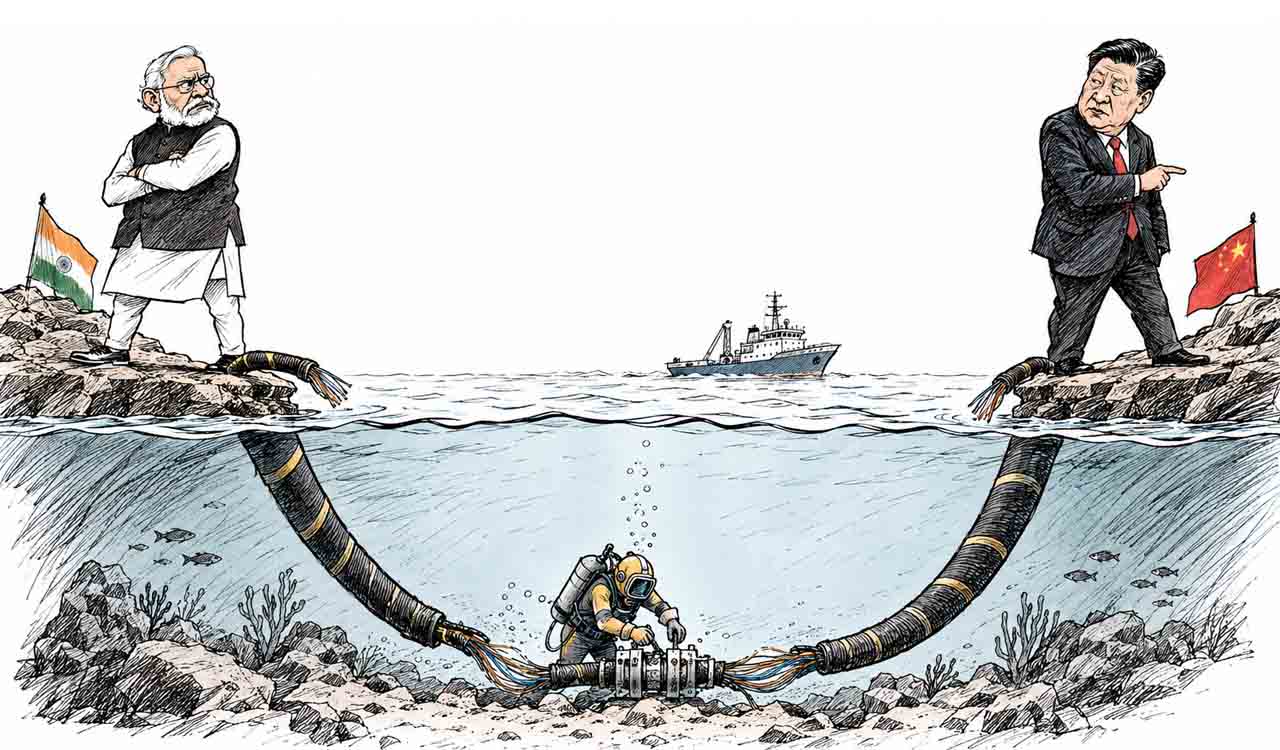
For India, the White Paper presents both opportunities and challenges. Its call for greater representation of developing countries in global institutions aligns with India’s long-standing demand for reforms of the UN Security Council, the IMF and the World Bank. At the same time, China’s attempt to position itself as the principal spokesperson of the Global South inevitably intersects with India’s own efforts to shape the international agenda through forums such as the G20, BRICS and the Voice of Global South initiatives.
India is therefore likely to adopt a nuanced approach. It may welcome efforts aimed at making global governance more representative and inclusive while remaining cautious of initiatives that could disproportionately expand Chinese influence.
The larger significance of the White Paper lies not merely in its specific proposals but in what it signals: Beijing is increasingly seeking to define the terms of debate about the future international order. For India, the challenge is not whether to support a more representative global system. It has long advocated precisely such reforms. The challenge is to ensure that the transition towards multipolarity broadens global participation rather than merely replacing one concentration of influence with another.
(The author, a retired Army officer, writes on strategic and international affairs)

Related News