Opinion: Five-day banking: Reform or disruption?
With banking rapidly going digital, the debate should centre on balancing employee expectations, customer convenience and operational requirements


By Dr Suman Kumar Kasturi
The banking sector acts as the financial backbone of a nation. The impending three-day bank strike proposed for September 28–30 poses a million-dollar question: after years of consultations and a formal agreement, how long should a workplace reform remain pending? Plausibly, the proposed strike may cause temporary inconvenience to customers. However, the strike also raises a larger question—one that goes beyond three days of industrial action.
Also Read
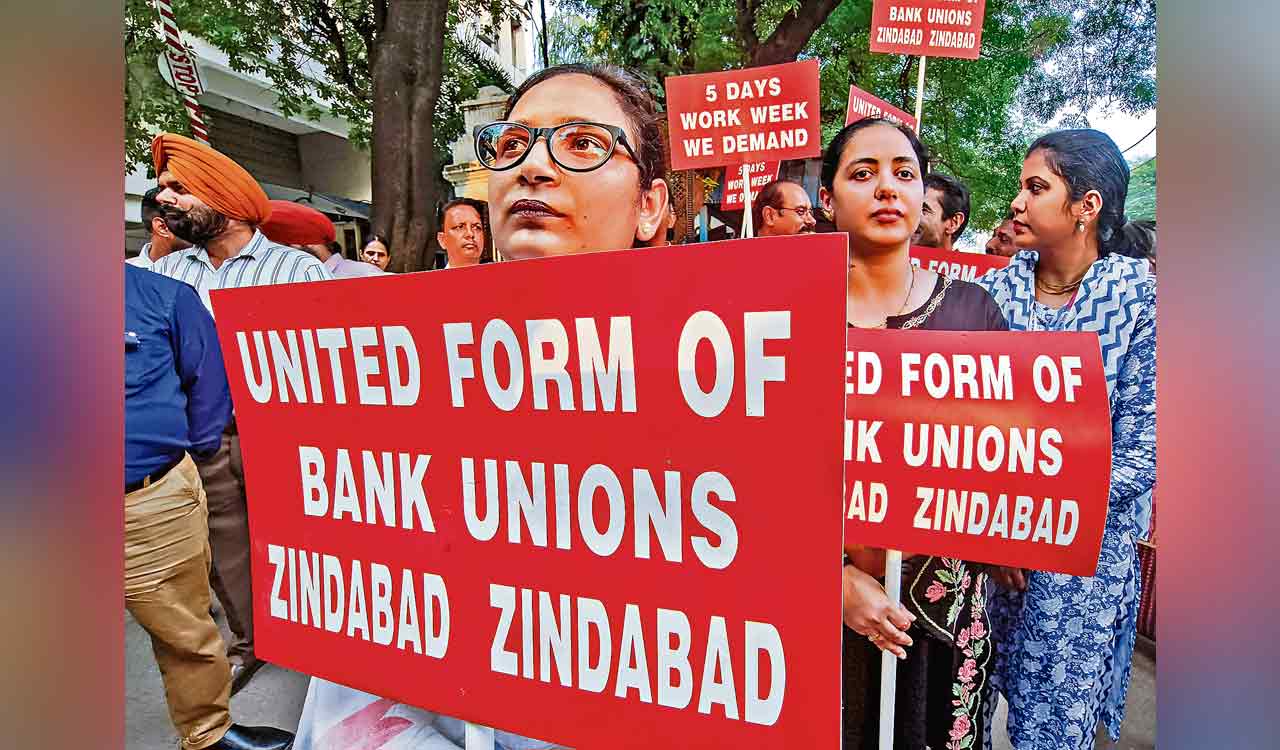
The banking industry’s negotiations over the years had the demand for five-day banking as its main component—the United Forum of Bank Unions (UFBU) has made it one of its principal demands. It is evident that the Indian Banks’ Association (IBA) conceded to the proposal under the 12th Bipartite Settlement/9th Joint Note, signed on March 8, 2024.
The proposal envisaged compensating for Saturdays by extending working hours from Monday to Friday by 40 minutes. It was subsequently recommended to the Union government. Nonetheless, the implementation remains stalled and warrants a closer look.
Not 5-day Work
The public debate mostly treats the five-day banking proposal as a straightforward demand for an additional holiday. However, this is an incomplete picture. The negotiations between stakeholders involve redistributing working time during the week.
The question, therefore, is not simply whether bank employees should work fewer hours, but whether the outdated distribution of those hours still makes sense, considering that banking today is very different from the banking of yesteryear, with many digital methods available 24X7.
Indubitably, the branch remains imperative, but it is no longer the entire banking system. In this milieu, technological transformation makes it legitimate to ask whether the old-style six-day branch schedule should remain unchanged.
Customer Cannot be Afterthought
No doubt, the customer is an important stakeholder in any banking environment. Hence, the argument for five-day banking cannot be made without addressing the customer, for a bank is not simply another office. For a section of people who are less comfortable with digital technology, branch services remain crucial. Any change in working arrangements must therefore ensure that customer service does not suffer. That does not inevitably make five-day banking impossible.
The contemporary banking ecosystem, with its assorted digital channels, could separate branch operations from the round-the-clock functioning of the financial system. Additionally, critical back-office and vital banking functions can be maintained without any disruption.
The question is not simply whether bank employees should work fewer hours, but whether the distribution of those hours still makes sense, given how banking has changed, with digital services now available 24×7
Given the above, the indecision surrounding the five-day banking demand is the strongest point of concern for bankers. If an agreement has been reached through the industry’s established collective negotiating process and the proposal has subsequently been recommended to the government, employees are entitled to ask a simple question:
What is holding up the decision? After the March 2024 agreement, more than two years have elapsed without implementation. Obviously, the government has greater accountability, for it should take customers, businesses, financial stability, regional requirements and the operational needs of different categories of banks into consideration before taking its call.
Nonetheless, sincere scrutiny should eventually lead to a decision. If the proposal can be implemented, it should be implemented with the necessary safeguards. If modifications are required, they should be conveyed. If there are substantive reasons for rejecting or postponing any part of it, those reasons should be explained clearly. Indefinite indecision serves neither bankers nor customers.
Uniformity in PLI
The present agitation includes concerns regarding Performance Linked Incentive (PLI). The question of uniformity in PLI is particularly pertinent in an industry where employees function under broadly common institutional objectives but may encounter differences in incentive structures and service conditions.
Uniformity, however, should not be confused with identical treatment in every situation. Different responsibilities and measurable performance can legitimately be recognised through transparent and clearly negotiated mechanisms. The rules governing incentives and service conditions should be comprehensible, reliably applied and arrived at through due process to instil trust among bankers.
The Four Perspectives
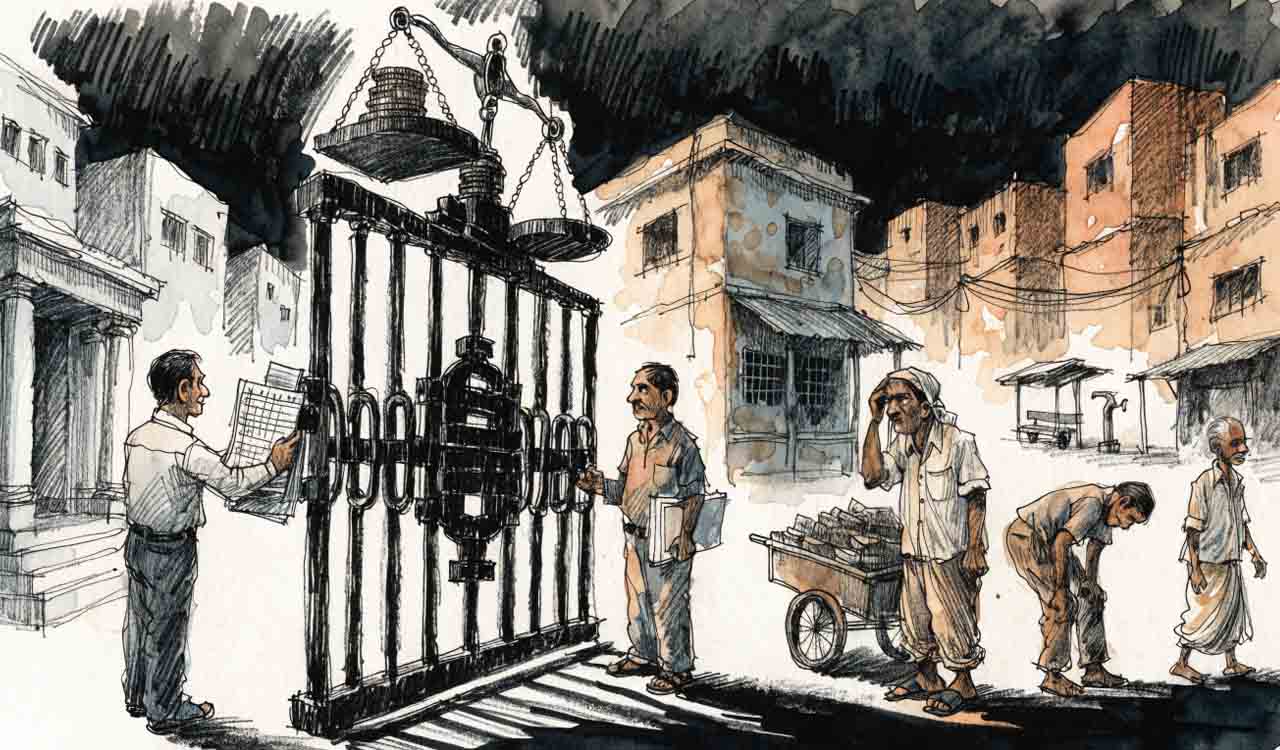
Industrial disputes are seldom as simple as they appear from the outside. While the customer sees a closed branch, the banker sees years of negotiations and an unsettled promise. Management sees operational and financial constraints while the government sees the competing interests of millions of stakeholders and the wider economy.
Without doubt, all four perspectives matter. That is why neither dismissing the strike as mere inconvenience nor assuming that every union demand must automatically be accepted provides a satisfactory answer. Negotiation is the ultimate way forward.
Changing with Time
Banking has changed. Why not the working week? This is conceivably the fundamental question. India is swiftly moving towards a banking system that is digital and accessible around the clock. In this scenario, it would be unusual if the organisation of human work continued totally untouched by that transformation.
The gains from that transformation, however, need to be balanced carefully. In a setting where technology has made banking easier, bankers should not be expected to remain forever within a working model designed for a very different era simply because changing it is administratively inconvenient.
At the same time, customers should not be inconvenienced when a dispute can be addressed through timely negotiation and sensible operational planning. The issue, therefore, is not to choose between bankers and customers, but it is to design a system that recognises both.
An ideal modern public sector bank in India has to balance employee expectations, customer convenience, operational realities and the changing nature of banking. In conclusion, for an industry that prides itself on modernisation, perhaps it is time to modernise the way the question itself is approached. After years of discussion, surely a clear, reasoned and negotiated answer is due.
They say change is inevitable! Then why not five-day banking and uniformity in PLI among bankers?

(The author is an Air veteran-turned-independent researcher)

Related News