Opinion: From stardom to statesmanship — what sets Vijay apart in politics
Unlike many celebrities entering politics, Vijay does not appear psychologically trapped within the bubble of celebrity worship, a trait that could become his biggest political strength


By Chittarvu Raghu
The relationship between cinema and politics in India has always been deeply fascinating. Over the decades, several film stars have attempted to transform cinematic popularity into political success. Some emerged as extraordinary political figures, while many others failed despite possessing immense fan followings and unmatched celebrity status. These failures are often explained through political factors such as weak organisation, lack of strategy, or electoral miscalculations. However, the deeper reason may lie in the psychological consequences of stardom itself.
Also Read
Fame has a profound ability to reshape human psychology. An actor who spends years receiving constant admiration, applause, and public worship inevitably undergoes a gradual transformation in self-perception. This process is rarely sudden or deliberate. It develops silently through repeated exposure to unconditional praise and carefully cultivated celebrity culture.
Admiration Trap
Over time, the individual begins to exist within an environment where criticism becomes limited and admiration becomes permanent. Every public appearance is celebrated, every statement receives exaggerated importance, and every gesture is treated as extraordinary. Such continuous reinforcement slowly creates a psychological distance between the celebrity and ordinary social realities.
The real danger of this condition is not visible arrogance alone. The deeper issue is psychological insulation. The actor gradually becomes disconnected from ordinary life without even recognising it. A subtle sense of superiority begins to emerge because society itself repeatedly places the individual on a pedestal.
In cinema, this distance is often accepted and even encouraged because superstardom depends upon creating an aura larger than life. The film industry thrives on this carefully constructed image. Elevated stages, dramatic entries, controlled interactions, heavy security, and choreographed appearances all help preserve the mystique of celebrity. Fans themselves strengthen this process because admiration often transforms into emotional devotion.
Political Realities
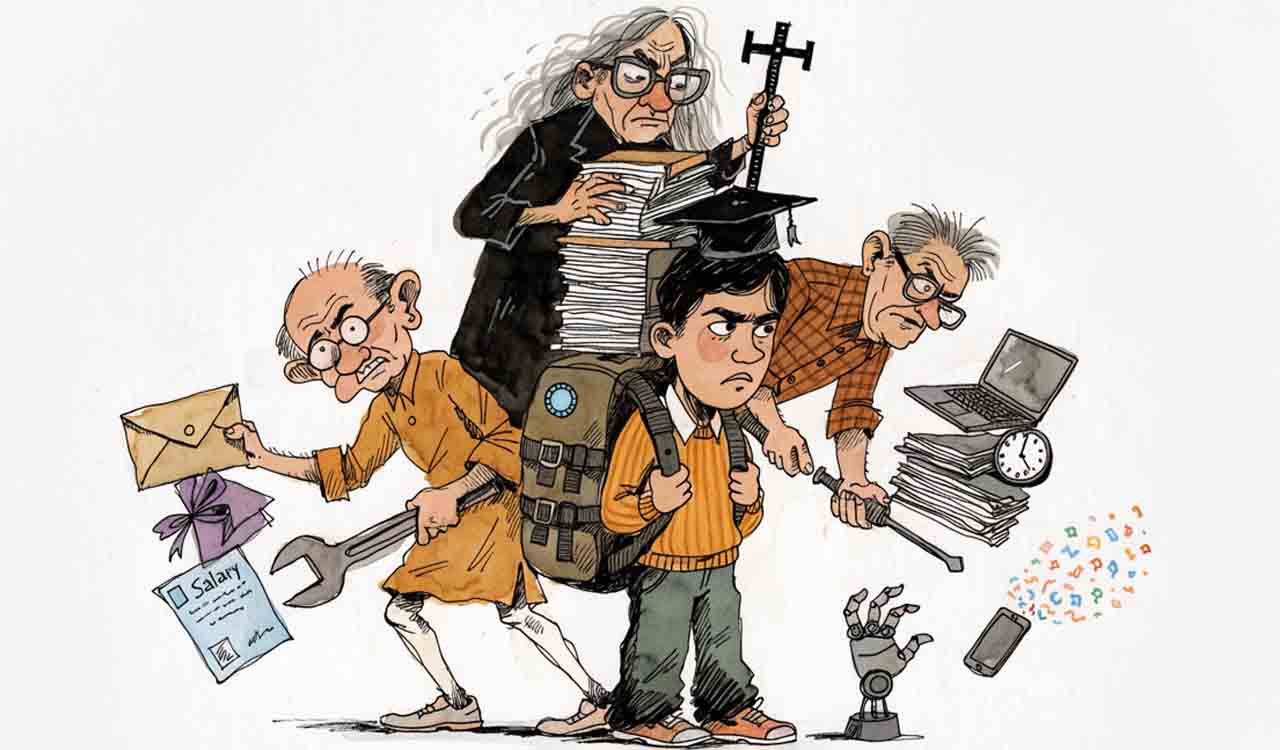
Politics, however, operates on entirely different principles. Unlike cinema, politics cannot survive on glamour, illusion, or emotional fantasy alone. Political legitimacy depends upon trust, accessibility, patience, and emotional connection with ordinary citizens. A political leader cannot psychologically position himself above society. He must remain among the people and connected to their lived realities. This is precisely where many actors struggle after entering politics.
The psychological effects of prolonged celebrity worship often become visible in subtle ways. It may appear in body language, public conduct, speech, or an inability to engage naturally with ordinary citizens. Sometimes these reflect entitlement, while at other times, they emerge as emotional distance or excessive self-importance.
Even when these traits are not openly visible, people instinctively recognise them. Voters may admire an actor as a performer, celebrate his films, and enjoy his cinematic persona, but political trust is fundamentally different from cinematic admiration. Citizens can distinguish between genuine humility and rehearsed simplicity because politics ultimately demands authenticity.
If Vijay resists political arrogance and stays emotionally authentic, the actor-turned-politician could emerge as a rare example of humility, successfully bridging cinema and public service
This perhaps explains why several immensely popular stars across Indian cinema could not successfully sustain political careers. Their failure was not simply organisational or electoral. In many cases, it was psychological. They found it difficult to transition from being worshipped by the people to becoming accountable to the people. Politics demands emotional synchronisation with society. It requires the ability to listen patiently, absorb criticism, understand suffering, and remain grounded in social realities. A leader who loses touch with ordinary life eventually loses touch with public sentiment itself.
Vijay’s Strength
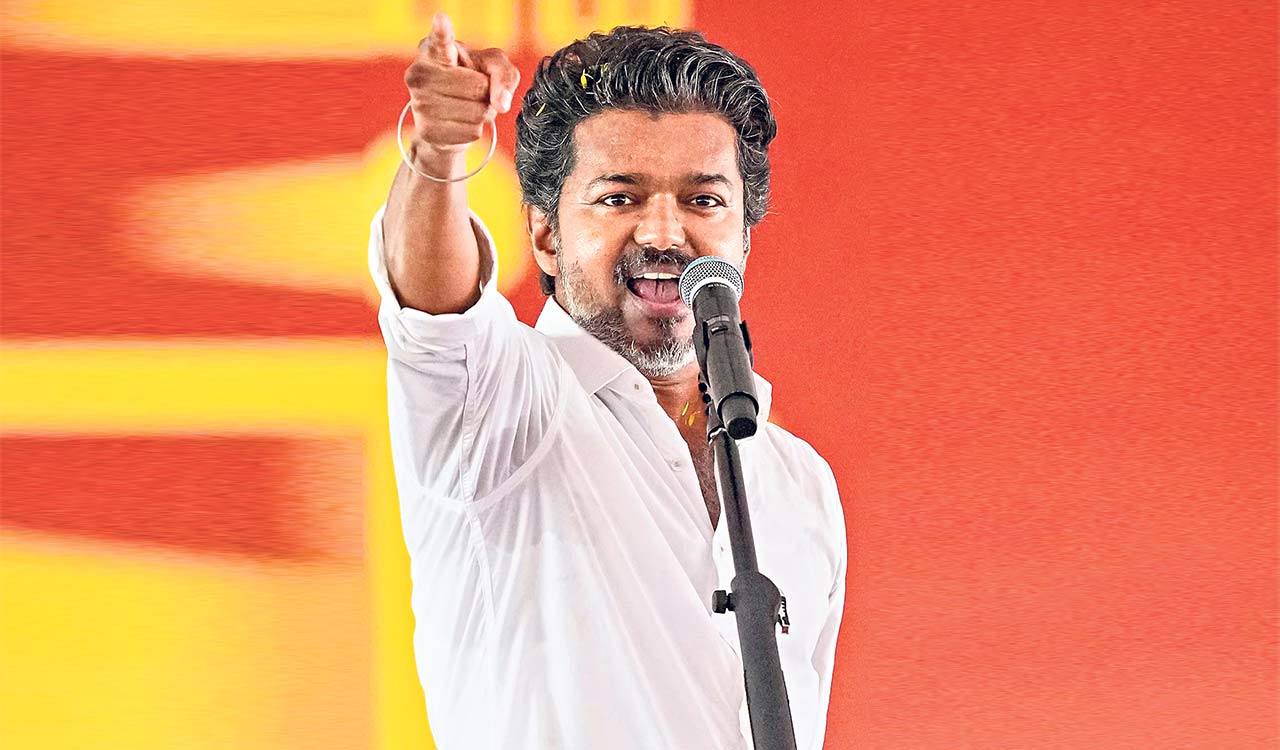
This is where Vijay appears different. From what one observes publicly, Vijay seems to possess a noticeable sense of groundedness. His public demeanour appears calm and measured. There is very little trace of exaggerated self-importance in the way he presents himself. His body language reflects simplicity rather than superiority. Most importantly, he does not appear psychologically trapped within the bubble of celebrity worship that has affected many stars before him. There is a natural ease and accessibility in his public presence that creates a perception of authenticity.
This psychological simplicity may become his greatest political strength. Vijay appears to recognise that cinematic popularity alone cannot guarantee political legitimacy. Fan following may create attention, but political trust must be earned through humility, credibility, patience, and sustained public engagement. At the same time, entering politics is only the first challenge.
The greater challenge emerges after political success. Power can transform individuals just as deeply as fame can. Many leaders begin their public journey with humility and sincerity, but gradually change after acquiring authority. Political power often creates its own psychological insulation. Leaders begin hearing only praise while criticism slowly disappears from their surroundings. The distance from ordinary citizens begins to grow once again.
This is where true political character is tested. If Vijay succeeds politically, his real examination will begin at that stage. The simplicity he appears to possess today must survive the pressures and temptations of power tomorrow. He must resist political arrogance just as he appears to have resisted the arrogance that often accompanies superstardom. If he succeeds in preserving this groundedness, he may emerge as more than just another actor entering politics. He may instead become an example of how humility and emotional authenticity can successfully bridge the worlds of cinema and public service.
In the long run, politics does not reward performance alone. It rewards authenticity, credibility, and emotional connection with people. As of today, Vijay appears to possess the psychological temperament necessary for such a transition. Whether that simplicity survives the realities of political power will determine the true trajectory of his public life.
(The author is a senior Advocate)

Related News