Opinion: How money’s shadow rules us
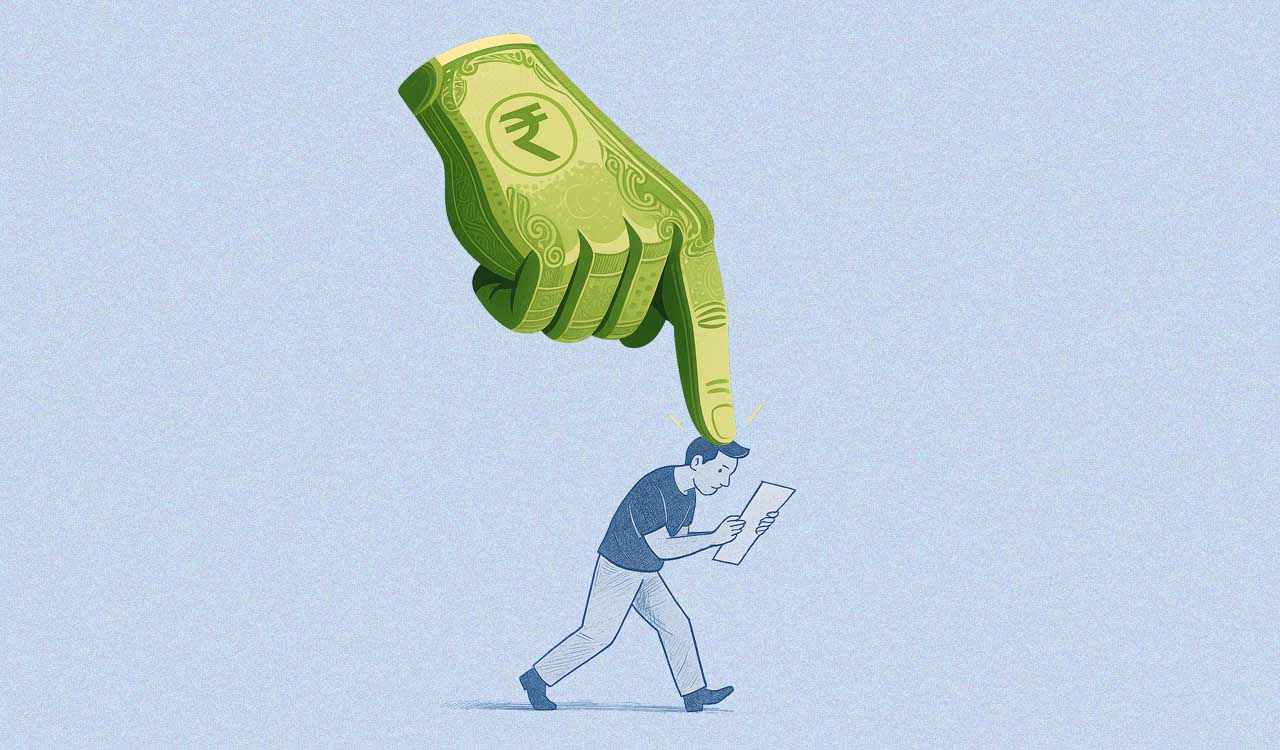
Our financial decisions aren’t in data but in hidden emotional patterns — how we interact with money reflects deep beliefs about safety, control, and self-worth


By Prof Jaya Misra, Dr Sukhamaya Swain, Dr Siddhartha Bhattacharya
For years, we believed money was all about logic and numbers. But our financial lives are truly driven by emotion. While spreadsheets may balance, people often do not, revealing that emotion, not math, is the core force shaping financial behaviour. If money were only about logic, we wouldn’t stay up at night thinking about past mistakes or feel guilty when we spend on ourselves. We wouldn’t buy things to fill a void, put off investing out of fear, or tie our self-worth to our wealth. But we do these things, every day.
Also Read
Behavioral finance has long said that fear and greed drive the markets. Building on this, shadow work asks a deeper question: why? Why does one person panic and sell at the first sign of trouble, while another keeps taking risks even when it’s unwise? Why do so many of us hold ourselves back or chase success but still never feel secure when we achieve it?
Emotional Undercurrents
The real reasons behind our financial decisions aren’t in the data; they’re in our hidden emotional patterns. How we interact with money reflects deep beliefs about safety, control, and self-worth. This emotional core explains why finances rarely follow pure logic. And we are not as rational as we think.
Recent data underscore the emotional undercurrents of finance. In a 2023 survey commissioned by Self Financial, 89.4 per cent of respondents admitted to engaging in “emotional spending” (with an average spend of about $62.55 per purchase). On the mental-health side, large-scale work from financial-wellbeing research shows a very strong correlation between one’s sense of financial control and psychological well-being. What this really means is, money, in more ways than one, is emotional.
Many of us grew up learning unspoken rules, like thinking that wanting more is greedy, that having things easy means being lazy, or that wealth comes with a moral price. These ideas shaped the way we handle money. So when we save, spend, or avoid money decisions, we’re not just managing money; we’re managing our emotions.
To help us recognise these patterns, behavioral finance labels them as biases, like loss aversion, overconfidence, and herd behaviour, while shadow work describes them as archetypes, inner characters that try to protect us, even if their help sometimes does more harm than good.
Meet the Money Shadows: The Emotional Roles We Play
- The Victim shadow feels at the mercy of money, blaming luck, the market, or circumstances. When things go wrong, they wait for rescue rather than reach out to an agency. Beneath that helplessness is a quiet belief: “I don’t have control over my life.”
- The Controller seeks safety by being certain, checking accounts, tracking expenses, and planning every move. Control feels like protection, but beneath all the spreadsheets is a fear: “If I stop watching, everything will fall apart.”
- The Martyr is generous with others but hesitates to spend on themselves. Their giving becomes a way to feel loved or needed. Their inner message is, “As long as I sacrifice, I’m good.”
- The Saboteur works hard and dreams big, but then suddenly self-destructs by missing deadlines, cancelling plans, or walking away just before things work out. It’s not laziness. It’s fear saying, “You don’t deserve what you want.”
- The Rebel resists advice, rules, and systems, priding themselves on being different. But beneath the defiance is often a fear of being controlled or invisible. Their unspoken truth is: “If I follow the rules, I’ll disappear.”
- And the Impostor lives with the quiet dread of being exposed, convinced they’re one mistake away from losing it all. They say, “I’m not good with money,” but what they really mean is, “If I fail, it means I’m not enough.”
Each of these shadows wears a familiar face in the financial world. Behind every bias is a human story. The Victim’s avoidance mirrors risk aversion, while the Controller’s vigilance becomes overconfidence. The Martyr’s self-denial shows up as under-investing, and the Saboteur’s fear disguises itself as poor timing. The Rebel’s defiance drives contrarian choices, and the Impostor’s shame leads to hesitation, paralysis, or overcompensation.
Beneath the Mask
Much of what seems irrational in finance is actually emotion acting as self-protection. Each so-called mistake begins with a learned emotional reflex reflecting deeper needs for safety or control. By recognising money choices as products of emotional narratives, not personal failures, we gain the power to change them. Here, genuine transformation in financial behaviour starts.
Each of these shadows wears a mask that appears to be behaviour. Beneath them are emotions we rarely name, like fear, guilt, shame, and longing. These forces shape our financial patterns far more than any market index ever could.
Even professional investors are not immune. For example, a 2024 study found that loss aversion, the tendency to experience losses more sharply than equivalent gains, significantly influences investment behaviour. Another line of research highlights the strong roles of fear, impulsivity, and overconfidence in explaining variation in investment decisions. The bottom line: emotion often drives money more than pure logic.
When collective emotion surges like fear in a downturn or euphoria in a bubble, individual shadows merge into what can be called the collective money shadow. Behavioral finance calls it herd mentality. One person’s panic becomes everyone’s panic. One person’s greed ignites a frenzy. Markets don’t collapse because humans forget math; they collapse because humans forget themselves.
Changing our financial lives requires understanding the emotional drivers behind our choices, not simply mastering formulas. The goal isn’t to silence our insecure, anxious, or reckless parts, but to know them. Once we do, we move beyond fixing numbers and instead begin healing the story that shapes them. When we understand these emotional drivers, money stops measuring worth and starts revealing what we believe about ourselves. This is the real shift: from math to meaning, from fear to understanding.

(Prof Jaya Misra is Adjunct Faculty, and Dr Sukhamaya Swain and Dr Siddhartha Bhattacharya are Professors of Finance, JK Business School, Gurugram)

Related News