Opinion: The evil of political defections
By Nayakara Veeresha The political fallout of the Maharashtra Vikas Agadhi (MVA) regime in Maharashtra has reignited the debate on defections and their role in democracy. Political defections and the subsequent government’s downfall in Maharashtra are nothing but a betrayal of the people’s mandate and democracy. It seems political parties are least bothered about respecting […]


By Nayakara Veeresha
The political fallout of the Maharashtra Vikas Agadhi (MVA) regime in Maharashtra has reignited the debate on defections and their role in democracy. Political defections and the subsequent government’s downfall in Maharashtra are nothing but a betrayal of the people’s mandate and democracy. It seems political parties are least bothered about respecting the voter’s decision in the gamble of power politics. By resorting to this greedy politics, they are doing irreparable damage to the foundations of democracy.
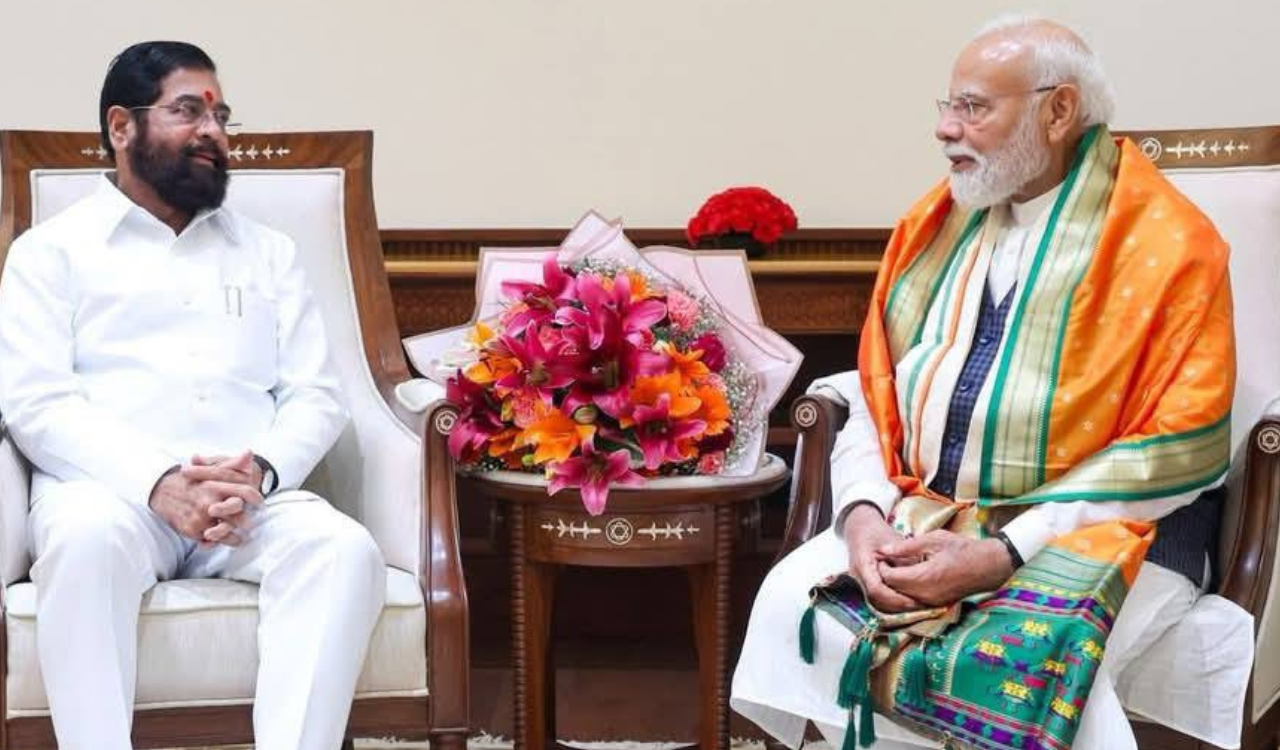
The political ambitions of individuals like Eknath Shinde and other dissenting MLAs highlight not only greedy power politics but also the fragility of Indian democracy. The internal rift within the Shiv Sena and its power dynamics led to this situation in addition to ideological dissonance. The democratic decline in Maharashtra has once again resurrected the limitations of anti-defection laws in the country, especially the Tenth Schedule of the Constitution.
Old Phenomenon
This is one side story of the coin; the other side and also one of the important missing links in the ongoing discourse is the fragility of democracy, especially at the State level politics. Set against this backdrop, it is essential to understand the political crisis of Maharashtra from a democratic perspective. The politics of defection in India purely to climb up the ladder of power positions is not a new phenomenon as seen more specifically between 1967 and 1969 and in contemporary times.
Political defections are antithetical to the principles of democratic governance. They betray the electoral mandate of the voters; corrode the fundamental tenets of the party system; destabilise the elected governments; and reduce the value of politics from a transformative tool for social change to serving individual interests, a political business cycle. The last two aspects can be seen more frequently in Indian politics, especially in the post-coalition phase.
The fifty-second Amendment Act of 1985 added the Tenth Schedule under Articles 102(2) and 191(2) of the Constitution, also popularly known as Anti-Defection Law, to contain the political defections in the country. The main objective of this law is “to curb the evil of political defections motivated by the lure of office or other similar considerations that endanger the foundations of our democracy”.
Limitations of the Law
More than three-and-a-half decadal experience shows that the implementation of the law has certain inherent limitations due to which political defections are happening continuously and are on the rise. Various committees have recommended amendments to the Tenth Schedule and strengthening of the same.
The Committee on Electoral Reforms, 1990, (under the chairmanship of Dinesh Goswami) recommended the amendment to the Tenth Schedule to confine the disqualification provisions to specific cases, along with the transfer of power to decide the legality of disqualification from Speaker/Chairman of the House to the President or Governor.
The same was opined by the Law Commission of India in its 255th report on ‘Electoral Reforms (2015)’. The Supreme Court in the case of Shrimanth Balasaheb Patil & Others vs. Hon’ble Speaker, Karnataka Legislative Assembly and Others (2019) observed that “Parliament is required to re-consider strengthening certain aspects of the Tenth Schedule” to contain the undemocratic practices of the political parties and leaders of those who engage in corrupt practices.
In spite of these recommendations, successive governments have not taken any steps to amend the Tenth Schedule. This brings forth the politics of defection and its implications on democracy and constitutional governance.
The heart of the matter is given the role of identities such as jaati (caste), community, ethnicity, gender, religion and ideology in politics and political parties are reluctant to bring progressive changes in the anti-defection law. These identities, coupled with money, muscle power and dynastic background and its associated social status in influencing the people’s perception in the elections, create effective barriers to initiating measures to tighten the anti-defection law.
In this context, it is worthwhile to mention that the Constitution does not have provisions for the constitution, supervision and regulation of political parties, which is critical for the sustainability of parliamentary democracy. In fact, the provisions of the Tenth Schedule to some extent have filled this vacuum by extending the role of political parties in political affairs and processes. The 91st Amendment made defections more difficult by deleting certain provisions, yet it could not stop them in their entirety.
Individual, Institutional Aspirations
Political parties irrespective of ideologies continue to do power politics especially when the party is losing its ground. It is worrisome to note that the government at the Centre is resorting to political defections by identifying and attracting the dissatisfied and discontented leaders in the elected governments. This was evident in the cases of Goa, Karnataka, Madhya Pradesh and now Maharashtra. The next political target seems to be Rajasthan.
The English philosopher Thomas Hobbes while explaining the person’s behaviour in the state notes that “the biggest threat to the stability of states is the existence of too much scope for private judgment. The more each person is entitled to think for themselves in matters of well being, the worse it turns out for everyone.”
To overcome the private interests of individuals, it is necessary to strengthen the Election Commission of India (ECI) to an extent that powers must be accorded to regulate the actions of the political parties. This is in practice in Germany, Portugal and Spain and needs to be studied and replicated as per the suitability of the Indian socio-political conditions. A political and policy consensus on the need to bring the regulation of political parties within the ambit of the Constitution through the ECI is imperative to protect and preserve our democracy.
(The author is PhD Fellow, Centre for Political Institutions, Governance and Development, Institute for Social and Economic Change [ISEC], Bengaluru. Views are personal)

Related News
-

One-year extension to learn Marathi removes livelihood threat, say taxi, auto unions
-
Ganeshotsav 2026: Maharashtra govt steps up preparations for smooth celebrations
-
Eknath Shinde meets PM Modi amid govt push for women’s reservation, delimitation bills
-
Supreme Court issues notices on Shiv Sena (UBT) MPs merger plea