Opinion: Time for Gross Ecosystem Product
For more than 70 years, Gross Domestic Product, or GDP, has been the key yardstick by which nations have measured economic progress. But GDP is designed to exclusively account for the monetary benefits accrued from economic activity. It is blind to the degradation of the natural environment, finite resources and human well-being. It’s time we […]


For more than 70 years, Gross Domestic Product, or GDP, has been the key yardstick by which nations have measured economic progress. But GDP is designed to exclusively account for the monetary benefits accrued from economic activity. It is blind to the degradation of the natural environment, finite resources and human well-being. It’s time we came up with something better.
Without ever having to acknowledge how nature has contributed to economic growth, GDP has promoted unsustainable practices that have contributed to the climate and biodiversity emergencies. To put it another way, GDP is like a ledger that will not accept red ink. Like an accounting trick, it has allowed us to vent greenhouse gasses into the atmosphere, destroy habitats and neglect human well-being without ever having to worry about the consequences.
Of course, the current environmental disaster was something that the economist Simon Kuznets did not have to consider when he developed the concept in the aftermath of the Great Depression in the 1930s. But notwithstanding its limitations, something Kuznets was himself aware of, GDP has become the main economic indicator in use today. This puts policy makers who are trying to limit global warming in somewhat of a bind.
Nature’s Contribution
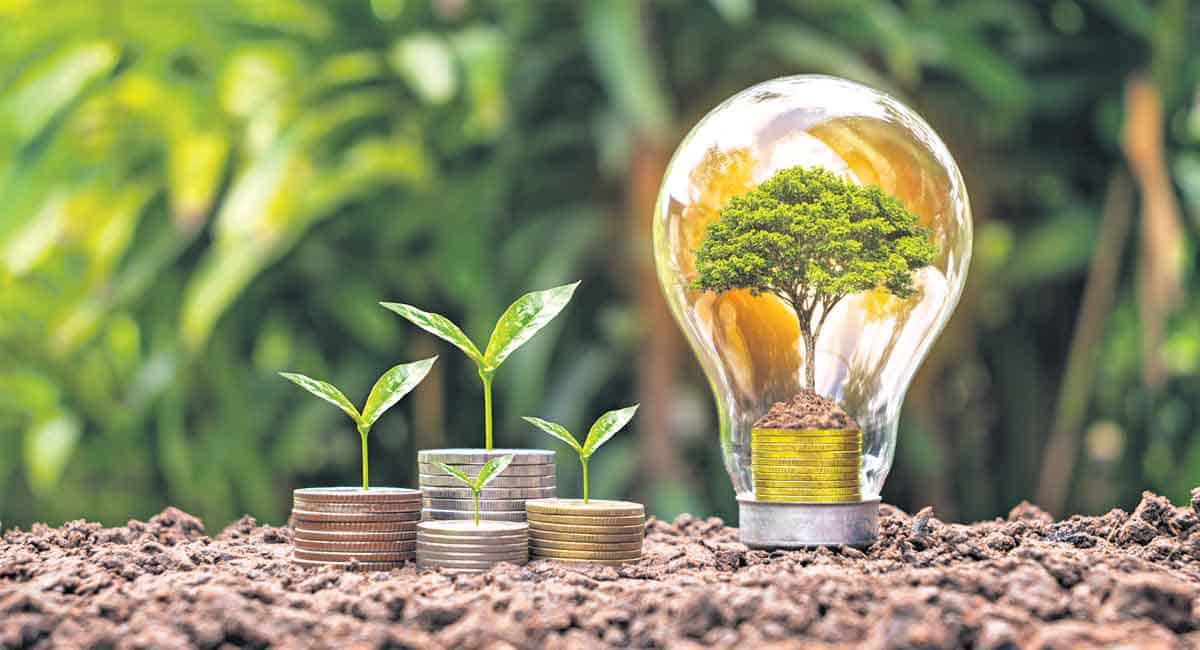
As such, we need to start looking at alternative metrics such as Gross Ecosystem Product (GEP) so that we can account for nature’s contribution to economic activity and human well-being.
Although research into calculating GEP is only in its infancy, it attempts to place a monetary value on things like clean water, soil quality, food security, healthcare and the culturally-significant landscapes that contribute to our happiness. In other words, GEP assigns a dollar value to the work of bees who act as nature’s pollinators, bogs that sequester carbon, and the stimulating effect nature has on our mental health.
While GDP looks exclusively at the value of production – or outputs – GEP instead places a value on nature’s input and incentivises policymakers to invest in nature. It would be naive to simply add both measures together and come up with an overall figure, since both metrics overlap in numerous areas. But the two measures can still provide decision-makers with complementary information that could help allow for sustainable economic growth into the future.
Exporting Ecosystem Services
For example, the Chinese government has been experimenting with the implementation of GEP in Qinghai province – a remote region of the Tibetan plateau that contains the source of the Mekong, Yangtze and Yellow Rivers. There, researchers found that GEP was far greater than GDP in the year 2000, 81.5 Vs 26 billion Yuan. At that point, there was considerably more useful ecosystem activity than human economic activity.
However, by 2015 GEP had shrunk to three quarters the size of GDP, 185.4 Vs 242 billion Yuan. This suggests greater investment had been made in traditional economic growth at the expense of the environment.
Intriguingly, as Qinghai is the source of three major rivers, the study also found that the province “exports” ecosystem services like drinking water and fertilising nutrients, which show up in the GEP accumulated by other Chinese provinces and neighbouring countries.
The ability to measure the value of Qinghai’s ecosystem “export” could set in train a process whereby financial compensation is paid to the province by neighbouring regions.
Such a programme could create the economic incentive for communities to conserve and grow ecosystem assets. To put this in a global perspective, imagine if Brazilian farmers were paid by European countries to manage the rainforest based on the amount of carbon it sequesters.
Similarly, in Ireland where I live, GEP would allow bogs and woodlands to contribute to the economy. In such a scenario, Irish cities could be compelled to pay rural regions to store some of the carbon they produce or to maintain culturally significant landscapes that enhance mental health and wellbeing.
By placing a value on the benefits that we derive from our natural environment, GEP would also encourage us to think differently about how we manage, maintain and grow those regions that have been neglected in favour of centralised growth strategies.
However, for now at least, it would be impractical to implement a system like GEP or the UN’s System of Environmental-Economic Accounting. Apart from being hugely complex and largely unproven, adopting it would require a global economic consensus on a scale not seen since the international financial order was devised after the second world war.
Nevertheless, if we are to manage the complex trade-offs needed to mitigate the climate crisis, then radical new thinking is required.
(The author is Senior Lecturer, Department of Food Business and Development, and Deputy Director of the Centre for Sustainable Livelihoods, University College Cork. theconversation.com)
Now you can get handpicked stories from Telangana Today on Telegram everyday.
Click the link to subscribe. Click to follow Telangana Today Facebook page and Twitter .

Related News