Opinion: Hard reality — living with HIV, dying in stigma
The dissonance between medical success in treating HIV and social acceptance of people living with HIV must be addressed


By Kattamreddy Ananth Rupesh, EB Pavan Kalyan Reddy
Living with HIV in India often unfolds very differently from the optimistic narratives that accompany the country’s progress against the disease. National programmes led by the National AIDS Control Organisation (NACO) have made significant strides in treatment and medical management, yet the lived realities of many patients remain shaped by silence, stigma, and social abandonment.
Also Read
Recently, we encountered a deeply unsettling case. A husband and wife rented a room in a private lodge far from their hometown so that the woman, who was in the terminal stages of HIV/AIDS, could spend her final months away from the scrutiny of their community. They lived there in isolation for nearly six months. She eventually died alone, and even her husband disappeared, leaving no one to witness her final moments. As a result, the police registered the case as an unnatural death, and the state assumed responsibility for her unclaimed body.
This case is just the tip of the iceberg of what people living with HIV face in our society. Working closely with individuals living with HIV, both during their care and after death, has exposed us to difficult realities within the healthcare system. We have witnessed instances where seropositive individuals face subtle or overt disdain from some healthcare providers, despite the professional obligation to provide compassionate and unbiased care. They also encounter serious challenges in securing employment, and even healthcare workers living with HIV may struggle to find or retain jobs due to fear surrounding the virus.
Although India enacted the HIV and AIDS (Prevention and Control) Act in 2017, which explicitly prohibits discrimination in healthcare, employment, education, and housing, the reality on the ground often falls short of the protections envisioned by the law. The gap between legal protections and everyday experiences reveals the persistent stigma that continues to influence how people living with HIV are treated and the opportunities available to them.
Substantial Progress
India has made substantial progress in controlling HIV/AIDS. According to the National AIDS Control Organisation and UNAIDS (2023), about 2.47 million people are living with HIV in India. Since 2010, new infections have declined by nearly 48%, while AIDS-related deaths have dropped by about 82% from their 2004 peak. These reflect the impact of national prevention programmes, expansion of antiretroviral therapy (ART), targeted interventions for high-risk groups, and strong community-based outreach.
Regardless of the declining infection rate, the total number of people living with HIV continues to rise slowly because treatment allows individuals to live longer, healthier. ART coverage has reached roughly 76%, with improved viral suppression due to modern regimens such as Dolutegravir-based therapy, which has helped transform HIV into a manageable chronic condition.
Healthcare systems in India still lack integrated care models capable of addressing both the physical and mental health complications associated with chronic HIV
Significant progress has also been achieved in preventing mother-to-child transmission of HIV through routine antenatal screening and the use of Nevirapine prophylaxis during pregnancy. Modern ATP not only prolongs life but also suppresses viral replication to undetectable levels. Scientific evidence now confirms the principle of “Undetectable = Untransmittable (U=U)”, meaning individuals with sustained viral suppression do not transmit HIV sexually.
However, as treatment improves and life expectancy increases, many People Living with HIV (PLHIV) now develop non–AIDS-defining conditions such as Diabetes Mellitus, Cardiovascular Disease, Chronic Kidney Disease, and certain cancers. These conditions may appear earlier or progress more rapidly due to chronic inflammation, long-term antiretroviral therapy, and underlying socioeconomic vulnerabilities like financial and emotional strain. At the same time, mental health concerns, including depression, anxiety and substance abuse, are highly prevalent among PLHIV.
Social Rejection
Notwithstanding these evolving needs, healthcare systems in India still lack integrated care models capable of addressing both physical and mental health complications associated with chronic HIV. Employment discrimination remains another persistent barrier. Although the HIV and AIDS (Prevention and Control) Act, 2017, formally bans workplace discrimination, cases of job loss, forced disclosure, and hiring refusal continue to be reported. Healthcare workers living with HIV often face additional stigma, including unnecessary reassignment away from clinical duties, in spite of clear scientific evidence that standard precautions make occupational HIV transmission in healthcare settings extremely unlikely.
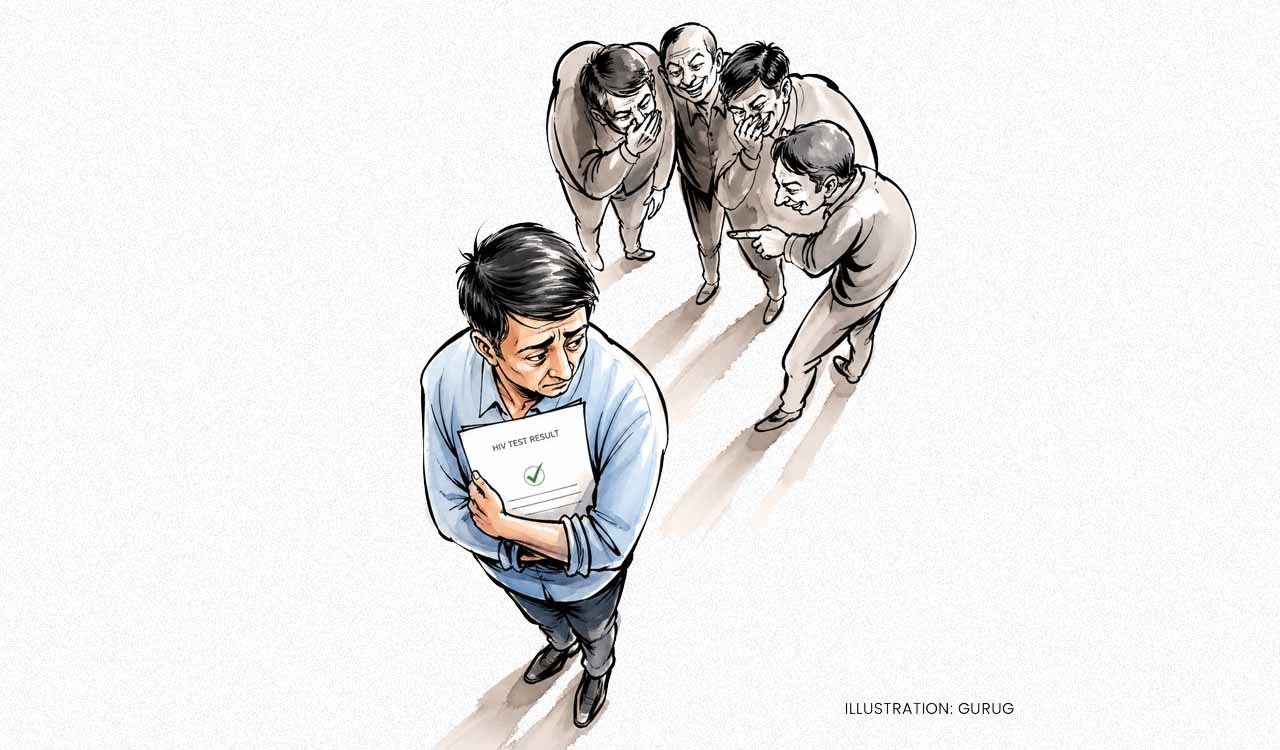
Stigma remains one of the most powerful forces shaping the experience of HIV/AIDS in India. Much of this stems from a deeply rooted cultural association between HIV and sexual immorality, where the disease is often perceived as a consequence of promiscuity, infidelity, or moral wrongdoing. This moral framing has overshadowed scientific understanding of HIV transmission. Unlike other serious illnesses like TB, which causes over a thousand deaths daily in India, HIV attracts intense social judgment. As a result, many people living with HIV face rejection not only from society but also within their own families.
Support Systems
People living with HIV often experience isolation, which contributes to higher risks of depression, suicide, and self-harm. Women are particularly vulnerable; widows who test positive are frequently blamed for their husband’s illness, expelled from marital homes, or denied custody of their children. Despite these challenges, support systems have emerged in the form of community networks, PLHIV collectives, support groups, and even HIV-positive matrimony platforms. These initiatives foster belonging, encourage treatment adherence, and help individuals navigate relationships, parenting, and employment—though they cannot fully offset the broader social exclusion many continue to face.
India’s response to HIV must now move beyond simply controlling infection to rebuilding social inclusion. While legal protections exist, meaningful change must occur at three interconnected levels—within families, communities, and society at large. Addressing this requires comprehensive sex education, supportive community initiatives, holistic healthcare that links HIV care with other specialities, and workplace environments that actively show empathy, along with preventing discrimination.
At the same time, HIV should no longer be seen only through the lens of viral suppression or terminal care. Families, communities, and institutions must learn to view HIV as a manageable chronic condition much like diabetes or hypertension, ensuring that no individual is made to feel alienated, and that dignity, belonging, and social acceptance remain as central to care as the medicines themselves.

(Kattamreddy Ananth Rupesh and EB Pavan Kalyan Reddy are faculty members, Department of Forensic Medicine and Toxicology, Government Medical College, Ongole)
Related News