Opinion: When Hyderabad goes home—the city’s two-address lives
Hyderabad’s festival exodus is not a sign of weak urban attachment, but a reminder that moving to a city does not mean leaving one’s roots behind


By Dr Sonal Mobar Roy
A few times each year, Hyderabad performs a minor miracle. The roads that normally demand patience, strategy and a full tank of fuel begin to breathe. Google Maps turns an improbable green. Apartment parking spaces empty, office attendance drops, and tiffin centres wait for customers who do not arrive.
The traffic problem remains unsolved. A festival is on, and part of the city has gone home.
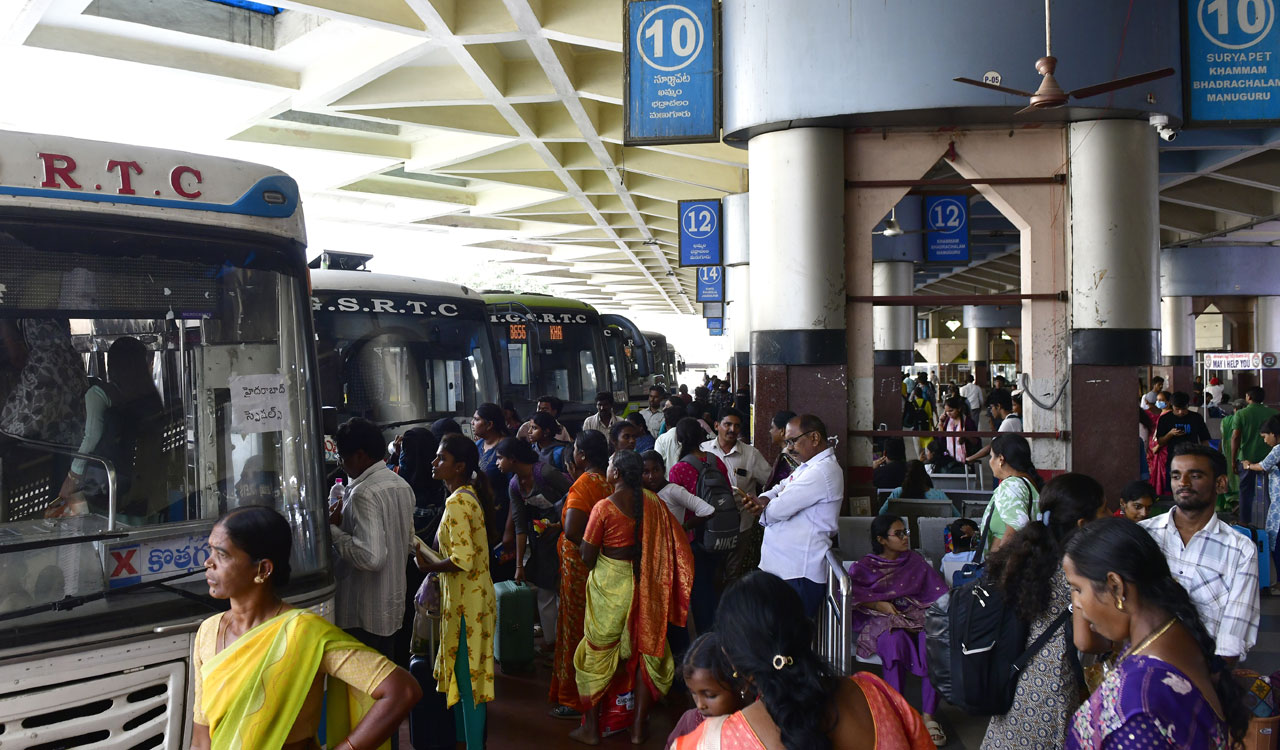
The city has not emptied; it has simply changed coordinates. Its crowds now gather beneath railway clocks, beside luggage-laden buses and along highways pointing towards ancestral homes. The scale of this homeward pull is striking. During Bathukamma and Dasara in 2025, the TGSRTC operated 7,754 special buses, 617 more than the previous year, and arranged another 6,431 services for Sankranti 2026.
On some routes, connecting Hyderabad with Andhra Pradesh, more than a lakh railway tickets were reportedly claimed within minutes of reservations opening. These are more than transport statistics. They are a census of longing, revealing how many urban lives remain emotionally anchored elsewhere.
These figures also map the city’s attachment. They show where Hyderabad’s residents continue to locate family, memory and obligation, even after building their everyday lives in the city. They show where their hearts beat.
Two Addresses, Two Homes
Many people joining the festive rush have lived in Hyderabad for years. They work here, raise children here, pay rent or housing loans here, and know precisely which flyover to avoid during rush hour. Yet, as the holidays approach, they say they are “going home.”
Migration is often told as a simple story: someone leaves a village, enters a city and gradually becomes urban. Real lives are less orderly. A professional in Hitec City may speak to parents in Karimnagar every evening. A student in Tarnaka may live independently but return for every important family occasion. A household in Kukatpally may retain land, property or responsibilities in a village several hours away.
The city provides employment, education, privacy and possibility. The native place holds family history, childhood friendships and people who remember us from before the designation, apartment number and office identity card.
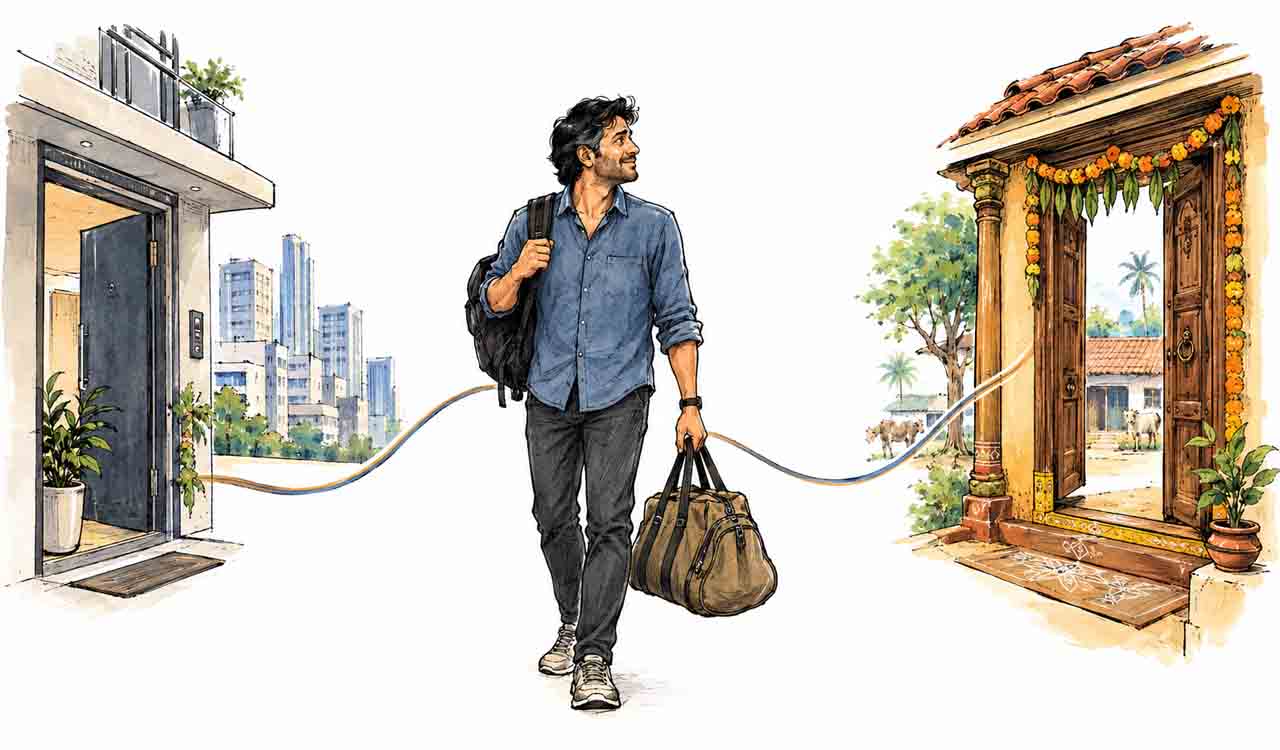
Migration is rarely a linear journey from village to city; it is an ongoing negotiation of belonging, where two addresses can hold different meanings of home
Sociologists describe such lives as translocal: lives organised across more than one place. But no technical term is needed to understand the feeling. It is possible to have two addresses and discover that each answers a different meaning of home. A software professional may live in Rajendranagar and travel along the Outer Ring Road to Gachibowli every morning, yet when asked where “home” is, names a village hundreds of kilometres away.
Relationships Revisited
Festival travel is often explained in terms of nostalgia: food aroma, old friends and childhood rituals. That is true, but incomplete. People also return to maintain relationships that quietly support their lives throughout the year. A neighbour may watch over a locked house or agricultural land. In return, someone earning in Hyderabad may contribute towards education, treatment or household expenses back home. Money, information and care travel in both directions.
Sociologists call the resources available through such relationships “social capital.” In ordinary language, it means having people to call when life goes wrong, and remaining someone they can call too. Festival visits keep these ties alive. A shared meal, a gift carried home, or an afternoon spent with an elderly relative can reaffirm membership in a family and community.
WhatsApp has made distance easier to manage, but it has not abolished the importance of showing up. A video call can display the festive meal; it cannot carry a box of sweets or satisfy the aunt who has already informed the neighbourhood that “they never visit now.”
However, these networks are not always gentle. Belonging provides security, but it also comes with an informal performance appraisal, conducted by relatives, without prior notice.
What We Carry Back
People do not return to a place preserved exactly as they left it. Fields become layouts, shops close, younger relatives move away, and old friends meet mainly during festivals. The visitor has changed too.
More importantly, Hyderabad travels back with those who leave it. Someone who arrived speaking little Telugu may return a few years later recommending punugulu, comparing dosa stalls, and discussing whether Nani or Mahesh Babu has the more promising release. Food, cinema, humour and everyday phrases enter a person’s life gradually. By the time they are noticed, the city has already become part of them.
This does not erase earlier identities. A Bengali, Marathi, Odia, Kannadiga-speaking or North Indian resident need not surrender one cultural world to enter another. Identity is not a suitcase with room for only one place. It expands, although packing for the return journey may remain difficult.
Nor can everyone travel. Tickets cost money, leave is not always granted, and some family relationships have weakened. Some people have a native place but no longer experience it as home. The quiet city therefore carries its own inequality. Some residents have gone to celebrate; others remain at work, making those celebrations possible.
Changing Direction
Over time, the meaning of home may shift without anyone formally announcing it. The first journey to Hyderabad is made for education or employment. For years, “going home” means returning to the family. Then one evening, after a long visit, someone closes the suitcase and says, “Come, let us go home”, this time meaning Hyderabad.
That small change in vocabulary contains a whole history of migration. The hometown remains home because it remembers one’s beginnings. Hyderabad becomes home because it contains the life built afterwards: work, friendships, routines, favourite food stalls, and perhaps children who know the ancestral village mainly through holidays.
The festival exodus does not show that people are insufficiently attached to Hyderabad. It shows that belonging need not be exclusive. For a few days, Hyderabad loses some of its people and distant homes regain them. Then the holidays end. Families return carrying homemade food, gifts, memories and fresh instructions from their parents. Hyderabad welcomes them back as only Hyderabad can: with familiar flavours, unfinished work and traffic jams large enough to confirm that everyone has returned.

(The author works with the National Institute of Rural Development and Panchayati Raj, Hyderabad. Views are personal)

Related News