Opinion: Where does India stand on LPG security?
India’s LPG ecosystem reflects both vulnerability and resilience, shaped by import dependence, distributed infrastructure, and evolving consumption patterns that demand nuanced, data-driven energy policy responses


By KV Chandramouli
Concerns over a looming LPG crisis deserve serious consideration. The opinion article, “India’s silent energy vulnerability—the looming LPG crisis” (March 22 2026), rightly highlights a critical and often under-discussed topic: the strategic role of LPG in India’s energy security and the potential risks arising from import dependence. It successfully draws attention to the importance of energy resilience and policy planning.
Also Read
At the same time, a few points would benefit from additional context and supporting data to provide readers a more complete picture, thereby complementing the author’s insights and strengthening the argument further.
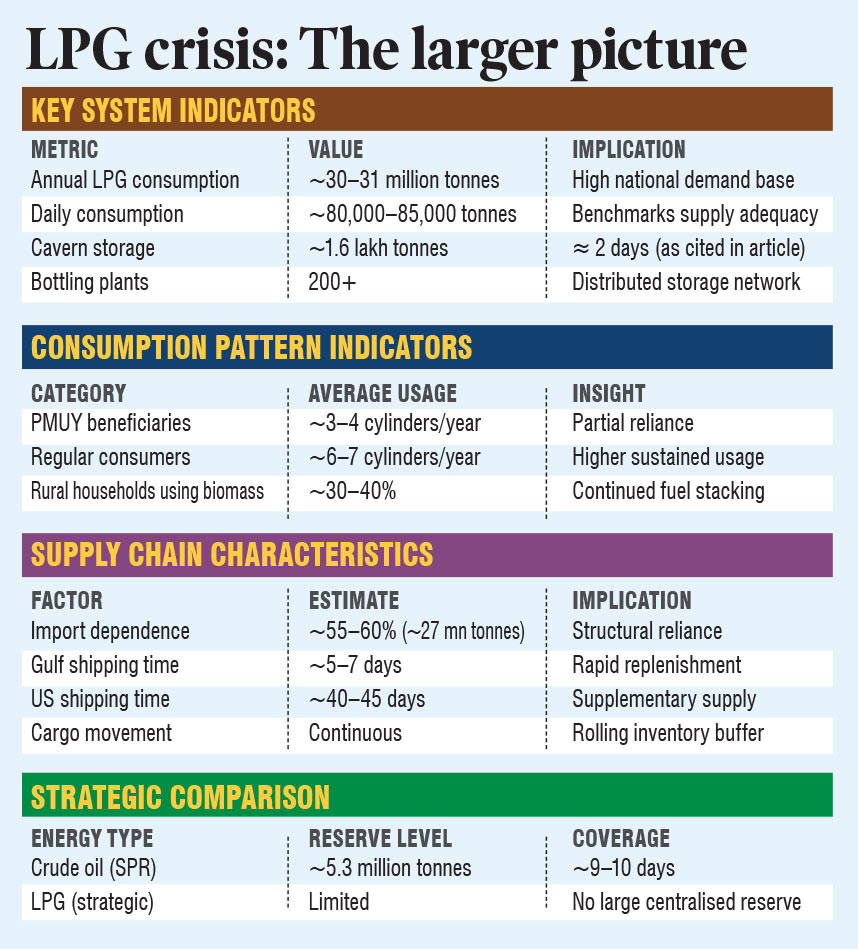
Firstly, the article notes that India has only about 1.6 lakh tonnes of LPG storage, roughly equivalent to two days of national consumption. This figure refers specifically to underground cavern storage facilities at Mangalore and Visakhapatnam. While accurate for these caverns, it does not represent the entirety of India’s LPG storage ecosystem.
India’s import and distribution system provides inherent flexibility. India imports roughly 55–60% of its LPG requirement (~27 million tonnes annually), through a combination of long-term contracts and spot purchases, with multiple shipments continuously in transit
In practice, LPG inventories are distributed across multiple nodes, including refineries, fractionation units, bottling plants, storage terminals, pipelines, coastal import facilities, and vessels in transit. India’s LPG system includes over 200 bottling plants, each maintaining working inventories and forming a decentralised storage network that is not reflected in cavern storage alone.
With annual consumption of ~31 million tonnes (~85,000 tonnes/day), even modest distributed inventories across this network provide several days of operational buffer beyond the cited cavern storage, offering a more complete picture of India’s preparedness.
Secondly, the article equates near-universal LPG access with near-universal dependence. While LPG connections have indeed expanded dramatically—from 14.86 crore in 2015 to over 30 crore today—access does not automatically mean exclusive or sustained usage. Government data shows that beneficiaries under the Pradhan Mantri Ujjwala Yojana (PMUY) consume an average of 3–4 cylinders per year, compared to 6–7 cylinders among regular consumers, suggesting partial rather than exclusive reliance.
Evidence from the NSSO 76th round further shows that many rural households continue to rely partly on biomass fuels, reflecting a “fuel stacking” pattern. Recognising this nuance could enrich the discussion on India’s vulnerability to supply disruptions.
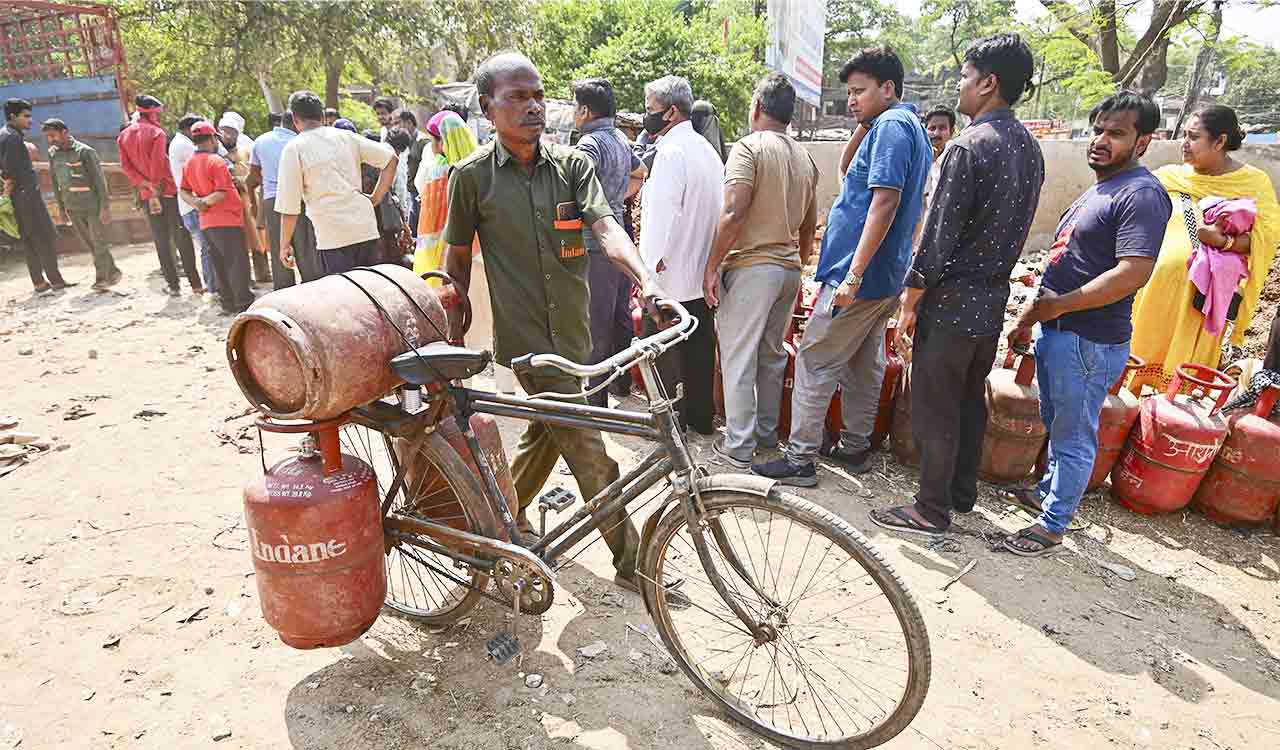
Thirdly, the article suggests that even a one-week disruption in LPG imports could result in serious shortages. While this is a valid concern for contingency planning, India’s import and distribution system provides inherent flexibility. India imports roughly 55–60% of its LPG requirement (~27 million tonnes annually), through a combination of long-term contracts and spot purchases, with multiple shipments continuously in transit. Shipments from the Gulf typically take 5–7 days, while those from the US take about 40–45 days, creating a rolling inventory buffer rather than a single-point dependence.
Sources: Petroleum Planning & Analysis Cell (PPAC), LPG Consumption & Import Data Reports, 2023–24; National Sample Survey Office (NSSO), Household Consumption of Various Goods and Services, 76th Round; International Energy Agency, India Energy Outlook (latest editions); Directorate General of Commercial Intelligence and Statistics (DGCIS), Trade Statistics.
Additionally, while the article mentions specific supplier shares, these figures fluctuate annually depending on contracts and global supply conditions. Citing precise sources would enhance accuracy without detracting from the broader point about West Asia dependence.
Finally, the article rightly notes the absence of dedicated strategic LPG reserves comparable to India’s strategic petroleum reserves for crude oil. While India maintains ~5.3 million tonnes of crude oil reserves (~9–10 days of coverage), no similar centralised LPG reserve exists. Nonetheless, the distributed commercial inventories act as day-to-day operational buffers.
In conclusion, the article’s call to expand LPG storage capacity and diversify supply sources is both timely and crucial for India’s energy security. By incorporating additional context and operational data—such as distributed bottling inventories, partial household reliance, and rolling import shipments—the discussion could present a more balanced yet compelling picture of the country’s strengths and vulnerabilities. Strengthening the narrative with such evidence would not only reinforce the urgency of strategic planning but also highlight India’s resilience and capacity to manage short-term disruptions, making the conversation around LPG security both credible and actionable.

(The author is Deputy Director of Boilers (Retd), Mysuru)

Related News