Editorial: Falling Rupee mirrors India’s vulnerability
Rising fuel prices, in particular, are having a ripple effect on transport, food and household expenses
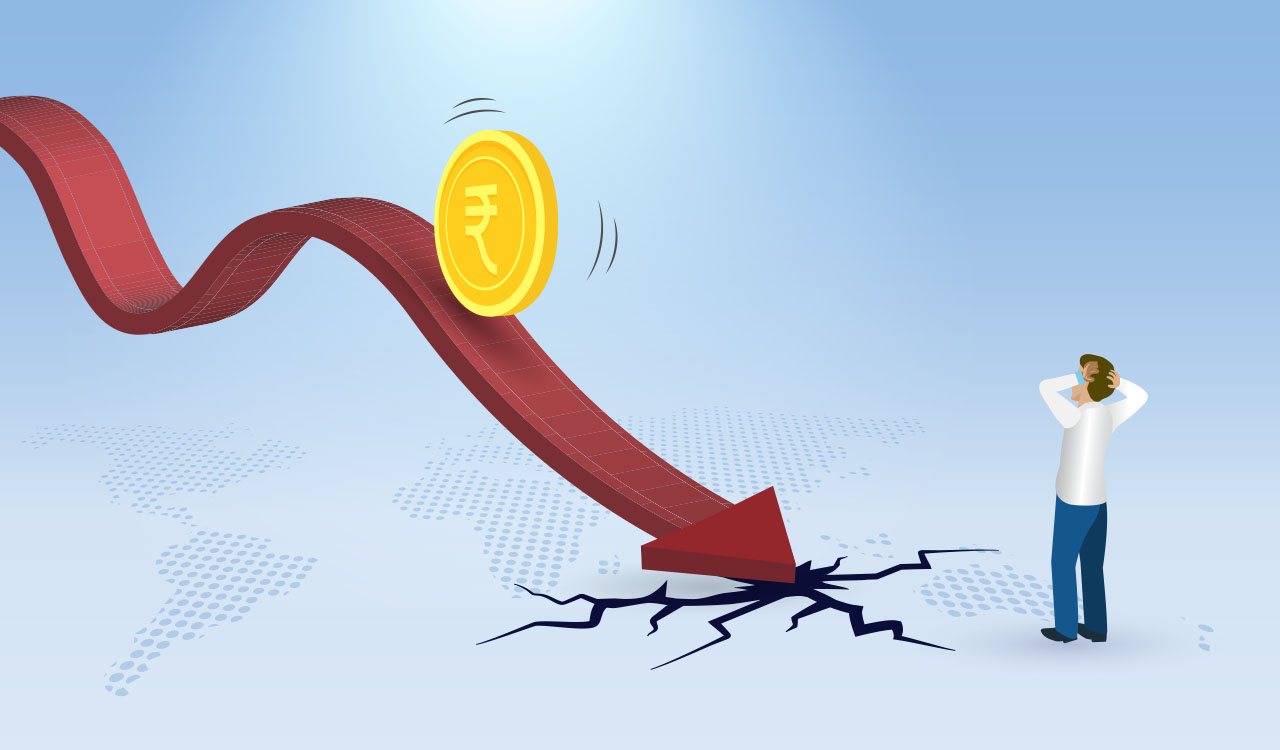


The sharp fall in rupee in recent months–touching a historic low of 96 against the US dollar–exposes the vulnerability of the import-dependent Indian economy. Since the beginning of this year, the currency has fallen by around 6%. A combination of factors–persistent geopolitical tensions, surging crude oil prices and a strengthening greenback–has created a perfect storm resulting in the continuous currency depreciation. While global fluctuations do impact the behaviour of currencies, it would be unfair to attribute the steady decline entirely to the external geopolitical factors. Flaws in domestic economic policies and management have also contributed to the slide. While currency woes are not unusual for emerging economies, the present fall is far more worrisome because it is unfolding amid geopolitical instability, rising crude oil prices, persistent inflation and slowing global growth. Together, these pressures have created a fragile environment in which the rupee’s weakness could trigger wider economic disruptions. India imports more than 88% of its crude oil requirements, along with essential commodities such as edible oils and fertilizers. With crude oil prices surging amid instability in West Asia and shipping disruptions around the Strait of Hormuz, the country’s import bill has swollen rapidly. Rising fuel prices, in particular, are having a ripple effect on transport, food and household expenses. The depreciation is also keeping corporates and policymakers on tenterhooks. Every dollar rise in Brent directly widens the current account deficit, pressures the rupee, and complicates the government’s fiscal arithmetic — making oil the single most important variable for the rupee right now.
India’s failure to diversify exports, reduce oil dependence, and accelerate manufacturing reforms has left it exposed to global fluctuations. The sharp depreciation is not just a currency statistic. It is a mirror of India’s struggle to find stability in an unstable world. India’s rupee fell alongside peers like Brazil and Turkey, underscoring the global dollar strength rather than purely domestic weakness. Oil shocks—from the Russia-Ukraine war to Middle East escalations—hit India hardest. Understandably, the NDA government has come in for sharp attack by the opposition parties, particularly the Congress, for the steady fall of the rupee. An attempt is being made to turn the issue into a binary political debate over Modi versus Manmohan Singh regimes. However, the matter transcends domestic politics. The rupee’s slide reflects both global adjustment and domestic vulnerability. Opposition leaders argue that the rupee’s fall to a historic low is proof of the Modi government’s economic mismanagement, while government supporters say that no individual leader could have shielded the country from the impact of the turbulent global events. There is no doubt that the UPA regime, under Manmohan Singh’s leadership, had benefited from a relatively benign global order with limited geopolitical conflict and a predictable US policy. However, the last decade has seen major disruptions to the economy like pandemic, wars, tariff restrictions and supply chain disruptions.
Also Read

Related News