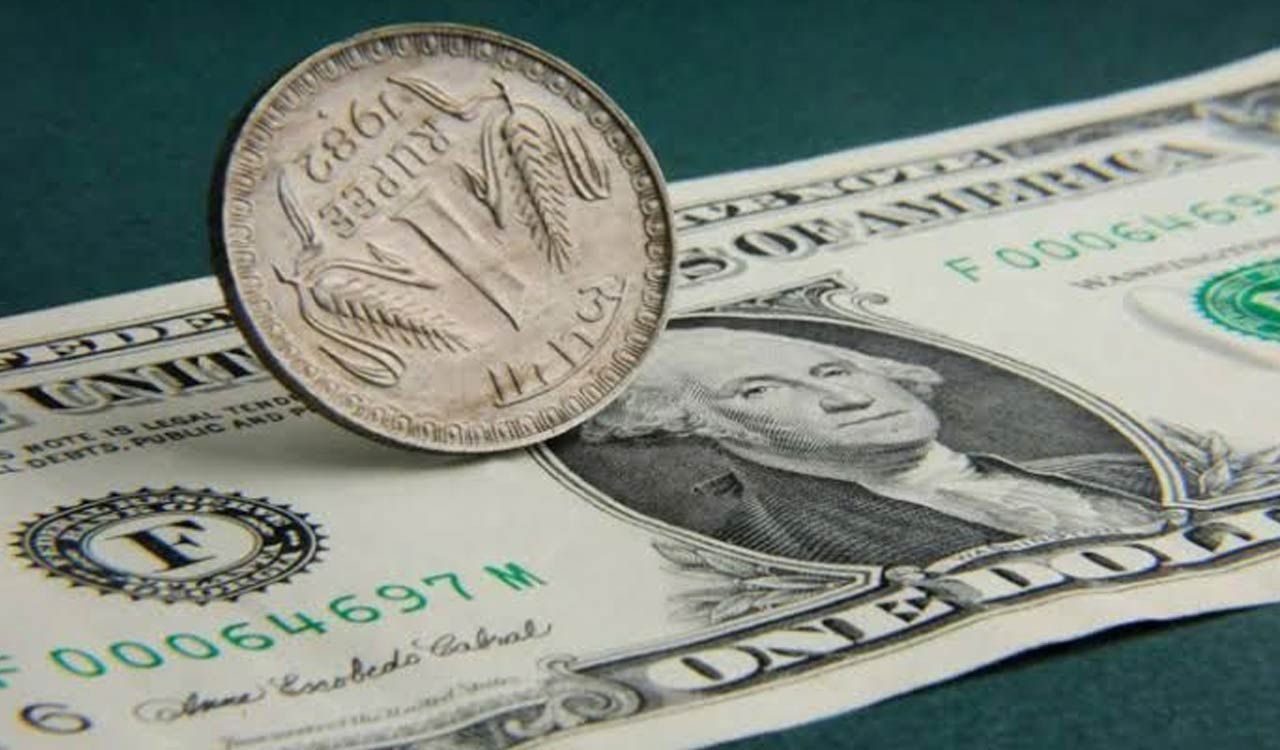
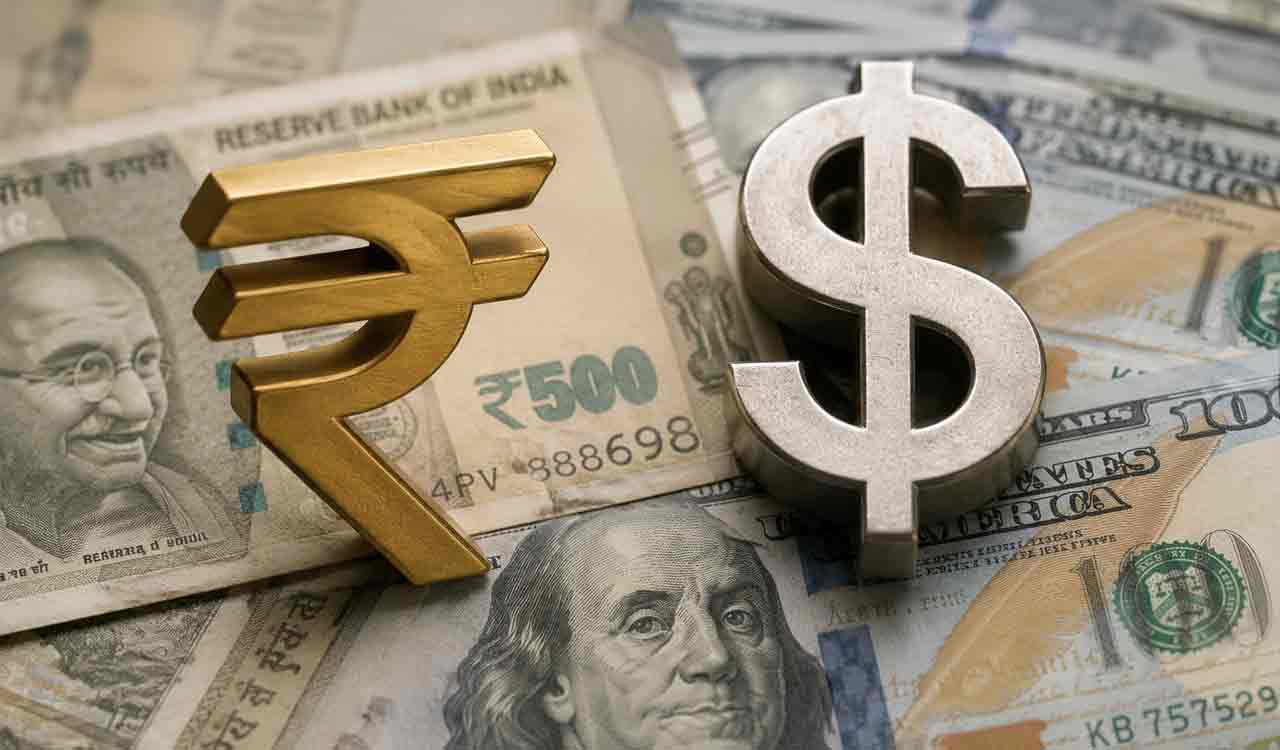
Opinion: Why is Rupee falling — The real story behind Rs 90 per dollar
Calling Rs 90 per dollar ‘“not a big concern’ may calm markets, but it masks deeper structural flaws in the economy


By Sushiila Ttiwari, D Samarender Reddy
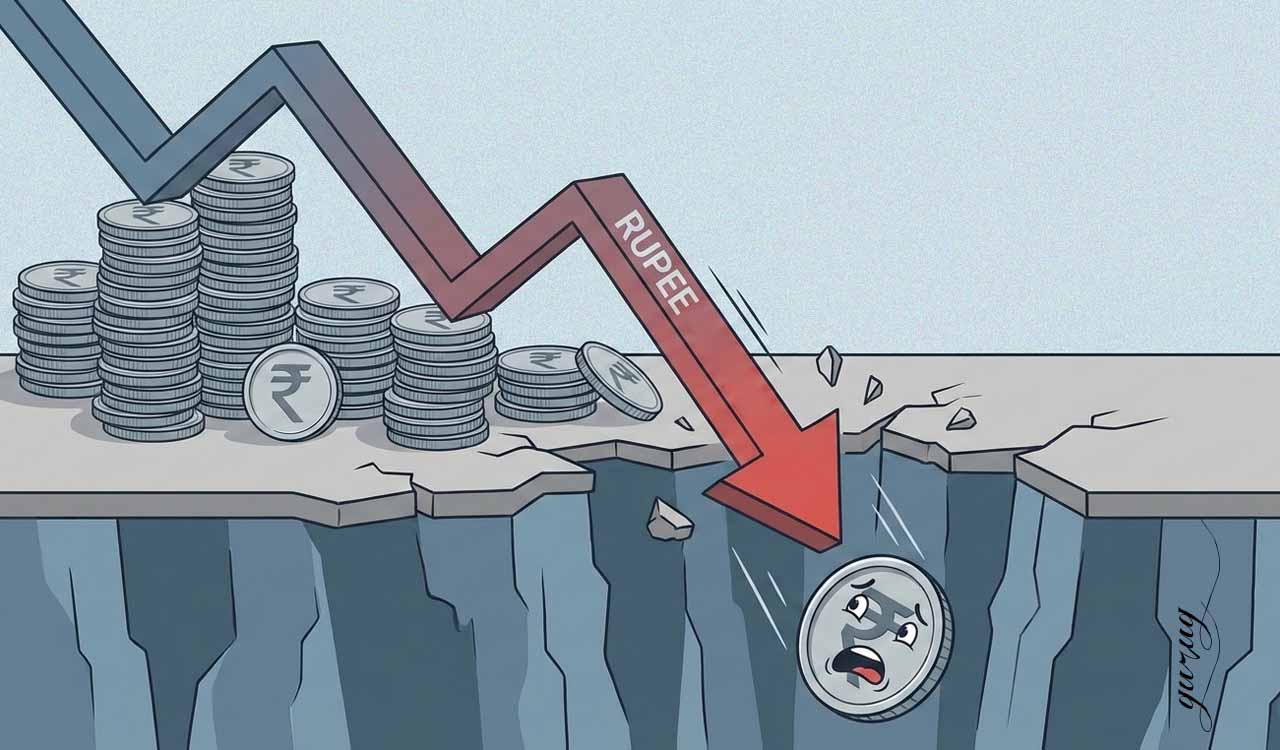
Over the past decade, the Indian rupee has steadily lost ground against the US dollar, touching new lows and breaching psychological barriers that once sparked national alarm. Curiously, the narrative has shifted. A decade ago, a slide past 60 or 70 to the dollar was described as a crisis. Today, many commentaries insist that Rs 90 is “not a big concern,” that depreciation is a natural part of emerging-market dynamics, and that India’s macroeconomic fundamentals remain strong.
But if this logic truly held, then why was it absent when the same forces of high imports, low exports, and current-account pressures were at play ten years ago? Why has depreciation been reframed from a warning sign into a supposedly benign sign of economic maturity?
The answer requires stepping beyond surface-level explanations and examining the deeper structural, financial, and global reasons why the rupee is falling; and why it does, in fact, matter.
The Old Explanation
It is often repeated that the rupee is weak because India imports more than it exports. This is true, but incomplete. India’s current-account deficit (CAD) has been persistent for decades. So the question is not why the deficit exists, but why its effects now translate into a sharper currency slide.
Classical open-economy macroeconomics shows that a currency’s value reflects not only trade flows but also capital flows, expectations, and relative interest rates. Dornbusch’s “overshooting model,” one of the most influential frameworks in exchange-rate economics, explains that exchange rates respond excessively to changes in monetary conditions and expectations, especially when prices in the domestic economy adjust slowly.
In other words, the rupee today does not fall simply because imports are high, but because financial markets, both global and domestic, are responding more strongly to shifts in interest-rate differentials, risk perceptions, and investor sentiment than in the past.
Big Part of the Story
A weak rupee is also the mirror image of a historically strong dollar. The US Federal Reserve has tightened aggressively, and when American interest rates rise, global capital flows back into dollar assets. This is a phenomenon documented extensively in Uribe and Schmitt-Grohé’s open-economy financial-frictions framework: emerging-market currencies depreciate disproportionately when global risk aversion increases.
The dollar’s strength is not a referendum on India’s weakness; it is a global phenomenon. Currencies worldwide are under pressure because the US dollar index has risen substantially. The “real fall” in the rupee must be understood relative to a broad-based strengthening of the dollar rather than a collapse of Indian fundamentals.
Thus, the rupee’s slide to 90 is not solely India-specific, but that does not make it harmless.
External Debt, Capital Outflows
India’s external commercial borrowings (ECBs) and foreign portfolio investments (FPIs) have grown rapidly since the 2010s. When global interest rates rise, servicing these debts becomes costlier, and investors reverse flows toward safer US assets.
The Economic Times notes that despite strong GDP growth numbers, the rupee has touched lifetime lows because FPIs have been net sellers for several months, driven by global uncertainty and tighter US monetary policy. This links directly to the capital-account identity, where exchange rates adjust to balance global flows of capital.
A country can withstand a trade deficit for years, but a sudden change in capital sentiment can trigger a sharp depreciation. India is not exempt.
Oil Imports
India imports over 85% of its crude oil. Rising oil prices consistently pressure the rupee by worsening the trade deficit and increasing dollar demand. But the deeper issue is long-term dependence.
Even when oil prices are stable, volumes increase as the economy grows. Uribe and Schmitt-Grohé note that in open economies where essential imports cannot be substituted, exchange-rate adjustments tend to be persistent rather than temporary. Thus, India’s structural oil dependence creates a long-term drag on the currency, one that economic growth alone cannot neutralise.
Stagnant Export Growth
While import bills rise with growth, exports have not kept pace. India’s export competitiveness has not improved significantly due to: High logistics costs, slower global demand, limited diversification in high-value manufacturing, and a strong dollar making emerging-market exports less competitive.
This aligns with the Harberger-Laursen-Metzler effect, which shows that when terms of trade worsen, real income falls, reducing national saving and further weakening the exchange rate. Thus, India’s export stagnation interacts with global conditions to create a cycle of depreciation.
“Not a Big Issue” Narrative
Why were economists and newspapers alarmed at rupee 60–70 in 2013 but less so at 90 today? Reasons:
- GDP has grown, masking currency weakness: Nominal GDP growth creates an illusion of resilience. While growth is strong, the rupee’s real effective exchange rate (REER) has declined, meaning India is losing purchasing power globally.
- Depreciation boosts exporters—at least on paper: A weaker rupee can help exporters by making goods cheaper abroad. Yet this benefit applies only if exporters have unused capacity, input costs do not rise proportionally, and global demand exists. In reality, India imports raw materials for many export sectors, diluting the benefit.
- Policymakers want to avoid panic: A narrative shift reduces pressure on the RBI and government by portraying depreciation as a sign of strength rather than vulnerability. However, as research in open-economy macroeconomics shows, persistent depreciation without current-account correction is indeed a warning sign. Exchange-rate movements that outpace productivity gains signal an underlying imbalance.
Why Rs 90 per dollar is a matter of concern
- Imported inflation: A weaker rupee makes everything from fuel to electronics costlier. The ongoing rupee depreciation has already increased input costs for MSMEs, squeezing margins and slowing job growth.
- Erosion of household savings: Depreciation reduces the global value of Indian savings, making imports, higher education abroad, medical equipment, and foreign travel more expensive for citizens.
- Higher government borrowing cost: A weaker rupee raises India’s cost of servicing foreign-currency debt, widening the fiscal deficit in the absence of strong tax buoyancy.
Slow export transformation: The claim that “depreciation boosts exports” assumes export elasticity that India demonstrably lacks. - Vulnerability to global shocks: Economies with persistent external balances and financial frictions experience stronger contractions when hit by global interest-rate shocks. In simple terms, the weaker the currency, the more vulnerable India becomes to the next global downturn.
Where was this logic ten years ago?
In 2013, during the “taper tantrum,” India faced a very similar situation: • High oil prices, • FPI withdrawals, and a widening CAD. Yet the public narrative was different. The government acknowledged crisis-level pressures. Economists openly debated structural weaknesses. The media framed depreciation as a macroeconomic risk.
Today, the fundamentals — productivity, export share, external debt, energy dependence — have not changed drastically, yet the narrative has softened. One explanation is political: depreciation narratives often shift depending on who is in power. But the economics have not changed. Whether under Manmohan Singh or Narendra Modi, rupee weakness reflects longstanding structural constraints.
Honest Assessment
- Reduce oil dependence: Accelerate renewable deployment, electric mobility, and domestic energy production.
- Boost export competitiveness: Improve logistics and SEZ efficiency, expand high-value manufacturing (electronics, semiconductors), negotiate trade agreements strategically
- Manage capital flows prudently: Policy must respond to the realities modelled in open-economy literature: capital flows matter as much as trade flows.
- Strengthen domestic savings and investment: A persistent savings-investment gap fuels external imbalances.
- Stabilise inflation expectations: Exchange-rate stability and inflation expectations are tightly linked in the monetary models.
Conclusion: The Rupee’s Fall Is Structural, Not Situational
The rupee touching 90 is not just a statistic — it is a lens into India’s unresolved economic challenges. While global conditions—particularly a strong dollar—play a role, India’s structural issues remain central:
• chronic import dependence
• stagnant export competitiveness
• volatile capital flows
• persistent current-account deficits
• weak domestic manufacturing depth
Dismissing depreciation as “not a big concern” distracts from the real work needed to strengthen India’s external sector. Exchange-rate movements, as the open-economy macroeconomic literature consistently shows, are symptoms of deeper imbalances, not isolated events.
A growing economy deserves a currency that reflects genuine strength—not one whose decline we learn to normalise.

(Sushiila Ttiwari is Managing Director, and D Samarender Reddy is Director, https://7qube.com/)

Related News