Otome and ‘Love Games’: The Challenges of understanding the Ghaziabad Tragedy
The Ghaziabad tragedy has raised questions about digital dependence among young people. This explainer looks at otome love games, loneliness, and how everyday online gaming habits blur boundaries between virtual relationships and real life, highlighting the urgent need for balance



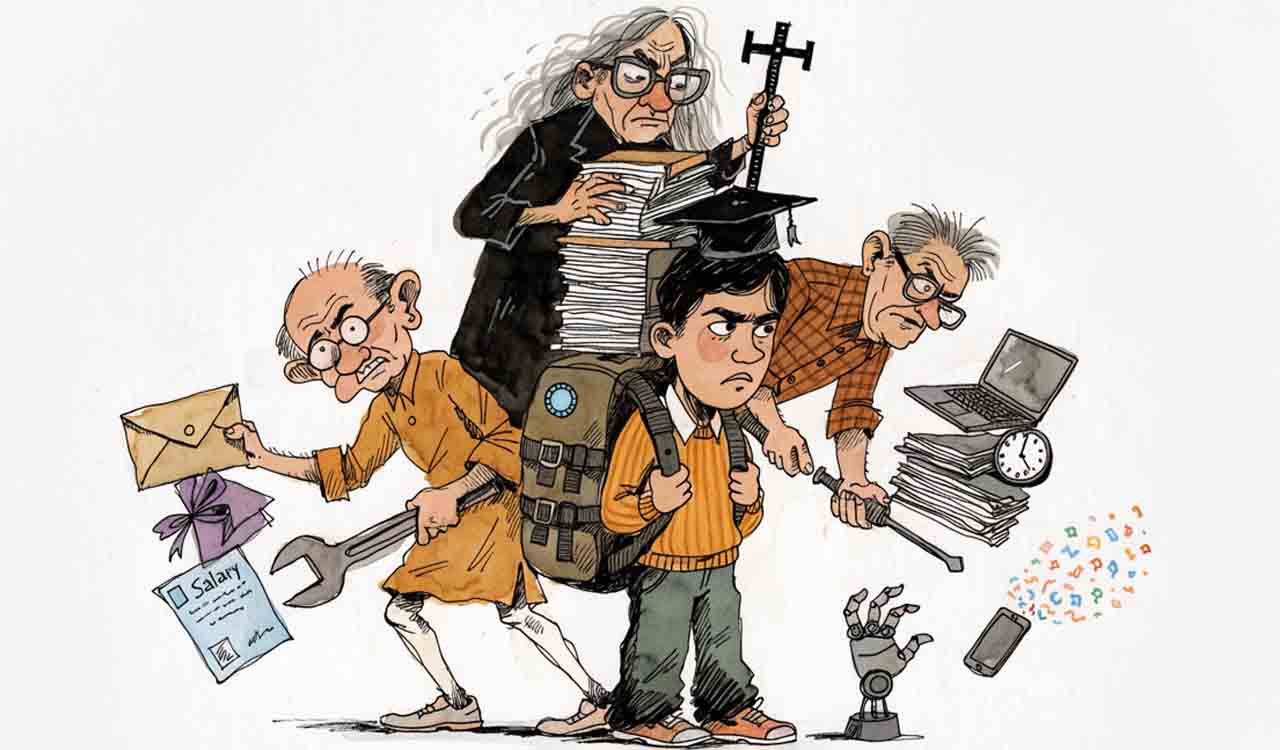
Hyderabad: How do we find balance for a ‘generation that never logs out’ and plays every day? Gen Z and Alpha are among the loneliest young people in the history of human civilisation.
Growing up in places with limited spaces for play and leisure, and in environments that have felt increasingly bleak, Indian youth are becoming more dependent on digital platforms for entertainment, learning, relationships, and meaning. In such conditions, loneliness and anxiety are almost inevitable as young people search for communities they can belong to and resonate with.
At the heart of the Ghaziabad tragedy that rocked the nation is the fact that the three young people who performed acts of ‘life taking’ were not prepared to imagine their lives without their smartphones and, by extension, the collage of games and content-driven applications they engaged with daily.
As expected, most discourse around the tragedy is examining overexposure to Korean culture among the nation’s youth, as well as a return of predictable ‘digital panics’ that speak of younger generations losing connections with the offline world.
The ‘Otome’ game genre
The closest understanding of the ‘Korean love game’ that has been described as “one played every day and requires players to complete tasks to unlock new scenarios and deepen relationships with in-game characters” is the ‘Otome’ game.
Otome games have been criticised for portraying idealised traits in their characters and for setting relationship expectations that are practically unachievable. Experts in Korea and China have also expressed concern about their social impact, with some research suggesting that certain young players move away from offline relationships to pursue in-game relationships with characters of their choice.
‘Otome’ games are a huge industry, and some of the most popular titles, such as Love and Deepspace, Amnesia Memories, and Crimson Spires, have garnered millions of loyal players worldwide.
The everyday live service game
The difficulty, however, is not in the ‘Otome’ aspect of the game. These games have several characteristics that make gaming communities more democratic and open to women gamers. The issue lies in the way they are played, day after day, as part of one’s everyday schedule.
The modern live-service game often takes over players’ daily routines to become their primary leisure activity. When leisure combines with romance and expectation, the combination can become dangerous.
When the same game is played repeatedly, day after day, it is no longer just play but transforms into a practice, a habit.
When young players find attention, value, and meaning in an online character that offline friends and family cannot offer, the boundaries between relationships begin to blur. What appears to have happened in the Ghaziabad tragedy stems from this. The three young women found their journeys in otome games to be an escape during troubling times and saw little reason to continue their offline lives when they were denied access.
Finding balance?
This is perhaps the trickiest part, considering how often society believes that the best way to keep young people occupied is by giving them their own smart devices. We see it with ‘iPad babies’ and saw it repeatedly during the pandemic. For young people, smartphones and tablets that began as distractions have today become the centres of the lives they lead.
Recentering their lives is the challenge, and it cannot be achieved unless adults participate in and understand the content young people watch, the games they play, and the dreams they aspire to.
Balance comes from respecting their choices while also giving them opportunities to pursue offline activities. We need to create moments of offline magic that can compete with the immersive pull of digital games.

Related News