Research finds mites live on skin of human’s face and mate at night
Washington: A new DNA analysis reveals the reason behind odd mating habits, body features and evolutionary future of mites that live in the hair follicles of humans. According to new research, tiny mites that live in human pores and breed on our faces at night are becoming such simplified organisms due to their unusual lifestyles […]
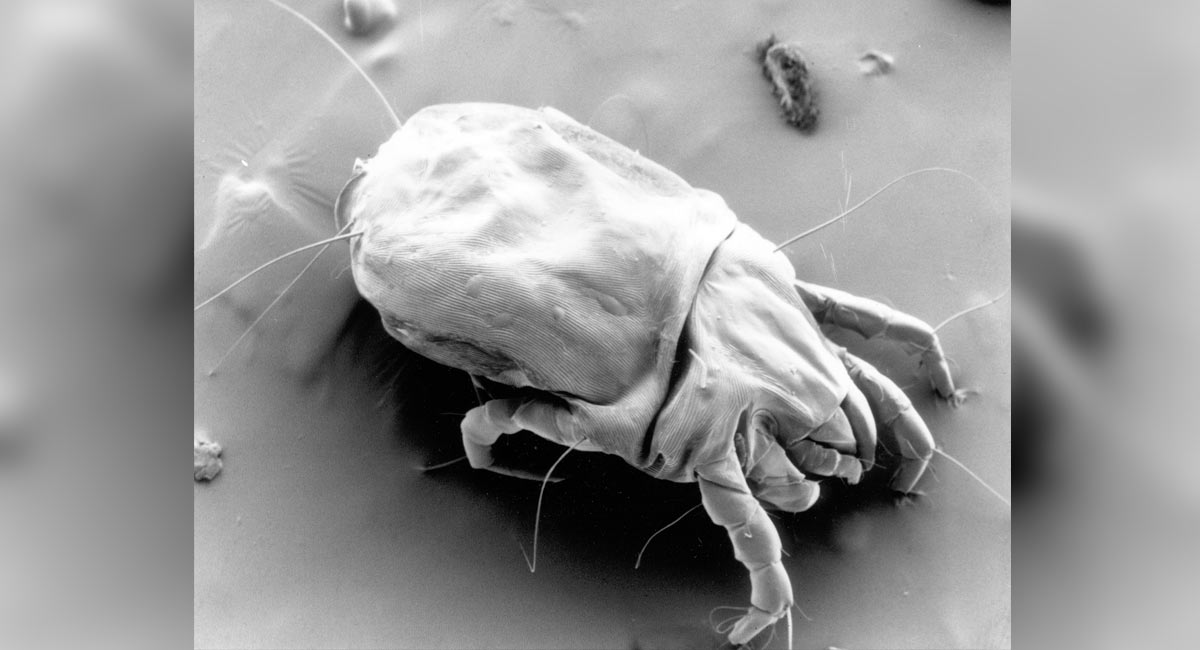


Washington: A new DNA analysis reveals the reason behind odd mating habits, body features and evolutionary future of mites that live in the hair follicles of humans.
According to new research, tiny mites that live in human pores and breed on our faces at night are becoming such simplified organisms due to their unusual lifestyles that they may soon become one with humans.
The research was led by Bangor University and the University of Reading, in collaboration with the University of Valencia, University of Vienna and the National University of San Juan. The findings of the research were published in the journal ‘Molecular Biology and Evolution’.
The mites are passed on during birth and are carried by almost every human, with numbers peaking in adults as the pores grow bigger. They measure around 0.3mm long, are found in the hair follicles on the face and nipples, including the eyelashes, and eat the sebum naturally released by cells in the pores. They become active at night and move between follicles looking to mate.
The first-ever genome sequencing study of the D. folliculorum mite found that their isolated existence and resulting inbreeding is causing them to shed unnecessary genes and cells and move towards a transition from external parasites to internal symbionts.
Dr Alejandra Perotti, Associate Professor in Invertebrate Biology at the University of Reading, who co-led the research, said: “We found these mites have a different arrangement of body part genes to other similar species due to them adapting to a sheltered life inside pores. These changes to their DNA have resulted in some unusual body features and behaviours.”
The in-depth study of the Demodex folliculorum DNA revealed: Due to their isolated existence, with no exposure to external threats, no competition to infest hosts and no encounters with other mites with different genes, genetic reduction has caused them to become extremely simple organisms with tiny legs powered by just 3 single cell muscles. They survive with the minimum repertoire of proteins – the lowest number ever seen in this and related species.
This gene reduction is the reason for their nocturnal behaviour too. The mites lack UV protection and have lost the gene that causes animals to be awakened by daylight. They have also been left unable to produce melatonin – a compound that makes small invertebrates active at night – however, they are able to fuel their all-night mating sessions using the melatonin secreted by human skin at dusk.
Their unique gene arrangement also results in the mites’ unusual mating habits. Their reproductive organs have moved anteriorly, and males have a penis that protrudes upwards from the front of their body meaning they have to position themselves underneath the female when mating, and copulate as they both cling onto the human hair.
One of their genes has inverted, giving them a particular arrangement of mouth-appendages extra protruding for gathering food. This aids their survival at young age.
The mites have many more cells at a young age compared to their adult stage. This counters the previous assumption that parasitic animals reduce their cell numbers early in development. The researchers argue this is the first step towards the mites becoming symbionts.
The lack of exposure to potential mates that could add new genes to their offspring may have set the mites on course for an evolutionary dead end, and potential extinction. This has been observed in bacteria living inside cells before, but never in an animal.
Some researchers had assumed the mites do not have an anus and therefore must accumulate all their faeces through their lifetimes before releasing it when they die, causing skin inflammation. The new study, however, confirmed they do have anuses and so have been unfairly blamed for many skin conditions.
Dr Henk Braig, co-lead author from Bangor University and the National University of San Juan, said: “Mites have been blamed for a lot of things. The long association with humans might suggest that they also could have simple but important beneficial roles, for example, in keeping the pores in our face unplugged.”

Related News