Rewind: Chasing the North — Trump’s Arctic obsession
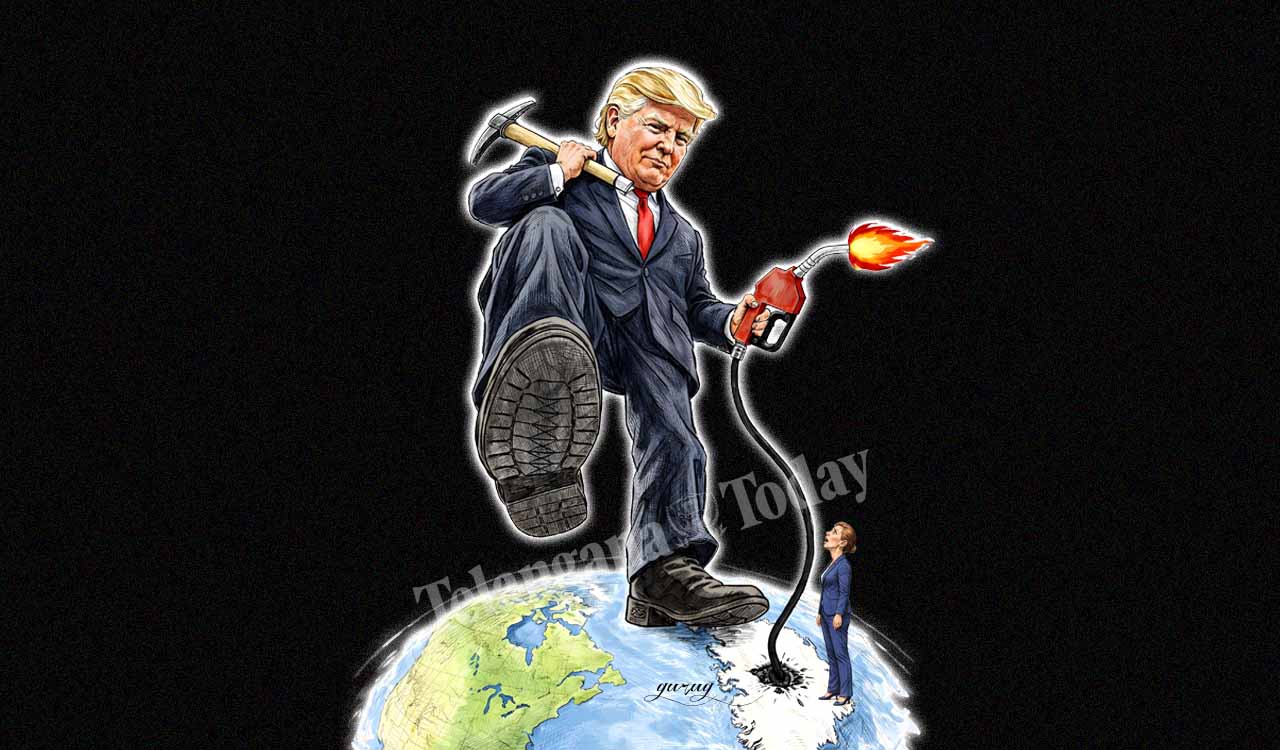
Greenland isn’t just ice — it’s the 21st-century test of power, climate, resources, and who will control the Arctic


By Brig Advitya Madan (retd)
When Donald Trump first floated the idea of “buying” Greenland in 2019, the world laughed it off as another eccentric headline. Denmark curtly responded that Greenland was “not for sale,” and most analysts assumed the matter was closed. It isn’t.
Also Read
The renewed strategic chatter around Greenland today reveals that Trump’s interest was never whimsical. It was rooted in hard geopolitics, military arithmetic, and the silent scramble for the Arctic’s resources. To understand why Greenland continues to attract such attention — and why Trump, in particular, sees it as pivotal — we must first understand what Greenland is, what it is not, and how it fits into the shifting tectonics of global power.
Greenland today enjoys extensive self-government. It runs its own parliament and manages nearly all internal affairs: local administration, policing, civil courts, healthcare, education, culture, environmental regulation, transport, labour policies, business regulations, taxation, and, crucially, control over its economy and natural resources, including fisheries, mining, and oil and gas. For all practical purposes, Greenland governs its domestic life like an independent state.
Independent Yet Non-Sovereign
Yet Greenland is not sovereign. Denmark continues to handle the core attributes of statehood: defence, military policy, national security, foreign affairs, diplomacy, treaty-making, representation at the United Nations, NATO membership, citizenship and immigration law, currency policy, constitutional matters, and the Supreme Court. Denmark also provides a substantial annual grant that underpins Greenland’s public finances. Full independence would require the approval of the Danish parliament.
• Greenland was first explored in the 10th century by Norse settlers from present-day Norway and Iceland. These early European communities eventually disappeared, likely due to climate changes and isolation
This unusual constitutional arrangement is the product of a long and complex history. Greenland was first explored in the 10th century by Norse settlers from present-day Norway and Iceland. These early European communities eventually vanished, likely due to climatic shifts and isolation. In 1721, a joint Danish-Norwegian expedition rediscovered Greenland while searching for surviving Norse descendants. From that moment, Denmark’s institutional involvement deepened. The Danish crown established the Royal Greenland Trading Department, which monopolised trade and controlled governance for more than a century.
Norway later argued that since the first European settlers in Greenland were Norse, the island should properly fall under Norwegian sovereignty. This dispute went to the Permanent Court of International Justice in 1933. On April 5 that year, the court ruled decisively in Denmark’s favour, citing earlier treaties — including the Treaty of Kiel — and Norway’s own 1919 Ihlen Declaration, in which it had agreed not to contest Danish sovereignty over Greenland. Norway accepted the verdict and withdrew its claims.
In 1953, Denmark formally ended Greenland’s colonial status and integrated it into the Kingdom of Denmark, granting Greenlanders Danish citizenship and representation in the Danish parliament. In 1979, following a referendum, Greenland secured home rule, taking control over domestic affairs while Denmark retained authority over defence, foreign policy, and monetary matters. This delicate balance between autonomy and dependence remains in place today.
What’s Beneath the Ice
So why does Greenland loom so large in Washington’s imagination?
The first answer is geography. Greenland sits astride the approaches to the Arctic from North America. It offers an unmatched vantage point for missile detection, satellite tracking, and space surveillance. From Greenland, the United States can dramatically shorten its reaction time to any missiles launched across the Arctic from Russia or China.
• In 1721, a joint Danish-Norwegian expedition rediscovered Greenland while searching for surviving Norse descendants. From that point, Denmark’s institutional presence on the island grew significantly
The island also anchors the Greenland–Iceland–United Kingdom (GIUK) gap, a narrow but strategically decisive naval and aerial corridor through which Russian submarines and aircraft must pass to reach the Atlantic. Dominance over this corridor is a cornerstone of NATO’s maritime defence.
The second answer lies under the ice. Greenland is believed to possess vast deposits of rare earth elements and strategic minerals, including lithium, uranium, and iron. These materials are indispensable to modern economies: electric vehicles, renewable energy systems, advanced electronics, artificial intelligence hardware, and military technologies all depend on them. Today, China dominates global rare earth supply chains. For an American President obsessed with economic nationalism and supply-chain security, Greenland represents both an opportunity and a strategic denial — an opportunity to secure alternative sources and a means to prevent China or Russia from gaining a foothold.
The third answer is the Arctic itself. As climate change melts polar ice, new shipping routes are opening across the Arctic Ocean, drastically reducing travel time between Asia, Europe, and North America. Control over these routes would confer immense commercial and military leverage. Greenland, sitting at the gateway of the Arctic, is central to this emerging maritime map.
There is also a deep irony. The United States already has extensive military access to Greenland under agreements with Denmark, a NATO ally. The Pituffik Space Base (formerly Thule Air Base) has long been a linchpin of America’s early-warning and space-monitoring systems. Denmark’s NATO membership already commits it to Greenland’s defence. It is precisely for this reason that European leaders have warned that any unilateral American attempt to seize Greenland would amount to a catastrophic breach, potentially dissolving the very foundations of NATO.
• In 1953, Denmark officially ended Greenland’s colonial status, incorporating it into the Kingdom of Denmark and granting Greenlanders Danish citizenship along with representation in the Danish parliament
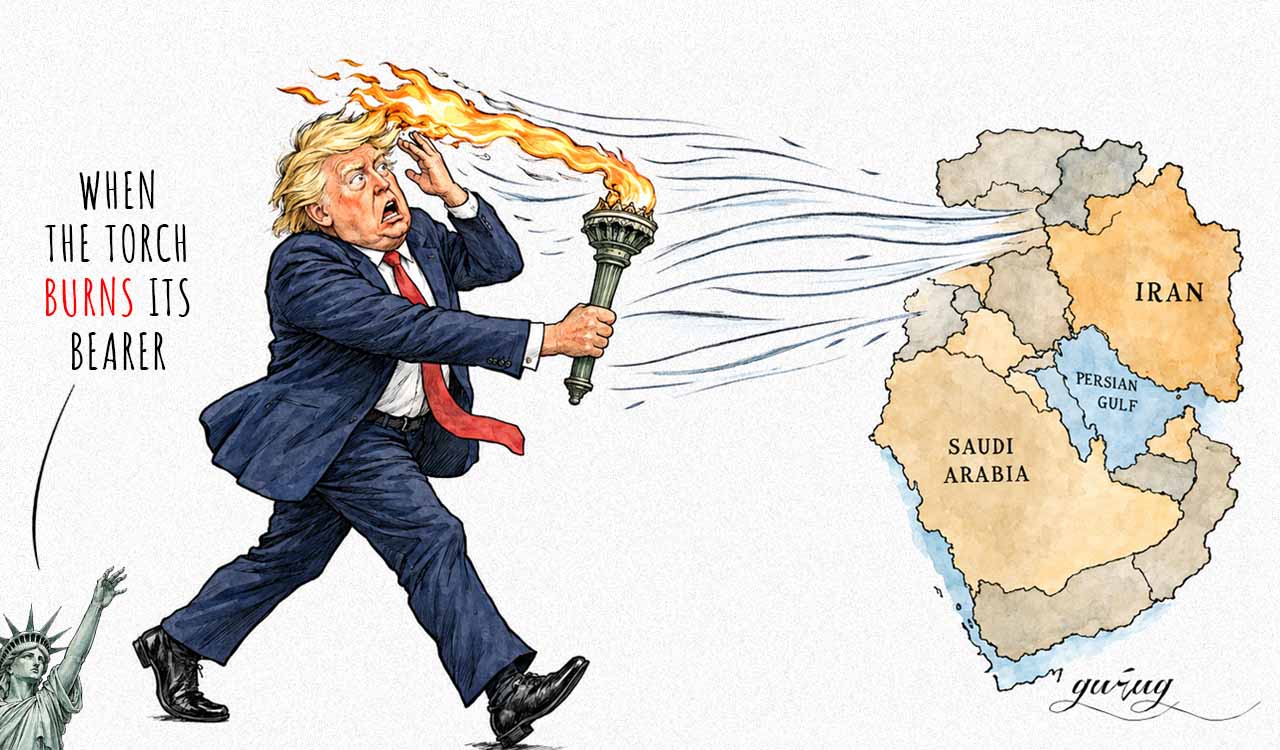
But Trump is not a conventional Atlanticist. He is, above all, a transactional strategist. His interest in Greenland has consistently revolved around two levers: minerals and money. Reports of undiscovered rare earth wealth beneath Greenland’s ice sheets have clearly caught his attention. So has the possibility — floated in his first term — of offering direct financial incentives to Greenlanders themselves, bypassing Copenhagen, to encourage a political realignment. Yet Greenland’s leaders have been unequivocal. As former Greenland Prime Minister Múte Bourup Egede said, “We don’t want to be Americans. We don’t want to be Danes. We want to be Greenlanders.”
Power Deployment
Where, then, does this leave Trump’s calculus? Trump understands power in asymmetrical terms. The US spends roughly $800 billion annually on defence; Denmark spends around $5 billion. America fields over a thousand combat aircraft; Denmark has about 50. The US armed forces number over 1.3 million; Denmark’s military has around 15,000 personnel. Denmark’s reinforcements would take days to reach Greenland across 3,000 kilometres of harsh terrain and ocean. The US, meanwhile, is already on the ground.
From this perspective, Trump may believe that military leverage alone can extract concessions without a single shot being fired —expanded basing rights, exclusive mineral access, long-term leases, or a reconfiguration of Greenland’s political status. Influence operations, financial inducements, and security pressure could all be deployed to loosen Greenland’s ties to Denmark.
• In 1979, after a referendum, Greenland gained home rule, taking control of domestic affairs while Denmark retained authority over defence, foreign policy, and monetary matters
If such measures fail, the more dangerous possibility arises: Trump might contemplate coercive action, betting that Denmark’s weakness and Europe’s divisions would prevent a meaningful response. Such a move would be reckless in the extreme. It would rupture NATO, legitimise territorial revisionism, and hand Moscow and Beijing the moral high ground in the global contest over sovereignty and international law.
Greenland today is not merely a frozen landmass on the edge of the map. It is a test case for the 21st century: of how climate change reshapes geopolitics, how mineral scarcity rewrites alliances, and how great powers behave when opportunity collides with ambition.
Trump’s fixation on Greenland is not about real estate. It is about who commands the future architecture of power in an Arctic world. The real question is not why Greenland matters. It is whether the international system is prepared to defend the rules that govern how it can be claimed.

(The author is a retired Army officer)

Related News