SC to direct CBSE to add opt-out option in APAAR consent forms
The Supreme Court said it would direct CBSE to implement nationwide the Orissa High Court's ruling requiring APAAR consent forms to include an opt-out option. The court also asked CBSE to examine concerns over consent, Aadhaar linkage and data privacy
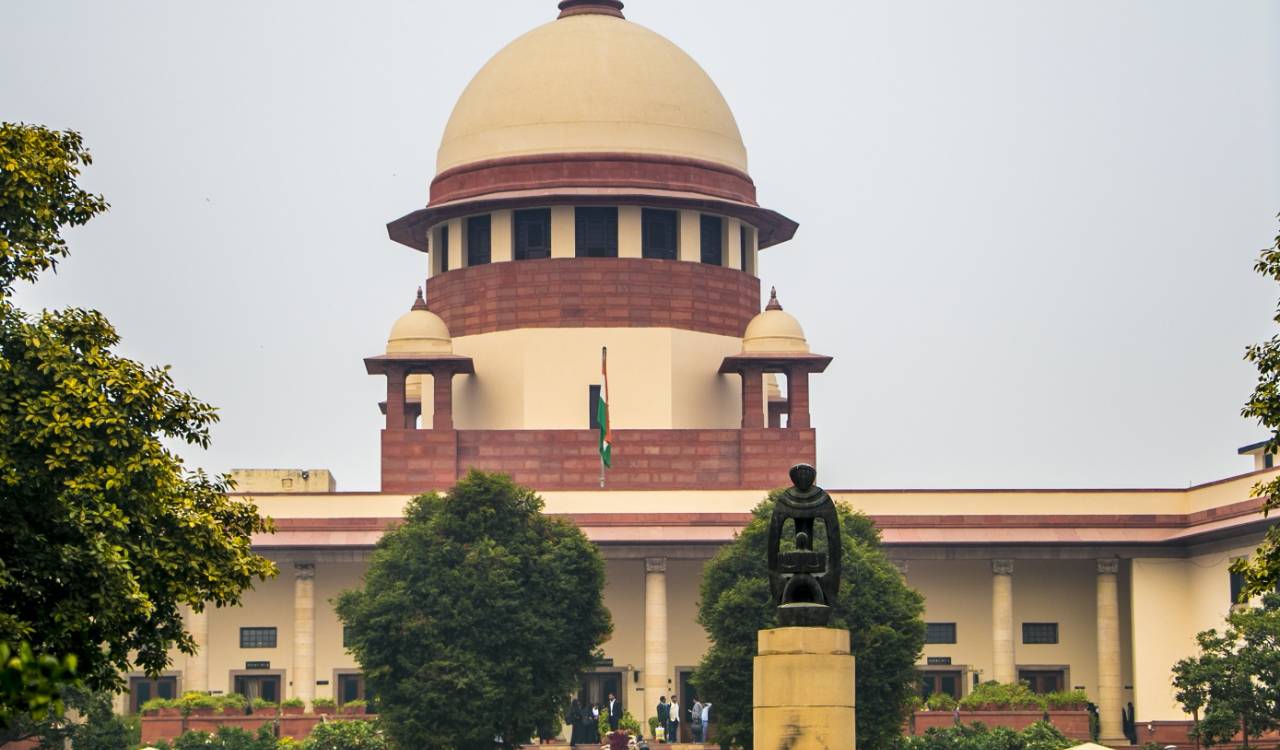


New Delhi: The Supreme Court on Monday said it will direct the CBSE to implement a direction of the Orissa High Court to amend the model consent form for the generation of Automated Permanent Academic Account Registry IDs to provide parents with the option to refuse consent or opt out of the scheme.
Under the Automated Permanent Academic Account Registry (APAAR) scheme, launched by the Ministry of Education under the New Education Policy, 2020, a unique, lifelong 12-digit student ID is generated. It acts as a digital passport for all educational records, securely storing marksheets, degrees and co-curricular achievements in one place.
A bench comprising Chief Justice of India (CJI) Surya Kant and Justices Joymalya Bagchi and V Mohana was hearing a plea filed by the parents of four students challenging the validity of the APAAR ID scheme for students on the ground that it compelled them to obtain Aadhaar IDs.
The top court said that since the Centre has not challenged the high court’s December 2025 judgement, it would direct the Central Board of Secondary Education (CBSE) to implement the ruling nationwide.
“We will direct the CBSE to implement this judgement on a pan-India basis, as the High Court order has been accepted. We are directing the CBSE to examine the issues as well,” the bench said. It said a formal order would be uploaded later. \The court also indicated that it would ask the CBSE to address concerns relating to consent and data protection raised by the petitioners.
Senior advocate Indira Jaising, appearing for the petitioners, said that children were being effectively compelled to enrol under a non-statutory scheme despite the government’s description of APAAR as voluntary. She said that while APAAR is projected as optional, it is linked to Aadhaar, making Aadhaar enrolment a practical prerequisite for obtaining an APAAR ID.
Referring to the 2019 Aadhaar judgement in the K S Puttaswamy case, she said that children cannot be compelled to obtain Aadhaar and that making APAAR necessary for examinations indirectly violates that principle. “The right to education is a constitutional right. Asking a child to obtain Aadhaar and APAAR to appear in examinations is against the Constitution,” the senior lawyer said.
She further said that the implementation of the scheme failed to comply with the Digital Personal Data Protection (DPDP) Act, 2023, particularly with regard to informed consent, withdrawal of consent and protection of students’ personal data.
Jaising said that the existing consent form was in the nature of a standard contract, offering no meaningful opportunity to refuse consent or opt out before enrolment.
She urged the bench to direct the CBSE and schools to ensure strict compliance with Section 6 of the DPDP Act while obtaining parental consent. The senior lawyer also highlighted concerns over long-term storage of children’s educational records, submitting that individuals should retain the “right to be forgotten” and withdraw consent.
The CJI, however, expressed reservations about the broader challenge to the scheme, saying that its objective was to create a unique academic identity for every student and improve educational administration.
“Let us not doubt everything in the country with a suspicious eye; it is a welcome step,” the CJI said. He said that the unique identifier would help educational authorities maintain accurate records of students, facilitate curriculum implementation and monitor parameters such as the teacher-student ratio.
While acknowledging that the scheme may pursue a legitimate objective, Jaising maintained that it must satisfy constitutional standards of legality, necessity and proportionality.
The bench observed that the CBSE’s circulars would remain subject to the provisions of the Digital Personal Data Protection Act and could not override the prevailing legal framework.
The petitioners relied on the Orissa High Court’s judgement, which directed the Union Ministry of Education to amend the model APAAR consent form to expressly provide parents with an option to refuse consent and opt out of the scheme.
It had held that the absence of an opt-out provision in the consent form undermined the government’s position that APAAR is voluntary and raised legitimate concerns regarding the fundamental right to privacy.
The high court had further reiterated that education cannot be made conditional upon Aadhaar and held that a post-facto right to withdraw consent could not substitute the right to refuse consent at the outset.
The plea, filed by Abhishek Baxi, in the top court sought to declare the APAAR scheme unconstitutional. It said that the Aadhaar-linked academic identifier and the associated data-processing architecture violate Articles 14, 19, 21 and 21A of the Constitution and exceed the executive powers of the Centre.

Related News
-

Supreme Court contempt plea targets Delhi Police chief over Metro restrictions
-
Supreme Court Bar bodies seek details, safety of lawyers detained during protest
-
Supreme Court orders probe into illegal factories along Rajasthan rivers
-
Andhra CM Naidu vows 34 per-cent of NDA local poll tickets for BC candidates