Telangana HC: Police cannot snatch keys or force motorists to pay challans
The Telangana High Court has ruled that police cannot stop vehicles or compel motorists to pay pending traffic challans on the spot. Justice NV Shravan Kumar directed that recovery of fines must follow due process of law, including court notices and adjudication.


By Legal Correspondent
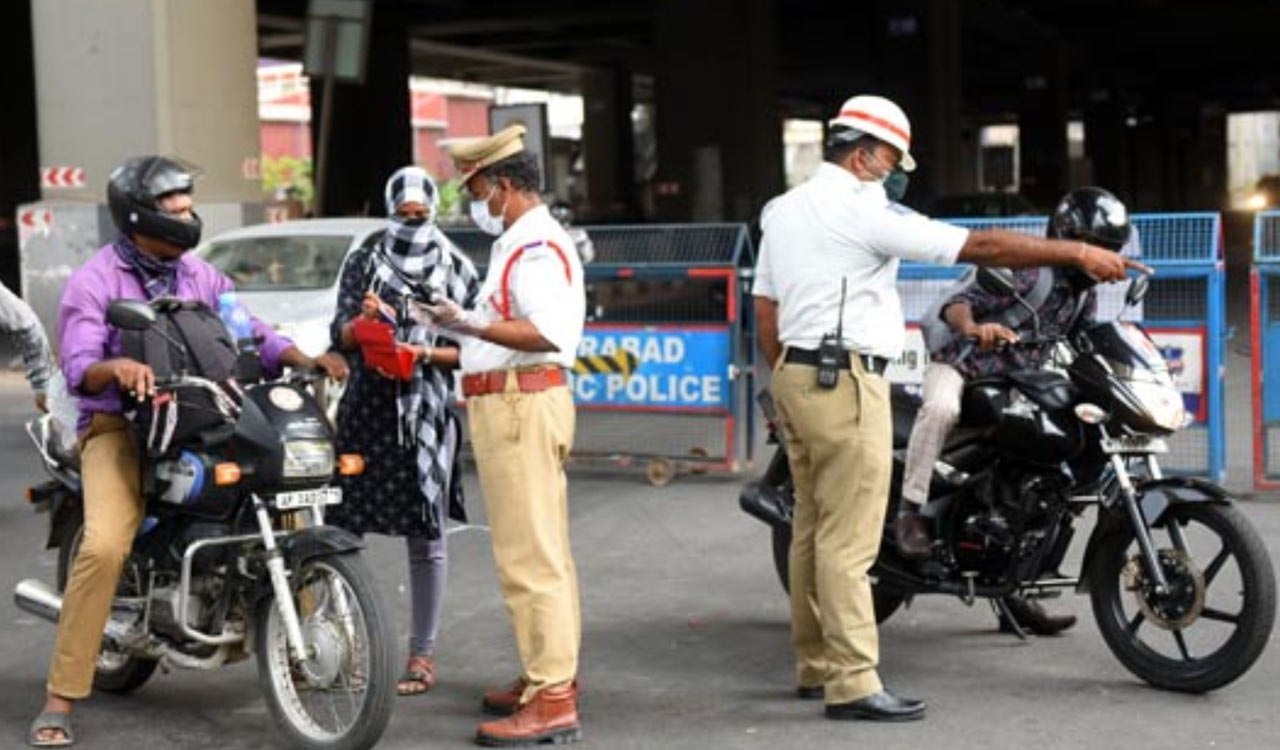
Hyderabad: The Telangana High Court has made it clear that the police cannot stop vehicles or compel motorists to pay traffic challans on the spot, and more importantly, must not snatch or confiscate keys or restrain motorists to force payments.
Justice NV Shravan Kumar of the Telangana High Court on Tuesday directed the Telangana police not to stop vehicles or compel motorists to pay pending traffic challans on the spot, holding that recovery of fines must strictly follow due process of law.
Hearing two writ petitions filed by Secunderabad resident V. Raghavendra Chary, the Judge made it clear that while citizens are free to pay traffic challans voluntarily, the police have no authority to resort to coercive methods to immediately collect pending fines.
The Court categorically observed that action for recovery of traffic penalties can only be taken in accordance with law, which includes issuance of court notices and adjudication by a competent court. The police, it held, cannot snatch or confiscate vehicle keys or otherwise restrain motorists to enforce payment of challans.
The writ petitions questioned the manner in which the Hyderabad Traffic Police were stopping vehicles on public roads and insisting that motorists clear old pending challans as a precondition to proceed further. Justice Shravan Kumar held that such practices are impermissible and violative of the procedure established by law.
The Court noted that under the Motor Vehicles Act, the choice to compound an offence rests with the citizen. If a motorist declines to pay, the authorities are required to follow statutory procedure by initiating proceedings before the appropriate court. The petitions also raised concerns about the manner in which traffic violations were being recorded.
The petitioner challenged a challan issued on March 17, 2025, for alleged “triple riding”, contending that a fine of Rs1,200 was imposed without reference to the specific legal provision violated. It was further submitted that multiple challans were generated solely on the basis of photographs taken on personal mobile phones of traffic personnel.
The counsel for the petitioner argued that such enforcement was contrary to Section 128 read with Section 177 of the Motor Vehicles Act, 1988, and Rule 167A(6) of the Central Motor Vehicle Rules, 1989.
It was contended that only government-approved and certified surveillance devices could be relied upon for booking traffic offences, and not personal mobile phones or non-certified equipment.
Another key contention was that police personnel were illegally deciding the quantum of fines and collecting money from motorists without judicial oversight. The petitioner argued that determination of punishment falls within the exclusive domain of the Judicial Magistrate and that field-level police officers have no authority to adjudicate penalties, invoking the doctrine of separation of powers.
The writ petitions also challenged G.O.No. 108 of 2011, issued by the Transport Department, which authorises police personnel to stop vehicles and collect compound penalties.
The petitioner claimed that the Government Order was unconstitutional, contrary to the Motor Vehicles Act, and violative of fundamental rights, besides suffering from repugnancy with central legislation.

Related News
-

Heera Group ponzi scam: ED completes registration of 7 properties auctioned in Hyderabad
-
Telangana High Court Hears Plea Against ECI’s SIR Voter Notice Process
-
Telangana High Court Reserves Order on IAS Officer Amrapali’s Cadre Allocation Plea
-
Four constables suspended in Ramagundam over challan collection irregularities