The Khammam Eviction Controversy: An Explainer
The demolition of nearly 600 houses on Bhoodan land in Velugumatla near Khammam has triggered political criticism and allegations of real estate interests. Evicted families face uncertainty, while officials maintain that no valid land allotments existed


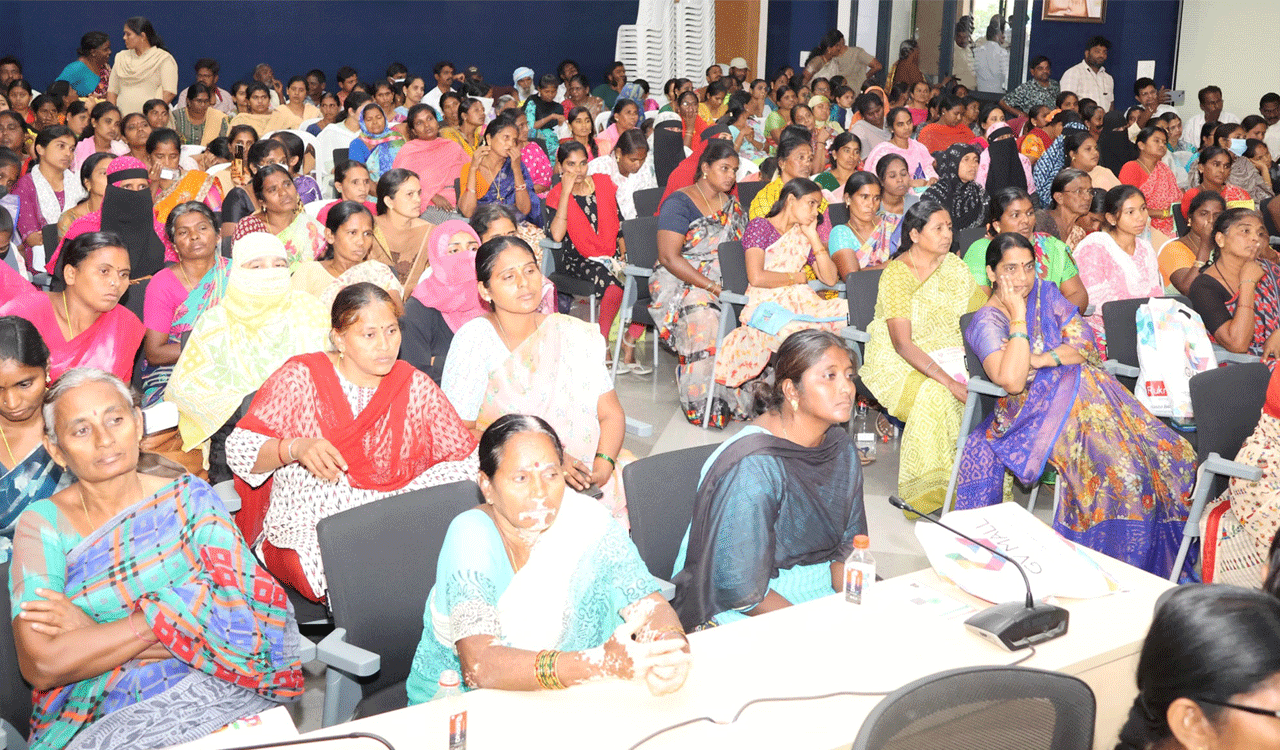
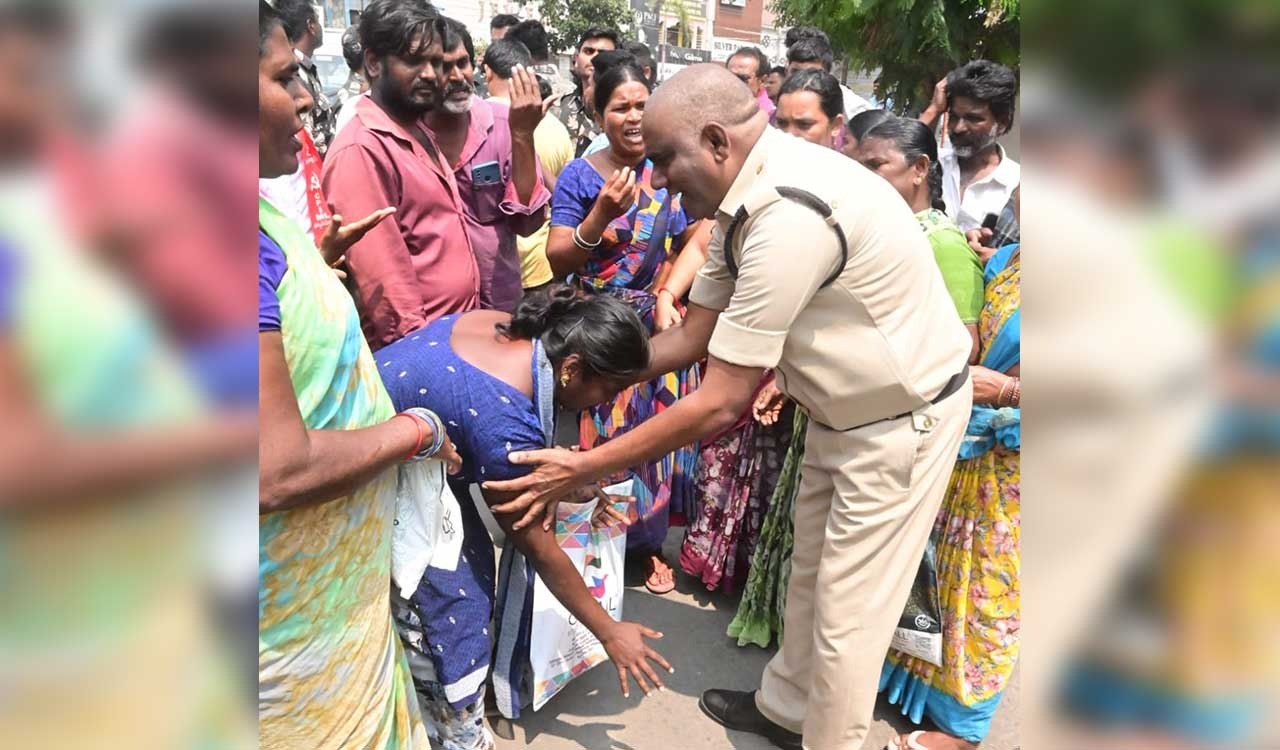
Khammam: Demolition of houses built on Bhoodan land at Vinoba Navodaya Colony in the Velugumatla area on the outskirts of Khammam city on Tuesday has drawn serious criticism from different political parties, while the evicted families are totally at a loss about their future.
What happened on Tuesday:
The area looked like a war zone as over 1,000 police personnel, disaster relief force personnel, along with revenue and municipal officials and staff, accompanied by a huge fleet of earth movers, tractor trolleys and mini-trucks, razed nearly 600 houses to the ground in a day-long operation. Those who resisted were detained and warned of serious action, even as they grieved over their loss. The action was taken following an eviction order issued on January 17, 2026, by the Telangana Bhoodan Yagna Board authority and Revenue department secretary DS Lokesh Kumar, who took suo motu cognisance of the alleged encroachment of land by the residents in Survey Nos. 147, 148 and 149 of Velugumatla village in Khammam urban mandal.
The reaction:
While affected families maintained that they had built houses eight years ago with support from Grameena Pedala Sangham on about 18 acres of Bhoodan Board land after they were issued proceedings allotting 100 square yards each in 2014, government officials asserted that no such allotment was made. The residents said they had approached the High Court in 2019 seeking basic facilities at the colony, and the court directed officials to provide electricity connections and ensure drinking water supply. As the officials remained inattentive, the residents again approached the High Court, and in 2022, the court again ordered officials to address the needs of the colony residents.
The official explanation:
Additional Collector P Srinivas Reddy said that in 1953, Kalavala Raja Rama Rao donated 31 acres and 7 guntas of land in the above survey numbers under the Bhoodan movement. The Khammam urban tahsildar, noting that the Bhoodan lands were being encroached upon, issued notices in 2019 to vacate the encroachments. A petition was filed in the High Court challenging the notices, and the court held that the tahsildar did not have sufficient jurisdiction in matters relating to Bhoodan lands and stayed the order, stating that the petitioners could not change the nature of the Bhoodan land under any circumstances.
Korlapati Parameshwari and nine other petitioners filed a petition in 2023 seeking orders not to remove structures built on Bhoodan lands. The High Court observed that the patta details submitted were incorrect and that the application stated that the poor had built houses on Bhoodan lands. The court ordered status quo not to remove the structures related to the petitioners and not to undertake any new constructions on vacant land.
Only five acres had been allotted for the KGBV and five acres for the Model School. Further, the Bhoodan Board had issued notices to 308 encroachers on January 17, 2026, to vacate immediately. Some encroachers in Velugumatla were showing documents claiming allotment in 2014, but on examination of records, it was found that no allotment was made, the Additional Collector said. Excluding the structures related to Avula Sirisha, the remaining land was taken into government control in Survey Nos. 147, 148 and 149, as per interim orders of the High Court issued in 2023. The land would be used for public utility programmes.
Allegations of real estate interests:
Setting aside technical and legal aspects, there are allegations that real estate interests were behind the massive demolition drive at Velugumatla. The disputed land is just 500 metres to the left of the new Khammam collectorate and close to TNGOs Colony on the Khammam-Kothagudem highway. The construction of the collectorate led to a sharp increase in land value in the surrounding areas.
In addition, some real estate traders, who were close associates of a district minister, owned land parcels measuring around 15 to 20 acres near Vinoba Colony, which appeared like a slum. The colony had become a hurdle for them to develop their lands into real estate ventures and exploit their full financial potential. Hence, they reportedly put pressure on the minister to ensure eviction of residents from Bhoodan lands.
As former minister Puvvada Ajay Kumar stated, the Congress minister’s associates and real estate traders had laid eyes on the Bhoodan lands and planned to occupy them by evicting the poor.
Future of the displaced:
Additional Collector Srinivas Reddy, during his press briefing after the demolition, said temporary accommodation was arranged for displaced families at a function hall, while their belongings were stored at Ambedkar Bhavan in Khammam. Their belongings would be shifted to places chosen by the families. His statement indicated that the State government has no plans to provide alternate housing or compensation.
Political response:
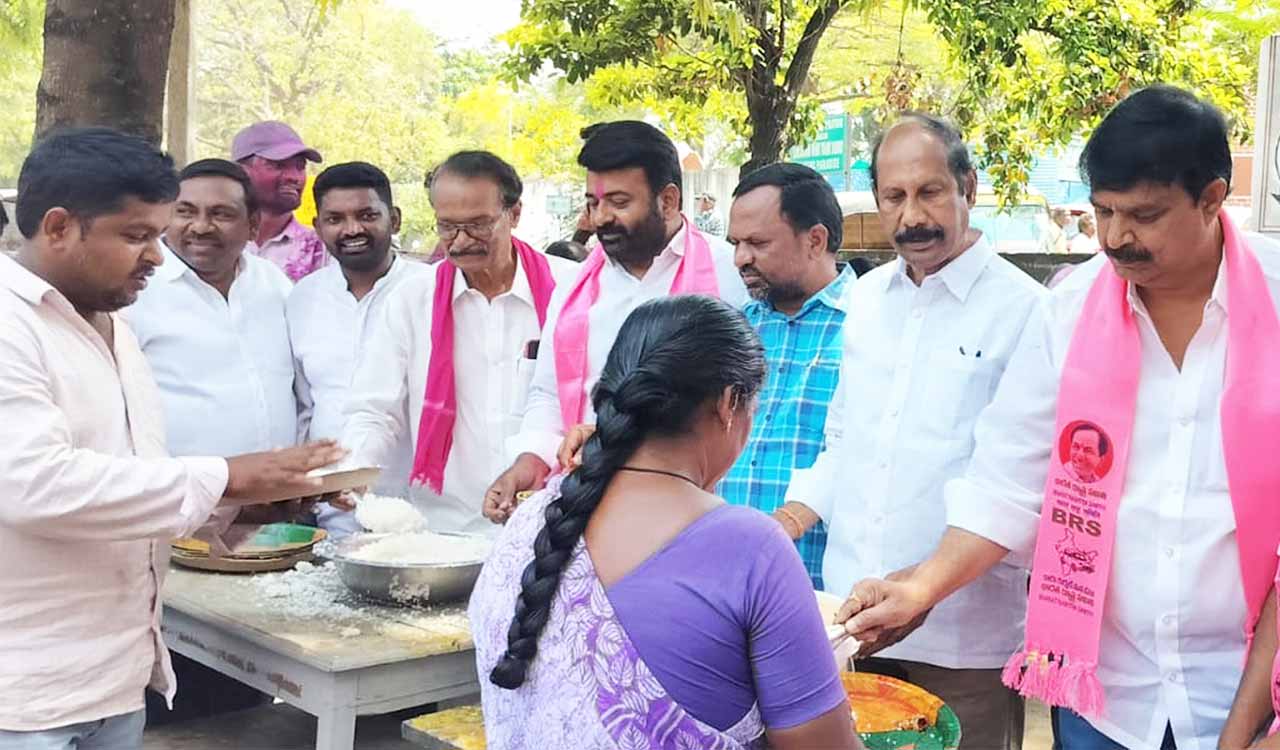
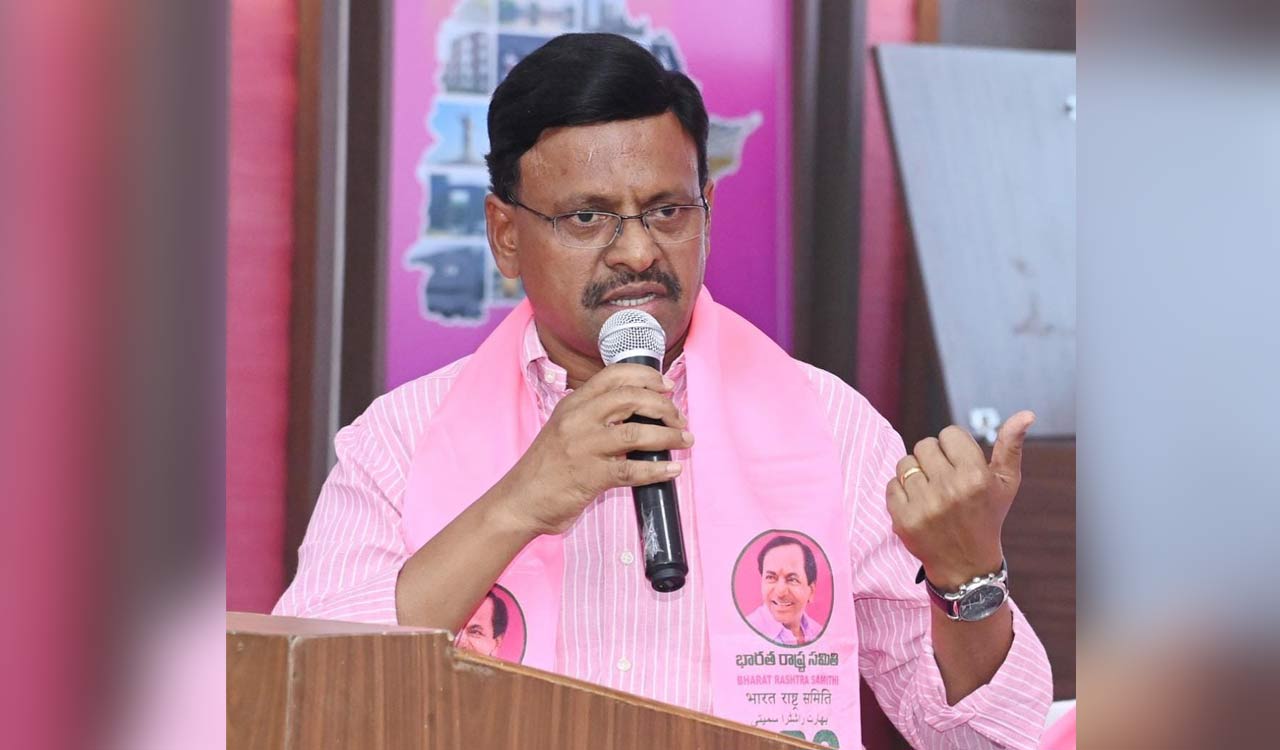
Opposition parties, including BRS, BJP, CPI and CPI(M), demanded that the government provide alternate houses to the affected families. BRS district president Tata Madhusudhan said that despite the court’s status quo order, the government had cracked down and displaced poor families living on Bhoodan lands.

Related News