VIF hosts discussion on evolution of Maoist insurgency in India
The Vivekananda International Foundation hosted a discussion on Dr P V Ramana’s book “India’s Maoists: Glimpses into Red Insurgency”, examining the Maoist movement’s evolution, geographical spread and security dimensions, with speakers discussing its history, counter-insurgency efforts and changing phases.
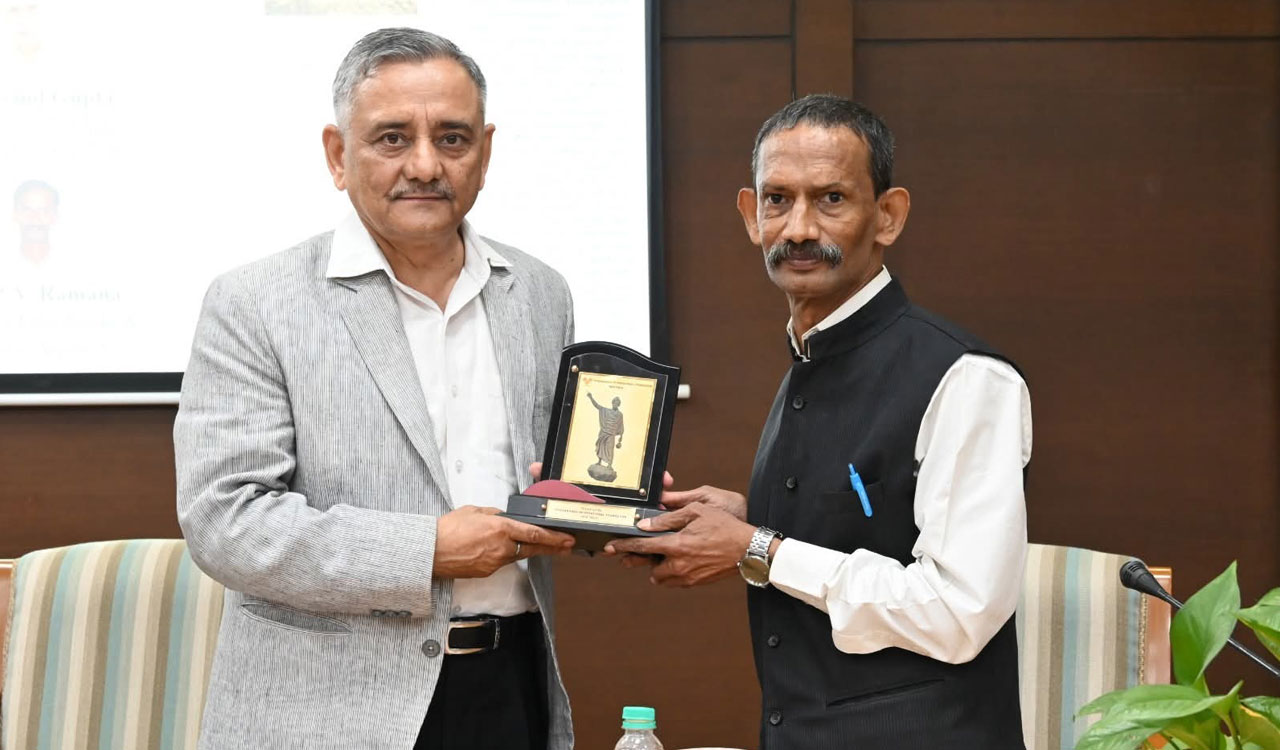


New Delhi: Vivekananda International Foundation (VIF) hosted the release and discussion of the book titled “India’s Maoists: Glimpses into Red Insurgency”, authored by Dr P V Ramana, examining the evolution, geographical spread and security dimensions of Maoist insurgency in India.
Commencing the session, Gen Anil Chauhan, Director, VIF, highlighted insurgency as an important national security challenge, particularly for a multi-ethnic, multi-religious and multi-linguistic society like India. Quoting Chanakya, he identified four types of threats: “internal threat, external threat, internal threat with external abetment and external threat with internal abetment.” He underscored the necessity of understanding these multi-dimensional threats to maintain internal national stability.
Dr P V Ramana, author, drew upon historical episodes and anecdotes from different parts of India to illustrate the evolution and geographical spread of the Naxalite/Maoist movement. He discussed regions including undivided Bihar, Chhattisgarh, Odisha, Telangana, Karnataka and West Bengal, tracing the Red Corridor and North-South Corridor, different phases of insurgency across the decades, and critical attacks that had a major impact on the movement, while placing these developments within the longer history of communist movements since Independence.
Dr Arvind Gupta, former Deputy NSA and former Director, VIF, congratulated Dr P V Ramana, describing the book as “a delight to read” and authentic. He noted the considerable efforts that had gone into ending insurgency in India and welcomed the government’s declaration that India was insurgency-free. He highlighted questions on why insurgency emerged, why it persisted and why it took so long to control, noting that deficits were addressed and that the strategy pursued in recent years had been coherent.
Shri Pankaj Singh, IPS, took the audience through the chronology of Left-Wing Extremism (LWE), from its first phase in West Bengal in the late 1960s to its subsequent movement towards South India. He discussed the developments of the 2000s, including how Central Armed Police Forces operated in unfamiliar terrain and conducted counter-insurgency operations. He also noted the Naxal groups’ emphasis on propaganda through songs and books to influence the masses, observing that it was fortunate that social media had not yet emerged during that period.
This was followed by an interactive Q&A session, with the discussion offering perspectives on the historical trajectory, geographical spread and changing phases of the Maoist movement, as documented in Dr Ramana’s book.

Related News