Why Earth is spinning faster?
According to Daily Mail, since 2020, every day is taking less than 24 hours.
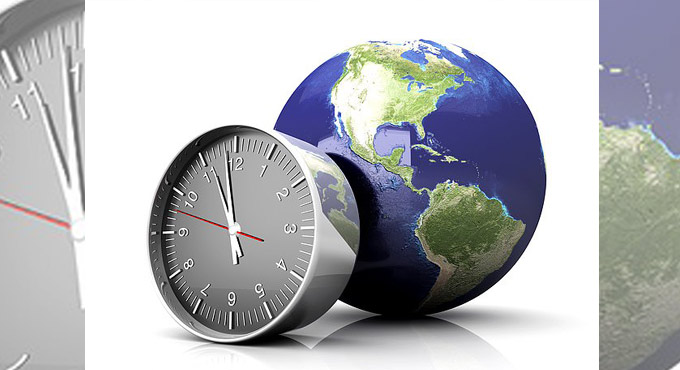


Scientists believe that Earth may be spinning faster than it has in over 50 years owing to the change in the speed of the earth’s rotation, which has increased over the last 5 decades. Several scientists have spoken about the unusual phenomenon, with some pointing out that this past year saw some of the shortest days ever recorded. Let’s read about the phenomenon and its reasons behind it…
According to Daily Mail, since 2020, every day is taking less than 24 hours.According to the researchers, the Earth has completed its revolutions around its axis milliseconds quicker than average. The planet’s rotation varies slightly all the time depending upon the variations in atmospheric pressure, winds, ocean currents, and the movement of the core.
As per the international timekeepers, who use ultra-accurate atomic clocks to meter out the Coordinated Universal Time (UTC), our blue planet took 1.4602 milliseconds shorter than the regular 24 hours to complete a rotation on July 19, 2020. In July 2020, the International Earth Rotation and Reference Systems Service (IERS) had announced that no ‘’leap second’’ would be added to the world’s official timekeeping in December 2020.
Factors behind the phenomenon
Planetary scientists are not concerned about the new finding; they have learned that there are many factors that have an impact on planetary spin—including the moon’s pull, snowfall levels and mountain erosion. They also have begun wondering if global warming might push the Earth to spin faster as the snow caps and high-altitude snows begin disappearing.
Computer scientists are somewhat concerned about the shifting spin speed—so much of modern technology is based on what they describe as “true time.” Adding a negative leap second could lead to problems, so some have suggested shifting the world’s clocks from solar time to atomic time.
What is ‘Leap second’?
Leap seconds refer to adjustment of time. The most recent addition of leap second happened on December 31, 2016. So far, leap seconds have been added to 27 days since the 1970s, according to the IERS. Leap seconds are added on either the last day of June or December and therefore the next potential date for a leap second is June 20, this year.
The negative leap second
On average, days are about 0.5 seconds shorter than 24 hours. Scientists around the world are considering whether to delete a second from time, which would be called a ‘’negative leap second’’. The deletion would be done to account for the change and to keep the passage of time in sync with the Earth’s rotation.
Now you can get handpicked stories from Telangana Today on Telegram everyday. Click the link to subscribe.
Click to follow Telangana Today Facebook page and Twitter .

Related News