Why Experts Believe PCOS Was Never Just An Ovarian Disorder
PCOS has officially been renamed PMOS after global experts concluded the condition was widely misunderstood as only an ovarian disorder, affecting more than 170 million women worldwide.
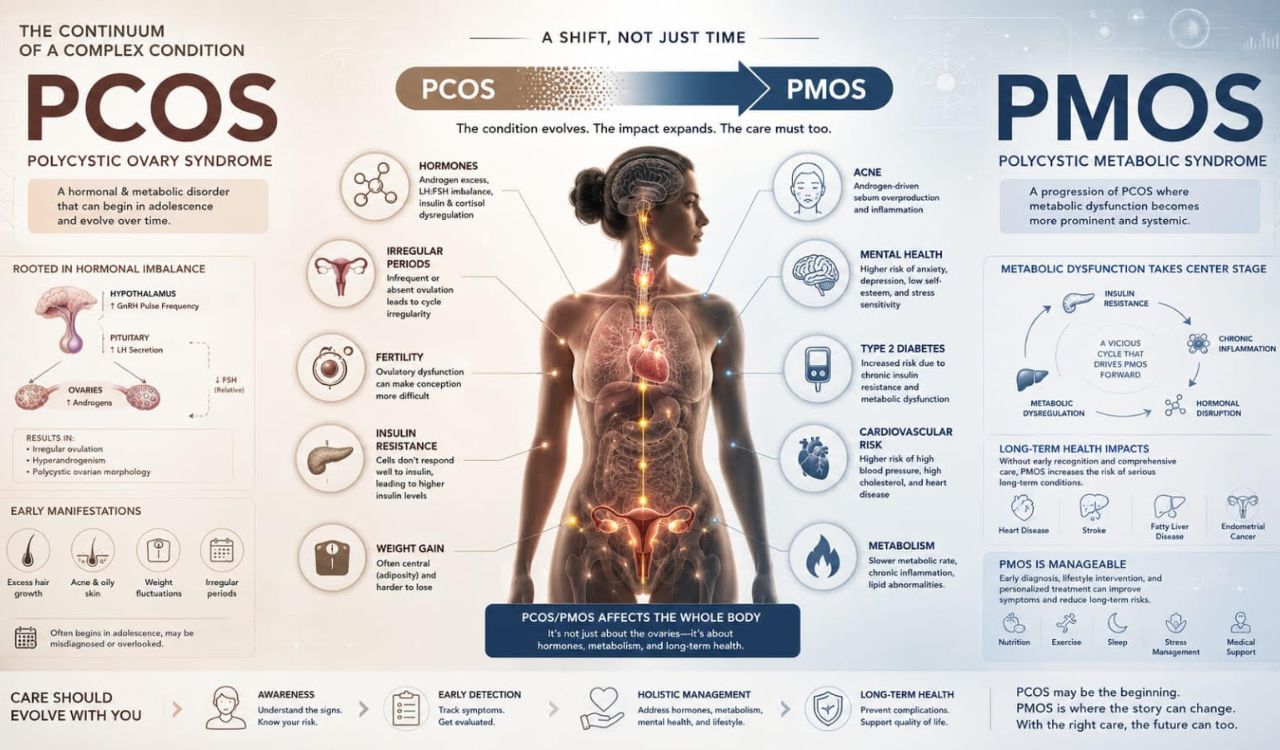


Polycystic ovary syndrome (PCOS), a condition affecting more than 170 million women worldwide, has officially been renamed Polyendocrine Metabolic Ovarian Syndrome (PMOS) after a 14-year international consultation involving doctors, researchers, and patient advocacy groups.
The new name was introduced in a paper published in The Lancet and presented at the European Congress of Endocrinology in Prague. Experts say the change reflects a broader understanding of the condition, which affects hormonal, metabolic, and mental health systems beyond the ovaries.
Professor Helena Teede, Director of Monash University’s Monash Centre for Health Research & Implementation, who led the initiative, said the previous term was scientifically misleading.
“What we now know is that there is actually no increase in abnormal cysts on the ovary,” Teede said, adding that the old name failed to capture the condition’s wider metabolic and endocrine impacts.
PMOS is associated with irregular menstrual cycles, fertility issues, acne, weight gain, insulin resistance, obesity, and increased risks of type 2 diabetes and cardiovascular disease. According to the World Health Organization, nearly 70 per cent of affected women remain undiagnosed.
Researchers said the earlier focus on “cysts” and ovaries often led to confusion among both patients and doctors, resulting in delayed diagnosis and fragmented treatment.
Rachel Morman, Chair of UK-based advocacy group Verity, said many patients without ovarian cysts were sometimes dismissed despite experiencing serious metabolic and hormonal symptoms.
The renaming process involved more than 50 professional and patient organizations and nearly 22,000 survey responses worldwide. Experts said cultural stigma surrounding women’s reproductive health was also considered during the consultations.
Professor Terhi Piltonen of Oulu University in Finland said the new terminology was designed to remain scientifically accurate while avoiding terms that could be harmful or stigmatizing in some cultures.
Under the updated framework, diagnosis may rely more on hormonal markers and blood tests alongside menstrual irregularities, potentially reducing dependence on ultrasound scans.
The transition from PCOS to PMOS is expected to continue over the next few years, with updated international medical guidelines planned for 2028. Experts involved in the process say the change could improve awareness, diagnosis, research funding, and long-term care for millions of women living with the condition.
By: vishal Kumar

Related News