Why UAE’s exit from OPEC could disrupt global oil markets
UAE’s exit signals a gradual shift in global oil governance—from tightly coordinated production regimes to more flexible, nationally driven strategies


By Brig Advitya Madan
The decision of the United Arab Emirates to exit the Organization of the Petroleum Exporting Countries (OPEC) marks a significant shift in global oil politics, with important implications for both producers and major consumers such as India.
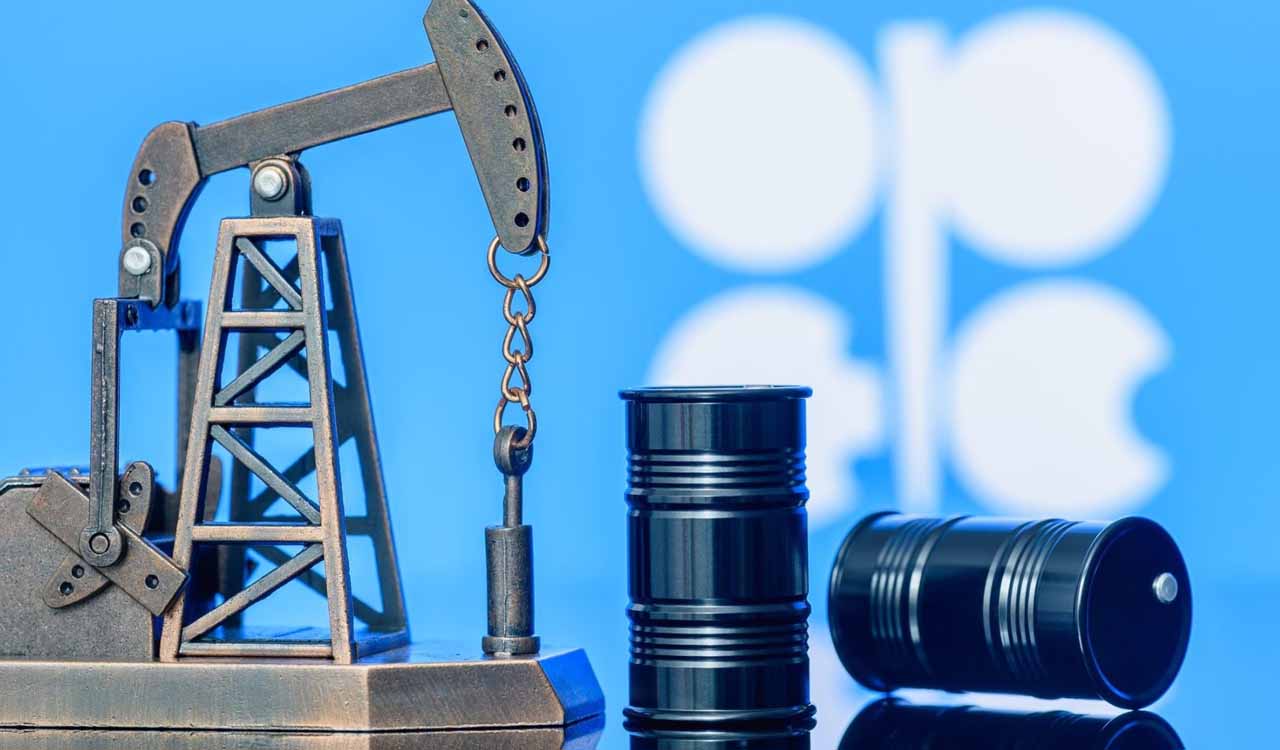
OPEC was established in 1960 in Baghdad by Iran, Iraq, Kuwait, Saudi Arabia and Venezuela to counter the dominance of Western oil companies and secure greater control over pricing and production. By coordinating petroleum policies and regulating supply, member countries sought to stabilise markets and ensure fair revenues.
At present, OPEC consists of 12 countries — Algeria, Angola, Congo, Equatorial Guinea, Gabon, Iran, Iraq, Kuwait, Libya, Nigeria, Saudi Arabia and Venezuela — with Saudi Arabia as the dominant player owing to its large reserves and spare capacity.
Since 2016, OPEC has been complemented by the broader OPEC+ framework, which includes around 10 non-OPEC partners: Russia, Azerbaijan, Kazakhstan, Mexico, Oman, Bahrain, Brunei, Malaysia, South Sudan and Sudan. Together, OPEC and these partners form a grouping of about 22 countries that coordinate production to influence global oil markets.
The UAE joined OPEC in 1967 to secure stable revenues and strengthen control over its oil resources. However, the organisation’s core instrument — production quotas — has increasingly become a constraint. Quotas are fixed limits on how much each member can produce, determined by factors such as reserves, capacity and economic needs. While intended to prevent oversupply and price crashes, as well as shortages and price spikes, they often generate friction among members.
For the UAE, this friction has been particularly pronounced. The country has significantly expanded its production capacity but is currently producing around 4.8 million barrels per day — only about two-thirds of its potential output. OPEC-imposed limits have therefore restricted its ability to fully monetise its investments. Exiting the organisation allows the UAE to increase output freely and maximise revenues, particularly at a time when the global transition to cleaner energy may limit future demand for oil.
Quest for Strategic Autonomy
The move is also driven by a quest for strategic autonomy. OPEC’s consensus-based decision-making can be slow and is often shaped by dominant players, especially Saudi Arabia. Differences over production baselines and broader geopolitical considerations have at times strained relations within the group. Tensions relating to regional issues, including those involving Iran, have further complicated cooperation.
The wider geopolitical environment has already weakened OPEC’s effectiveness. Conflict involving Iran has disrupted supply routes, particularly through the Strait of Hormuz, a critical artery for global oil shipments. Such disruptions reduce the impact of OPEC’s quota-based strategy, as actual supply is constrained by conflict rather than policy decisions. The exit of a key producer in this context risks further eroding the organisation’s cohesion and increasing price volatility.
Implications for India
For India, the UAE’s exit presents both opportunities and risks. As a major oil importer — bringing in nearly 2 billion barrels annually — India is highly sensitive to price changes; every $1 per barrel (one barrel is about 159 litres) increase raises its import bill by about $2 billion. If the UAE expands production after leaving OPEC, global supply could increase, helping stabilise or even reduce prices. This would ease inflationary pressures and lower fuel costs.
However, a weaker OPEC may find it harder to manage supply effectively, leading to sharper price fluctuations. Such volatility complicates economic planning and energy security. At the same time, the UAE’s greater flexibility could allow India to negotiate more favourable bilateral supply agreements, strengthening an already important energy partnership.
Part of Broader Pattern
The UAE’s departure is part of a broader pattern. Qatar exited OPEC in 2019 to focus on natural gas, Ecuador left in 2020 citing financial constraints, and Angola withdrew in 2023 due to disagreements over quotas. Indonesia has also suspended its membership multiple times after becoming a net oil importer. These developments highlight the growing divergence between national priorities and the collective discipline required by OPEC.
In sum, the UAE’s exit reflects a gradual shift in global oil governance — from tightly coordinated production regimes towards more flexible, nationally driven strategies. For India, the challenge will be to navigate this transition by balancing the benefits of potentially lower prices with the risks of increased volatility in an uncertain geopolitical environment.
(The author commanded 15 Punjab in Lebanon in 2007 and Brigade/Sector in Manipur as DIG in 2013. He was Brigadier Operational Logistics Western Command in 2014)

Related News