With more fuel, fail-safe measures, Chandrayaan-3 to leap towards moon on Friday
Chandrayaan-3, set for lift-off at 2:35 pm on Friday, will be a follow-up mission after the crash-landing of Chandrayaan-2 in September 2019 due to a software glitch
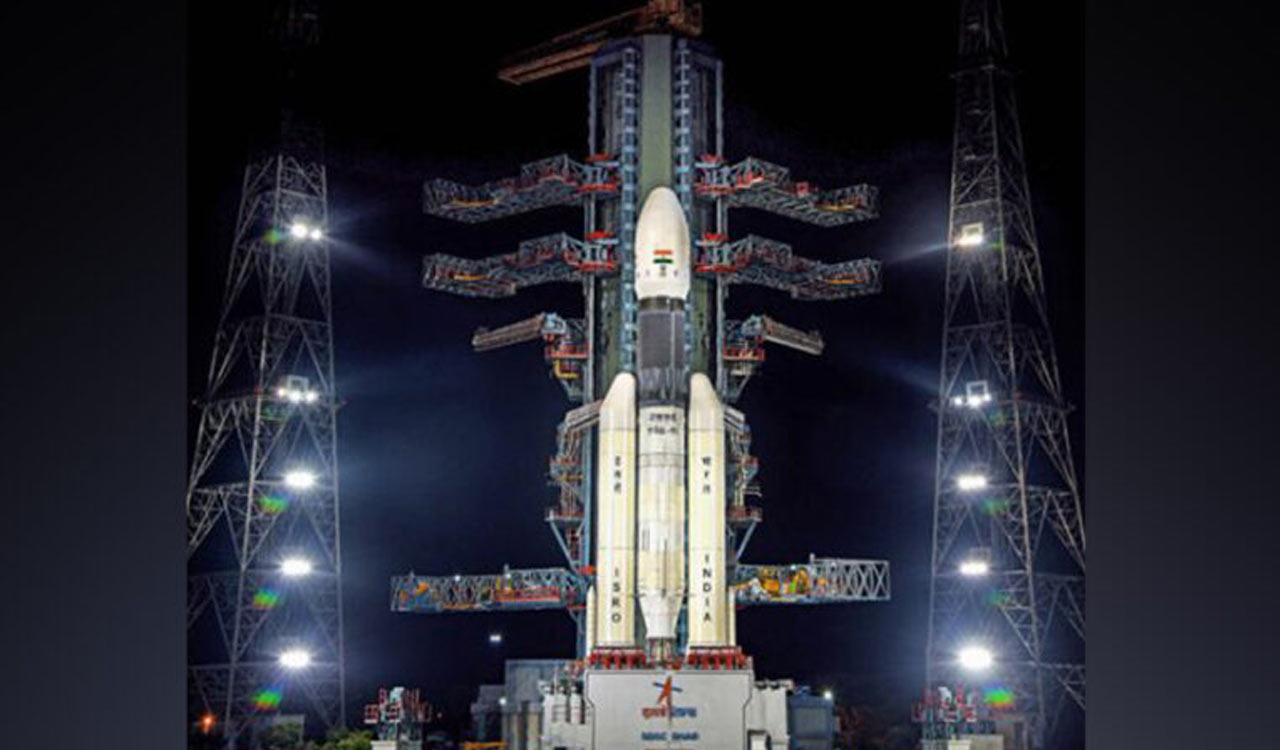


New Delhi: Loaded with more fuel, a slew of fail-safe measures and a bigger landing site, the Indian Space Research Organisation (ISRO) is set to make yet another attempt to land on the moon with the launch of Chandrayaan-3 on Friday.
Chandrayaan-3, set for lift-off at 2:35 pm on Friday, will be a follow-up mission after the crash-landing of Chandrayaan-2 in September 2019 due to a software glitch.
ISRO Chairman S Somanath on Monday shared minute details about what went wrong with the Vikram lander of Chandrayaan-2 as it went hurtling down towards the identified 500m x 500 m landing spot on the lunar surface with the engines designed to reduce its velocity developing higher thrust than expected.
“The primary issues were, one we had five engines which were used to give the reduction of the velocity, which is called the retardation. These engines developed higher thrust than what was expected,” he told reporters here on the sidelines of India Space Congress organised by SIA India.
Somanath said that when such a higher thrust was happening, the errors on account of this differential were accumulated over some period.
“All the errors got accumulated, which was on the higher side than what we had expected. The craft had to make very fast turns. When it started to turn very fast, its ability to turn was limited by the software, because we never expected such high rates to come. This was the second issue,” the ISRO chief said.
He said the third reason for failure was the small 500m x 500m site identified for landing the spacecraft.
“The craft was trying to reach there by increasing the velocity. It was almost close to the ground and kept on increasing the velocity,” Somanath said.
He said instead of success-based design in Chandrayaan-2, the space agency opted for a
failure-based design in Chandrayaan-3.
“We expanded the area of landing from 500m x 500m to four km by 2.5 km. It can land
anywhere, so it doesn’t limit you to target a specific point. It will target a specific point only in nominal conditions. So, if the performance is poor, it can land anywhere within that area,” Somanath said.
He said the Chandrayaan-3 also has more fuel so that it has more capability to travel or handle dispersion or move to an alternate landing site.
“We looked at very many failures – sensor failure, engine failure, algorithm failure, calculation failure. So, whatever be the failure we want it to land at the required speed and rate. So, there are different failure scenarios calculated and programmed inside,” Somanath said.
The ISRO chief said the Vikram lander now has additional solar panels on other surfaces to ensure that it generates power no matter how it lands.
“We asked if it lands with higher velocity, what will happen? Can it not land? Then we increased the vertical velocity component from 2 m/s to 3 m/s and tested it totally,” he said.
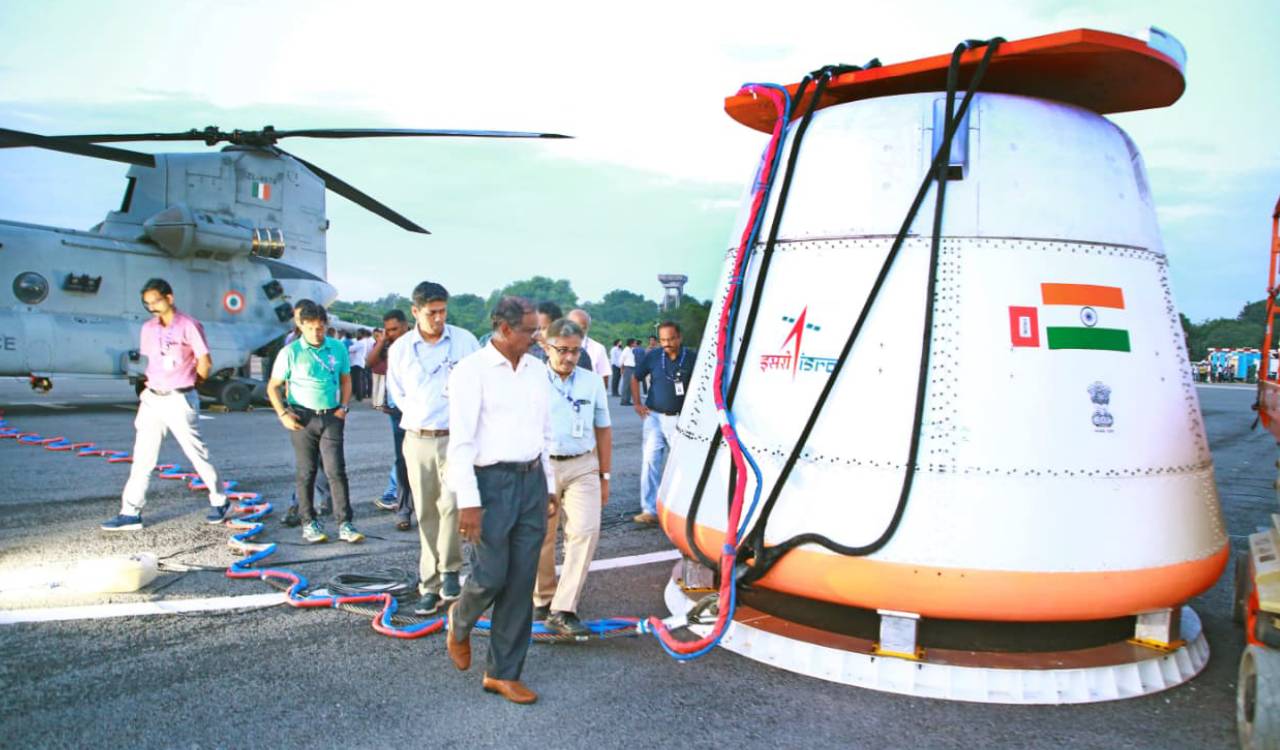
The spacecraft was also tested for ability to withstand vibrations by flying it over different terrains using a helicopter, while cranes were used to test the landing processes, he said.
“We did new test beds for simulation, which was not there last time. This was to look at failure scenarios,” Somanath said.

Related News
-

Editorial: Diluting institutional autonomy may boomerang
-
Incredible to watch capability ISRO is developing in science missions: Indian-American NASA senior official
-
India, France step up space cooperation with new private-sector deals
-
ISRO says remains at centre of India’s space programme, refutes media reports as ‘baseless’