AI and VR transforming brain tumour surgeries in Hyderabad
On World Brain Tumour Day, Hyderabad neurosurgeons highlighted how AI, VR and advanced surgical technologies are transforming tumour treatment. These innovations enable precise tumour removal while preserving critical brain functions, improving patient outcomes, reducing recovery time and enhancing surgical safety.


Hyderabad: Brain tumours are no longer a diagnosis that evokes fear, as modern advancements such as Virtual Reality (VR) and Artificial Intelligence (AI) have made it possible for neurosurgeons not only to remove tumours but also to preserve patients’ vital faculties, including speech, memory, movement, cognition and overall quality of life.
On the occasion of World Brain Tumour Day, observed every year on June 8, senior neurosurgeons in Hyderabad pointed out that the future of neurosurgery relies heavily on early detection and treatment through immersive technology and real-time guidance.
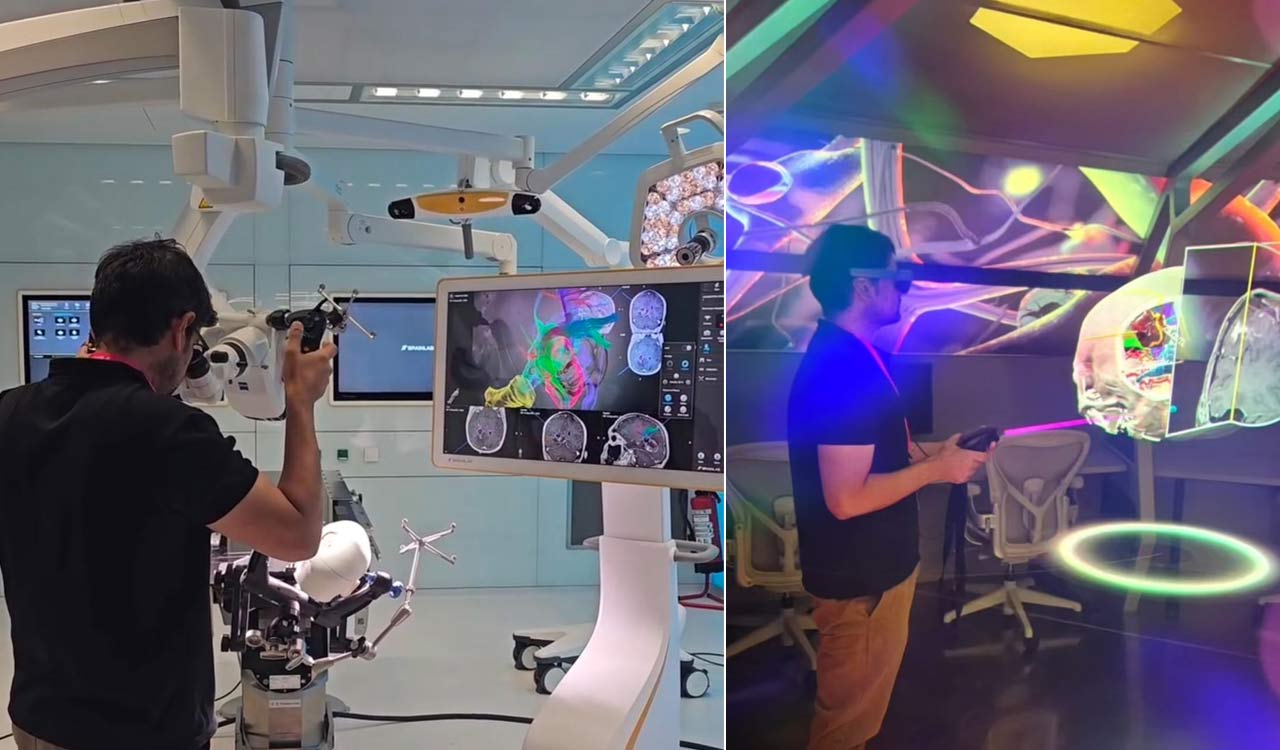
Even before making a single incision, neurosurgeons now use advanced VR headsets to step inside three-dimensional, colour-coded reconstructions of a patient’s brain and map out critical neural pathways. In the operating room, using sophisticated robotic navigation systems and specialised microscopes, specialists can cross-reference real-time anatomy with high-definition 3D digital models.
The expertise of neurosurgeons in utilising advanced technologies such as connectomics-guided mapping and laser-assisted precision ensures maximum tumour removal while protecting healthy tissue.
“A combination of early detection and advanced treatment definitely leads to better outcomes. Advanced endoscopic transorbital and endoscopic skull base approaches allow surgeons to reach selected tumours through natural anatomical corridors, often minimising or avoiding manipulation of normal brain tissue,” says Hyderabad-based senior neurosurgeon and neuro-oncology and skull base specialist, Dr Abhirama Chandra Gabbita.
Such minimally invasive techniques can reduce the surgical footprint on the brain, improve outcomes, shorten recovery times and enhance the safety of tumour removal in carefully selected patients, doctors added.

Related News
-

Ankita sets new meet record in 3,000m steeplechase at National Athletics Championships
-
Advik Sahasya, Irfan win titles at Brilliant Trophy chess tournament
-
Nadella calls for AI emergency brake, warns firms against trusting advanced models blindly
-
Menthra hosts ‘Human Advantage’ event to highlight human skills in AI era